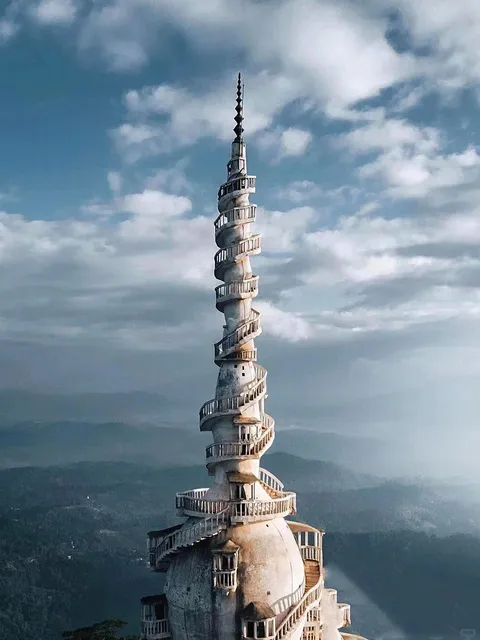
Rumassala , known to colonialists as Buona Vista, is the subject of many legends. It is featured in the Ramayana, as the home of the beautiful Queen Sita.
According to the Ramayana it is also said that Hanuman dropped a chunk of ‘Himalaya’ at Unawatuna (Onna Vetuna – ‘here it fell’) to form the present mountain, where many medicinal plants still grow. There is a major magnetic anomaly near Unawatuna, which Arthur C. Clarke attributes to a meteorite strike, and it is said that satellites lose their orbits with unusual frequency overhead. The Portuguese had a dreadful reputation in Sri Lanka as looters and pirates, are said to have given false light signals from Rumassala to lure unsuspecting Arab trading ships onto the rocks.
Peace Pagodo – Sama Ceitya
Mythical Legend
According to legend the Monkey-warrior Hanuman was sent back to India to fetch the four medicinal herbs, mritasanjeevani, vishalyakarani, suvarnakarani and sandhani from Himalaya in mountains to heal Lakshman who was wounded in his great battle with Ravana to save the abducted Princess Sita as he failed to identify the herbs he uprooted the mount and ferried it to the battlefield and a chunk of that “fell-down” forming theRumassala Hillock , and the name of the village derived from Unna-watuna meaning “fell down”.
The birth of prince Siddhartha
How does one reach Rumassala ? One has to pass Galle Town from Colombo towards Kataragama and in about 10 minutes a sign board to Rumassala “Rumassala Sama Ceitya” comes into view on the sea side. After five minutes from the sign board on the narrow road you reach the Sama Ceitya.
Enlightenment of the Buddha
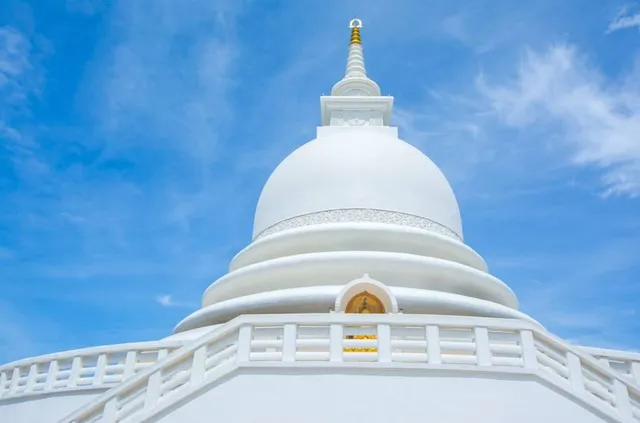
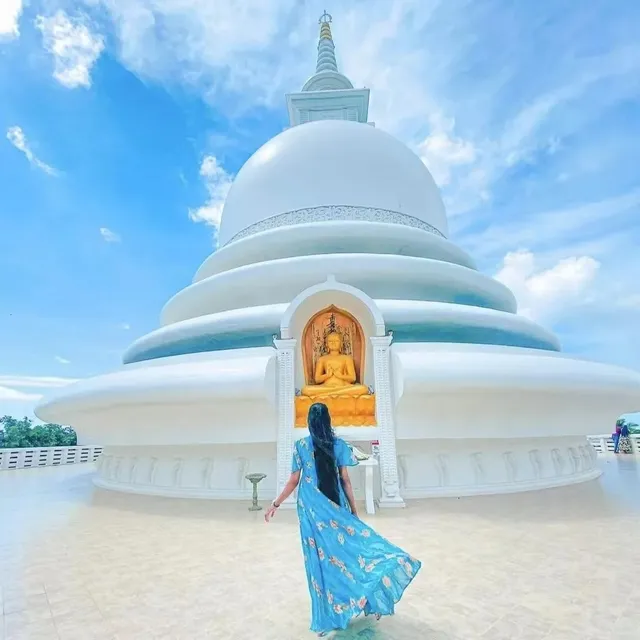
Sama Ceitya is the stupa which was built by the Japanese Nipponzan Myohoji Nikaya in 23rd February 2004. It is called “Peace Pagoda”. There are four stupas of this kind in Sri Pada, Bandarawela, Walapane and Ampara. In addition to these you can see this type of stupas in America, India, Australia, Japan, Nepal and Italy. By 2000, 80 Peace Pagodas had been built around the world in Europe, Asia, and the United States.
Right angled big square typed rock
Purpose
“We must not forget that Sri Lanka is a Buddhist country. We want to protect this country and Buddhism. It is for this purpose that five stupas were built in Sri Lanka. When we look at history it proves this country has pure Buddhism. There were many kings who built many stupas in their kingdoms. For example king Dutugemunu built Ruwanweli Maha Seya, the largest stupa in Sri Lanka.

Hanuman
“But during the period of the Portuguese, Dutch and the British we lost our religion, culture and other good values. The stupa is a symbol of Buddhism. We want to develop our religion day by day. It is mainly for this purpose that we decided to build five Peace Pagodas in Sri Lanka,” said Venerable Asami who is the Japanese representative from Nipponzan Myohoji.
Venerable Asami has been living in Sri Lanka for 27 years and in Galle 11 years. The 59 year old Thera Reverend can speak fluent Sinhala and has a very good rapport with the people in Galle.

The attainment of parinibbana
Those on ships calling at the Galle port can see the stupa. It is a very good sign to say that Sri Lanka is a Buddhist country.
This Peace Pagoda is designed to provide a focus for people of all races and creeds, and to help unite them in their search for world peace. Most (though not all) have been built under the guidance of Nichidatsu Fujii (1885-1985), a Buddhist monk from Japan and founder of the Nipponzan – Myohoji Buddhist Order. Fuji was greatly inspired by his meeting with Mahatma Gandhi in 1931 and decided to devote his life to promote non-violence. In 1947, he began constructing Peace Pagodas as shrines of World Peace.
The first Peace Pagodas were built as a symbol of peace in the Japanese cities of Hiroshima and Nagasaki where the the atomic bombs took the lives of over 150,000 people during the...
Read moreThe Japanese Peace Pagoda in Rumassala, Sri Lanka, is a serene and picturesque location that offers a unique blend of history, spirituality, and breathtaking views.
Historical Significance:
The Japanese Peace Pagoda in Rumassala is one of several such stupas constructed globally by the Nipponzan Myohoji Buddhist order. Built with the intention of promoting world peace and spiritual unity, it stands as a symbol of harmony between nations and people. The pagoda was completed in 2004 and is maintained by Japanese monks, symbolizing the longstanding spiritual connection between Japan and Sri Lanka.
Location and Surrounding Area:
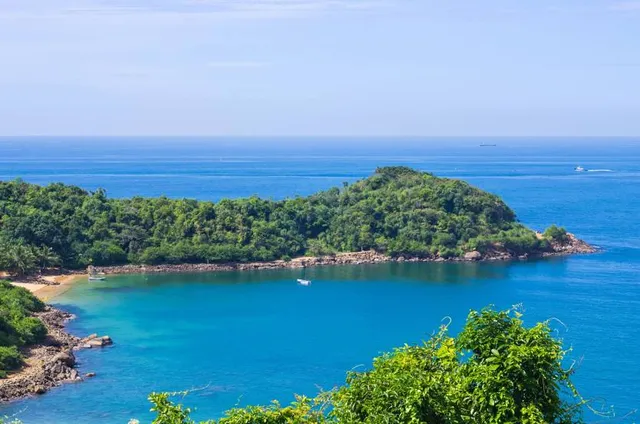
Situated on the lush, forested hill of Rumassala, near Unawatuna, the Peace Pagoda offers panoramic views of the Indian Ocean. Visitors are greeted with a calming and peaceful atmosphere as the pagoda overlooks the sparkling waters and nearby coastal cities. From the top, you can also catch glimpses of the Galle Fort in the distance, which is another UNESCO World Heritage site.
Views and Aesthetic Appeal:
As seen from the photos, the pagoda is a brilliant white structure that shines against the bright blue skies. The stupa itself is adorned with a golden Buddha statue, which adds a contrast to its gleaming white dome. Surrounding the pagoda is a lush green landscape that enhances its beauty, making it a serene spot for meditation, reflection, and photography.
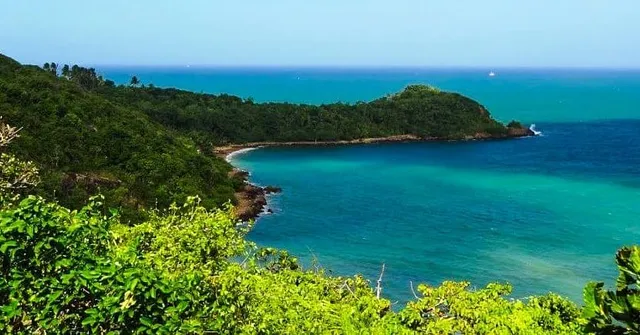
The second image highlights the stunning view of the ocean, which adds to the tranquility of the site. Visitors can enjoy a peaceful stroll around the pagoda while taking in the spectacular vistas, particularly during sunrise or sunset.
Parking and Accessibility:
It's important to note that parking near the stupa can be expensive, which may be a deterrent for some visitors. The location itself is accessible by road, but given its popularity, it's advisable to visit during off-peak hours to avoid large crowds and higher parking fees. Unfortunately, there aren't many budget parking options nearby, so plan accordingly.
Nearby Attractions:
The Rumassala area is rich in historical and cultural sites. Here are a few key places to visit nearby:
Galle Fort: Just a short drive from the Peace Pagoda, the Galle Fort is a historic colonial fortress built by the Portuguese in 1588 and later fortified by the Dutch. It offers visitors a look into Sri Lanka’s colonial past.
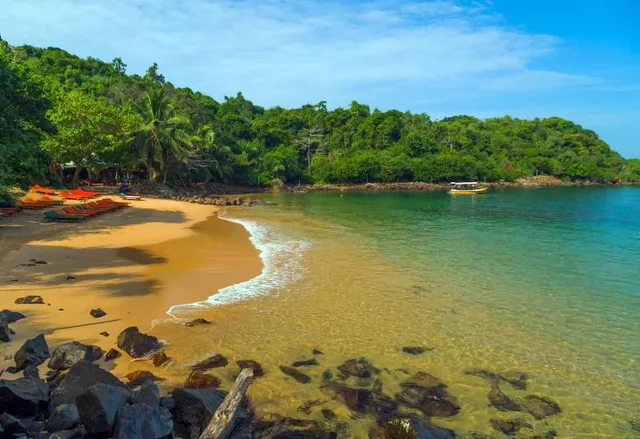
Unawatuna Beach: Located close by, Unawatuna Beach is a popular tourist destination known for its sandy shores, clear waters, and vibrant local restaurants.
Jungle Beach: For a quieter, more secluded beach experience, Jungle Beach is located a short hike away from the Peace Pagoda. It is a perfect spot for relaxation and swimming.
Rumassala Sanctuary: The surrounding area is rich in biodiversity. According to legend, this area was a piece of the Himalayas dropped by Hanuman during the Ramayana era, and the flora here is said to have medicinal properties.
Conclusion:
The Japanese Peace Pagoda in Rumassala is not only a peaceful retreat but also an iconic landmark that offers visitors spiritual insight, historical significance, and breathtaking views. While the parking costs can be steep, the experience of visiting this beautiful stupa and taking in the surrounding sights makes it well...
Read moreThe Rumassala Japanese Peace Pagoda is an enchanting testament to tranquility, nestled amidst the breathtaking beauty of Galle, Sri Lanka. As a devout traveler and seeker of inner peace, I recently had the privilege of visiting this exquisite pagoda and found myself utterly captivated by its serene ambiance and profound spiritual significance.
Perched atop the picturesque Rumassala Hill, the pagoda serves as a symbol of harmony and goodwill between Japan and Sri Lanka, representing their shared commitment to peace and unity. The architectural splendor of the pagoda is a seamless blend of traditional Japanese design and Sri Lankan craftsmanship, resulting in a structure that is both elegant and culturally rich.
Upon entering the pagoda, one is greeted by a palpable aura of serenity. The tranquil atmosphere is enhanced by the melodious chants and gentle fragrance of incense, invoking a sense of deep introspection and reflection. The interior houses a majestic Buddha statue, intricately carved and adorned, exuding a profound sense of tranquility and spiritual reverence.
The pagoda's surroundings are equally captivating, offering panoramic vistas of the azure Indian Ocean and the lush greenery of Rumassala Hill. The well-maintained gardens are a perfect setting for meditation and contemplation, allowing visitors to immerse themselves in nature's embrace while finding solace in the pagoda's peaceful energy.
What truly sets the Rumassala Japanese Peace Pagoda apart is its role as a pilgrimage site, attracting visitors from diverse cultural and religious backgrounds. Irrespective of one's faith or beliefs, the pagoda's inclusive environment welcomes all with open arms. It serves as a unifying force, encouraging dialogue, understanding, and fostering a sense of global harmony.
While the pagoda itself is a testament to tranquility, the journey to reach it is an adventure in its own right. Ascending the winding paths of Rumassala Hill presents breathtaking views of the surrounding landscape and adds a touch of mystique to the overall experience. Additionally, the warm and hospitable staff at the pagoda ensures that visitors are well-informed, providing guidance and insight into the pagoda's history and significance.
However, it is worth noting that the journey to the Rumassala Japanese Peace Pagoda might be physically demanding for individuals with mobility challenges. The uphill terrain can be steep at certain points, requiring a moderate level of fitness to reach the pagoda comfortably. Nonetheless, the effort is undoubtedly rewarding and well worth the breathtaking views and serene atmosphere that await at the top.
In conclusion, the Rumassala Japanese Peace Pagoda is a magnificent testament to spirituality, cultural harmony, and the pursuit of peace. Its enchanting surroundings, combined with the architectural grandeur and serene ambiance, make it a must-visit destination for travelers seeking solace and enlightenment. Whether you are a devotee of Buddhism, an admirer of Japanese culture, or simply someone in search of inner tranquility, the Rumassala Japanese Peace Pagoda is sure to leave an indelible mark on your...
Read more