My Family and my cousin's family booked Minneriya National Park's 'Rambavila' Bungalow online on 12 April 2023 for a one night stay on 13 April 2023.
On the day I made the booking I contacted Mr. Nuwan through the general line to get some advice for our trip, especially regarding what to bring, what to expect and any expert advice on Safari Tours. At the very outset, he gave me the true situation at Minneriya - that is the tank was full of water and Elephants could not be seen. Yet he assured me that he will be there on the following day and the day after to help me with any support needed. Elephants present or not, I had made up my mind to go to Rambavila because I had made the payment and my family was eager to go. I made a plan B, which was to spend the night at Rambavila on 13th without a Safari and for the following day to go to Habarana Eco Park after checking out.
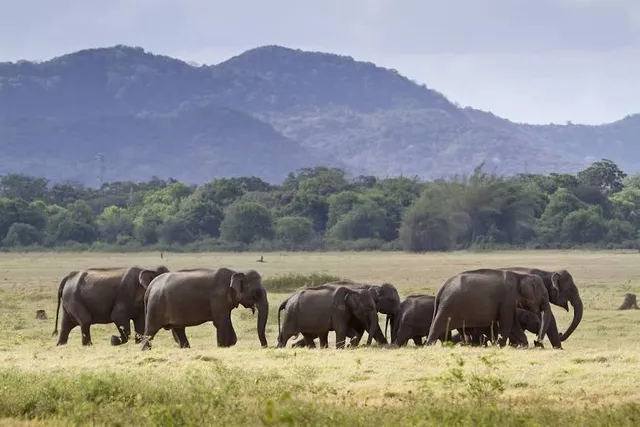
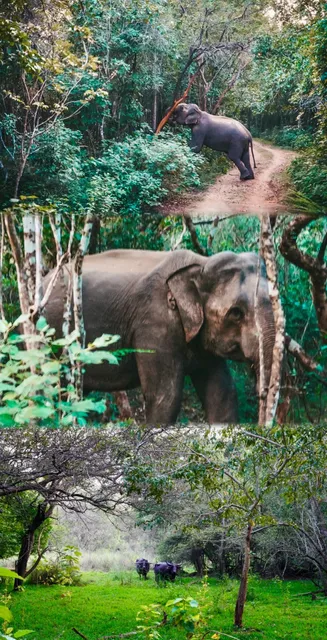
On the day of the trip, we got a little delayed and Nuwan telephoned me to check where we were. I said we were at Dambulla and will be there soon. We reached Minneriya Park Entrance at 3:00 pm. Nuwan greeted us warmly. He then accompanied us to Rambavila. We were so lucky, on our 9 KM journey to Rambavila, Nuwan helped us to spot the below animals;
Elephants (2) Pea Hen & Peacock (Several) Spotted Deer (Several) Grey Langur (Several) Painted Stork (Several) White Bellied Sea Eagle (1) Grey Headed Fish Eagle (1) Asian Opened Bill (Several) Great Cormorant (Several) Grey Heron (Several)
We were greeted warmly by Jagath & Ananda at the 'Rambavila' Bungalow. They showed the bungalow to us and inquired about what food / beverages they needed to prepare and we gave our rations and requirements.
Also, Nuwan helped us spot Golden Jackals (4) on our short trip to the Watch Tower from Rambavila.
Nuwan, Jagath & Ananda prepared the best food for us and were very courteous at all times. Despite it being their Festival, they were always joyful and served us with the brightest of smiles. From time to time, they inquired from us if we needed anything and if everything was ok.
It was one of the best experiences in our lives and our kids enjoyed the stay because of the tireless efforts of Nuwan, Jagath & Ananda of the Department of Wild Life. We owe them a BIG THANK YOU ! We sincerely wish them the best of the best in their careers. There is not the slightest doubt that they will hail Minneriya National Park's name in the highest possible place !
Looking forward to seeing them another day !
My advice to anyone visiting Minneriya National Park's 'Rambavila' Bungalow;
There are no fans and you will not be able to charge your phones & laptops. So take your portable fans and power-banks if you really need them.
There are no refrigerators ! If you need chilled / cooled food items or beverages, take a cool box with you. Stop at Dambulla to buy Ice Cubes and those food items & beverages.
Take plenty of Mineral Water for drinking & cooking. Taking fruit juices also is a good idea.
Take enough dry rations for your family & the staff at Rambavila too (additional 3 people). Always better to have a menu in mind and take the rations accordingly. Take spices / condiments i.e, cooking oil, chilli powder, table salt, onions, coconuts, tomatoes, curry powder, milk powder, sugar, tea leaves, coffee etc.
The weather is generally warm. Clothing like linen and pure cotton is ideal. Also, you will need a good shower / body wash. So take your shampoo, shower gel, soap, face wash etc etc.
Take Binoculars & Cameras to spot the Animals and take some great pictures.
The Bungalow Keepers / Staff leave behind their families to make you comfortable and happy. When you are with them, they treat you like family. Treat them with equal measure & respect which will make the stay a happy & memorable one for both parties. Always seek their advice....
Read moreMinneriya National Park is a prominent protected area located in the North Central Province of Sri Lanka, known for its rich wildlife and unique ecological features. Established in 1997, the park covers approximately 8,889 hectares and is renowned for its large populations of Asian elephants and its vital role in the conservation of Sri Lanka’s dry zone ecosystem.
Key Features of Minneriya National Park:
Elephant Gathering: One of the park's most remarkable features is the "Great Elephant Gathering," which occurs during the dry season, typically from July to October. During this period, hundreds of Asian elephants congregate around the Minneriya Reservoir, creating one of the largest gatherings of elephants in the world. This spectacle is a major attraction for wildlife enthusiasts and photographers.
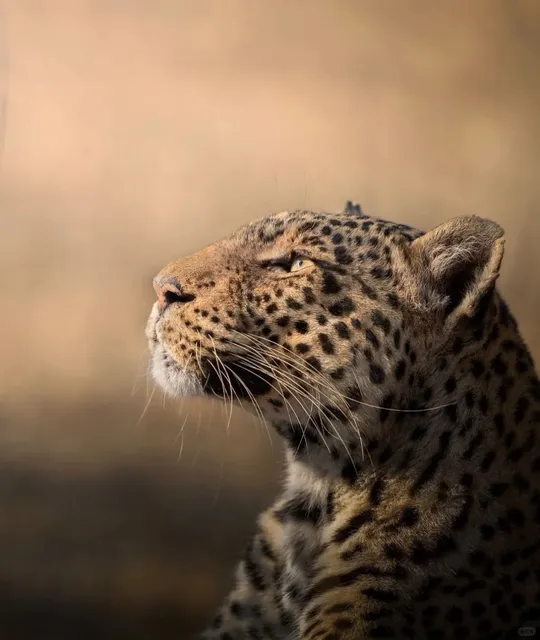
Wildlife: In addition to elephants, Minneriya National Park is home to a diverse range of wildlife. The park supports populations of sambar deer, spotted deer, wild boar, and leopards, though leopard sightings are relatively rare. The park is also rich in birdlife, with species such as the grey-headed fish eagle, purple heron, and various waterfowl commonly observed. Reptiles like crocodiles and various snake species inhabit the park’s wetlands and forested areas.
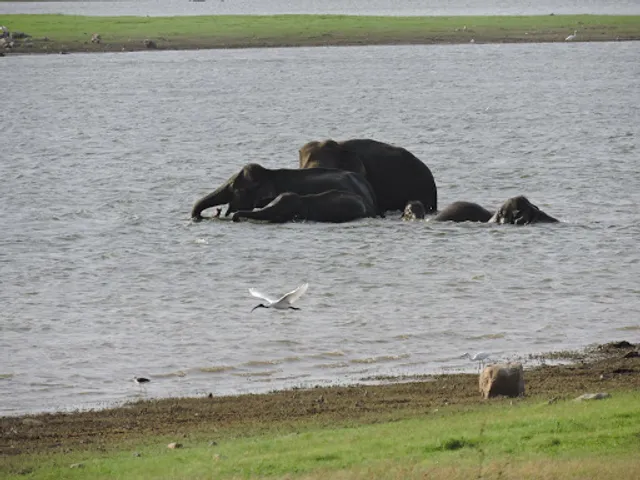
Minneriya Reservoir: The reservoir, constructed during the reign of King Mahasena in the 3rd century AD, is a crucial feature of the park. It serves as an important water source for wildlife and local communities. The surrounding wetlands and grasslands, which expand as the water level recedes during the dry season, provide critical feeding grounds for the elephants and other animals.
Ecosystems: Minneriya National Park features a mix of ecosystems, including dry mixed evergreen forests, grasslands, and wetlands. These varied habitats support a wide range of flora and fauna. The park’s landscape is characterized by open plains, forested areas, and water bodies, creating a mosaic of environments that cater to different species.
Conservation Efforts: The park is managed by the Department of Wildlife Conservation, which focuses on preserving its natural habitats and wildlife. Conservation efforts include monitoring and protecting elephant populations, managing human-wildlife conflicts, and addressing threats such as poaching and habitat degradation. The park is also involved in research and education to promote wildlife conservation.
Tourism and Activities: Minneriya National Park offers various activities for visitors, including jeep safaris that provide opportunities to observe wildlife and experience the park’s diverse landscapes. The Great Elephant Gathering is the highlight of the park’s tourism, attracting visitors from around the world. Birdwatching and photography are also popular activities, given the park’s rich avian diversity.
Climate and Best Time to Visit: The park experiences a tropical climate with distinct wet and dry seasons. The best time to visit is during the dry season, from July to October, when the elephant gathering occurs and wildlife is more concentrated around the reservoir. The monsoon season, from November to April, brings heavy rains that can affect accessibility and wildlife visibility.
Accessibility: Minneriya National Park is accessible from towns such as Habarana and Polonnaruwa. Travel to the park typically involves road transport, with several routes leading to the park’s entrance. It is advisable to plan visits in advance and check local conditions and...
Read moreMinneriya National Park belongs to North Central Province of Sri Lanka. The location is 182km’s away from Colombo.
In 1938 this area is declared as a wildlife sanctuary and later on in 12th Aug 1997 it was declared as a national park by the government.
The highlights of this park is, the historic Minneriya Tank built by King Mahasen in the third century AD, and this tank and catchment area is belonging to the national park. And the wildlife, mainly the elephants and also famous for birds.
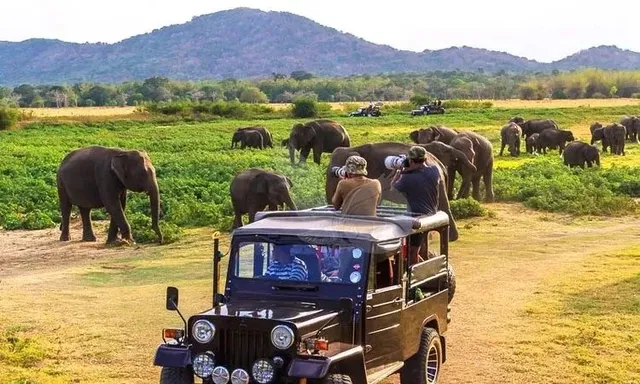
Minneriya National Park is one of main site visits and safari location for both foreigners and locals. In the dry zone, there are 100’s of jeeps in the park for safari to see mainly the elephants, in big herds together with baby elephants in different ages and sizes. Even can see sometimes very young baby elephants few months old and this will be very nice scenery and can see over the baby elephants for hours without boring or tired.
During the dry season, it is normal to see 150 to 200 elephants gathering on the grass fields of the edge of the reservoir. According to the reports, there are around 700 elephants migrate to the park area in sometimes, and they come from Wasgamuwa National Park, Kaudulla National Park and Huruluwewa National Park. The elephants in the area always moving from time to time with food availability to different parks.
Other animals available in the park are as below: there are two endemic monkeys of Sri Lanka: purple-faced langur and toque macaque. Large herbivorous mammals such as Sri Lankan sambar deer and Sri Lankan axis deer frequently found in the park. Jeep drivers say they have seen very rare the endangered species such as Sri Lankan leopard and Sri Lankan sloth bear inhabit in Minneriya. Minneriya is one of the areas where the gray slender loris is reportedly found in Sri Lanka.
The Minneriya reservoir is an important habitat for large water birds such as lesser adjutant, painted stork, and spot-billed pelican. Minneriya is a dormitory for many resident as well as migrant bird species. Flocks of 2000 little cormorants have been reported. Great white pelican, ruddy turnstone, and grey heron are the other water birds here. Among the endemic birds are Sri Lanka junglefowl, Sri Lanka hanging parrot, brown-capped babbler, Sri Lanka grey hornbill, black-crested bulbul and crimson-fronted barbet. The number of threatened birds recorded from this national park is 11.
Amphibians of Fejervarya pulla and Polypedates cruciger have been recorded from the area. There are eight species of endemic reptiles, and all of them are considered threatened. Painted-lip lizard and Lankascincus fallax are among them. Saltwater crocodile, Indian python, Asian water monitor, and Bengal monitor are among the other reptiles. Four of the fresh water fishes recorded from Minneriya are endemic to Sri Lanka.
Tips for safari:
Mostly people do safari early in the morning or afternoon. Morning safari starts 5:30am – 9:00am from Habarana or Sigiriya area and afternoon safari starts around 2:30pm – 6:00pm, Other times also possible to go for the safari, but you will see less animals then. And if compare morning safari and evening safari, you can see more elephants if you do evening safari. But sometimes other way...
Read more