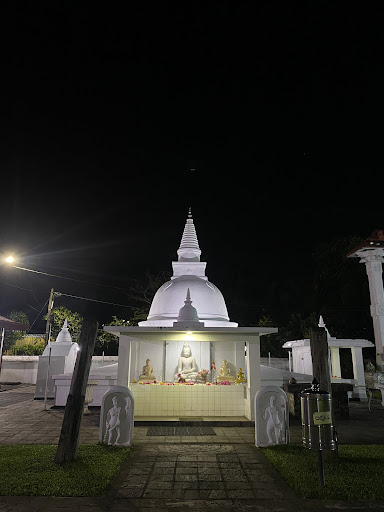
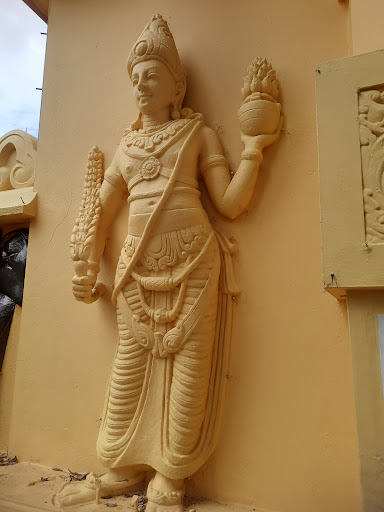
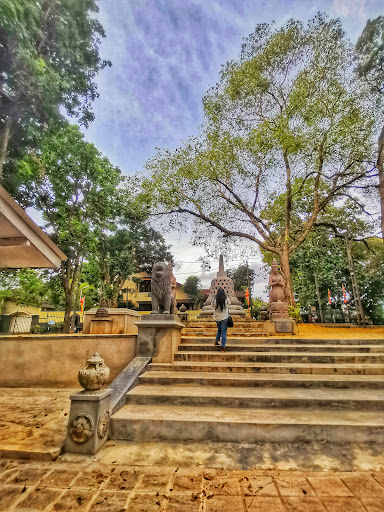
Kotte Raja Maha Vihara ( Sinhala: කෝට්ටේ රජ මහා විහාරය) is a historic Buddhist temple situated in Sri Jayawardenepura Kotte, Western province, Sri Lanka. It is located near to the historic building Pita Kotte Gal Ambalama at the Pita Kotte junction on Kotte road. The temple has been formally recognised by the Government as an archaeological site in Sri Lanka. The designation was declared on 17 May 2013 under the government Gazette number 1811.
The history of Kotte Raja Maha Vihara dates back to the Kingdom of Kotte. During the reign of King Parakumbha VI (1415-1467) the construction of the temple was begun and completed in all aspects with the royal patronage. King built the temple closer to his royal palace, to doing the necessary duties to the Sangha community.
During the Dutch presence in the country Kotte temple was completely destroyed by them. The temple was re-established in 1818 after the destroyed temple was found out by Ven. Pilane Buddha Rakkitha thero. However most of the constructions and artifacts of the original temple had been destroyed and taken away by the foreigners leaving only a few ruins at the place. It is said that only some ruins of the present Stupa, parts of Katharagama Devalaya, and some stone pillars were remained in the Vihara premises.
The Kotte Raja Maha Vihara is mentioned in Aththaragama Bandara Rajaguru's book Vihara Asna (Nam Potha), a Kandyan period compiled book about the important Buddhist centers in Sri Lanka. According to that book Kotte temple is described as Oth Pilima geya and Jayawardenepura Kotte Shanmuga Devalaya which are believed to be the image house with reclining Buddha at Kotte Vihara done by King Parakumbha VI and the Devalaya in front of it. Beside that the temple has also been described in the poetic literature (Sandesha Kavya) of the Kotte era.
The image house of Kotte Raja Maha Vihara consists of two chambers and the walls of inner chamber are adorned with Kandyan Era Frescoes. The outer chamber is seem to be constructed recently with modern frescoes. The inner chamber has two entrances, framed with sculpted Makara Thorana (Dragons archs). A portrait of the Queen Victoria has been painted over the right side entrance door in a framed portrait, accompanied by two lions.
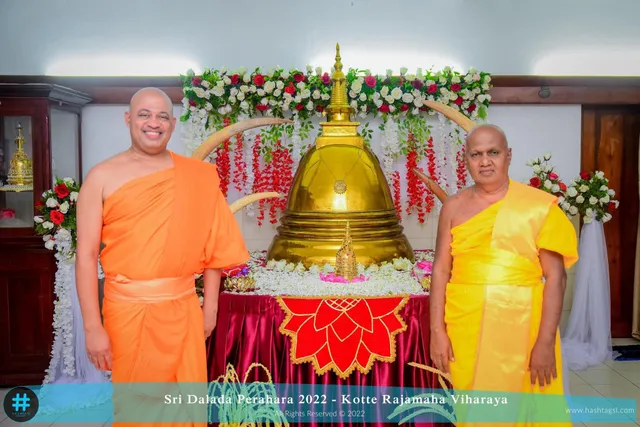
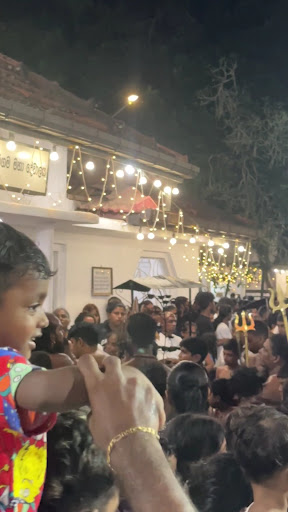
In every year a Perahera (a procession) is conducted in the Kotte Vihara, in memory of and to honour the Sacred Relic of the tooth of the Buddha as the kingdom of Kotte once abode the Sacred Tooth Relic. The Perahera was first started in 1415 by King Parakumbha VI under the counsel of Weedagama Maithree Thero. After the collapsed of Kotte Kingdom the Perahera function was stopped and again started in 1901 by Ven. Embulgama...
Read moreKotte Sri Rajamaha Viharaya is a revered Buddhist temple located in the ancient city of Sri Jayawardenepura Kotte, the administrative capital of Sri Lanka. This temple holds immense historical and religious significance, being closely linked to the Kotte Kingdom, which flourished during the 15th century. It served as one of the main religious centers for the kingdom and played a pivotal role in the spread of Theravada Buddhism during that era.
The temple’s history is intertwined with King Parakramabahu VI, the ruler of the Kotte Kingdom, who is credited with building the temple during his reign. The king’s efforts to promote Buddhism and his patronage of Buddhist institutions are reflected in the architecture and spiritual importance of Kotte Sri Rajamaha Viharaya. The temple stands as a monument to the Kotte era’s religious and cultural development, and its location is said to have once housed a segment of the Tooth Relic of the Buddha, making it a sacred site for Buddhists across the island.
One of the most significant annual events hosted at the Kotte Sri Rajamaha Viharaya is the Kotte Dalada Perahera, a grand procession that takes place in honor of the Buddha’s sacred relic, specifically commemorating the historical connection the temple has with the Sacred Tooth Relic. The perahera is a magnificent spectacle of Sri Lankan culture and Buddhist devotion, drawing both devotees and spectators from far and wide.
During the Kotte Dalada Perahera, elaborately decorated elephants, traditional drummers, dancers, and flame bearers parade through the streets in a ceremonial procession. The Kapilavastu Relic, which is enshrined in the temple, is carried in a beautifully adorned casket atop a majestic elephant, reminiscent of the ancient traditions of honoring the Tooth Relic.
The perahera holds deep spiritual meaning for Buddhists, as it is a time for reflection on the Buddha’s teachings and an opportunity for the public to witness the rich cultural and religious heritage of Sri Lanka. The perahera is also a reminder of the time when the Sacred Tooth Relic was housed in Kotte, a period that marked the city’s prominence as a political and religious center.
Beyond its religious events, Kotte Sri Rajamaha Viharaya is a tranquil place for meditation and worship. Its serene environment, coupled with the temple’s ancient architecture, allows visitors to step back in time and reflect on the rich history that shaped the Buddhist traditions...
Read moreThe Kotte Kingdom, a significant chapter in Sri Lanka's history, flourished during the 15th century. It was a period marked by both cultural brilliance and political intrigue, shaping the course of the island nation. The kingdom's rise began in the late 14th century when Minister Alakesvara established Kotte as a fortress to counter potential invasions from South India. However, it was under the reign of Parakramabahu VI (1412-1467) that Kotte truly blossomed. He moved the capital from Gampola to Kotte in 1415, recognizing its strategic location and natural defenses. Parakramabahu VI's reign was a golden era for Kotte. He successfully unified the island, conquering the Jaffna Kingdom in the north, bringing Sri Lanka under a single rule for the first time in over a century. This period witnessed significant cultural and artistic advancements, with Kotte becoming a center of learning and religious activity. The construction of the Kotte Dalada Maligawa, a temple housing the sacred tooth relic of the Buddha, further solidified the kingdom's religious importance. However, the Kotte Kingdom's prosperity was short-lived. Internal strife and external pressures began to erode its power. In 1521, a tragic event known as the "Wijayaba Kollaya" led to the division of the kingdom among the sons of King Vijayabahu VII. This weakened the kingdom and paved the way for further decline. The arrival of the Portuguese in 1505 marked a turning point. Seeking to exploit the region's resources and strategic location, the Portuguese established a foothold in Sri Lanka. They formed alliances with certain Kotte rulers, further destabilizing the kingdom. In 1597, with the death of King Don Juan Dharmapala, the Kotte Kingdom officially ended. The Portuguese, who had been steadily increasing their influence, took control of the kingdom, marking the beginning of a new era in Sri Lankan history. The legacy of the Kotte Kingdom, however, endures. Its capital city, now a suburb of Colombo, still bears witness to its glorious past. The ruins of the ancient city, including the Kotte Dalada Maligawa and the royal palace, offer a glimpse into the grandeur of this bygone era. The Kotte Kingdom's story serves as a reminder of Sri Lanka's rich history and the complex interplay of power, culture, and external influences that shaped...
Read more