HTML SitemapExplore
logo
Find Things to DoFind The Best Restaurants

Negombo Dutch Fort — Attraction in Western Province

Name
Negombo Dutch Fort
Description
Nearby attractions
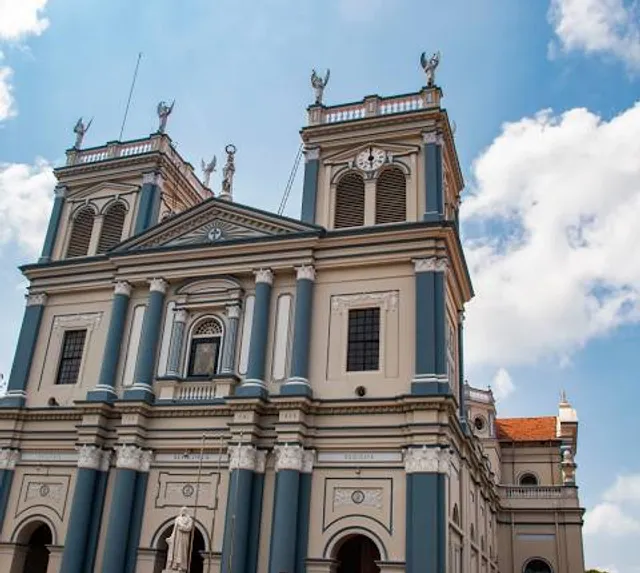
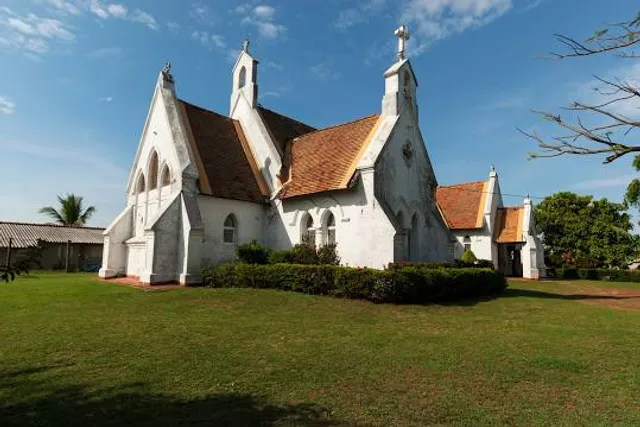
St. Mary's Church
Main Street, No.100 Grand St, Negombo 11410, Sri Lanka
Nearby restaurants
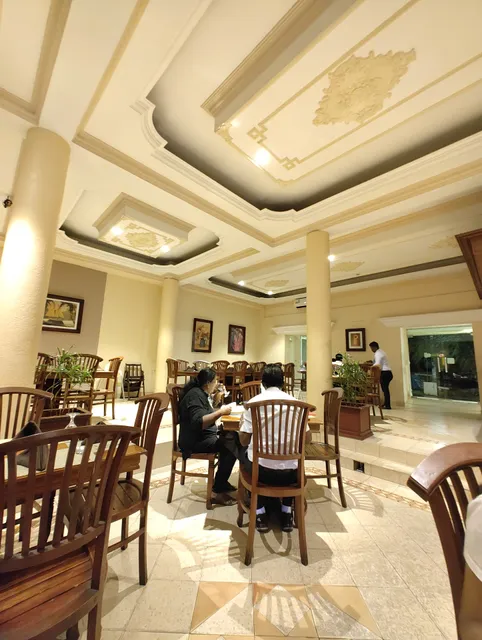
Choys negombo
Customs House Rd, Negombo, Sri Lanka
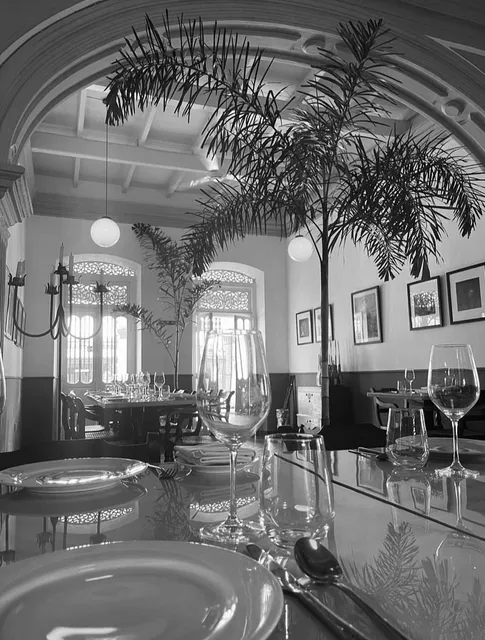
CLUB. Ceylon (Seafood)
25 Main St, Negombo, Sri Lanka
New Peking Restaurant
6R5Q+HJ4, Rajapakse Broadway, Negombo, Sri Lanka
Winston seafood restaurant
51 /8 Alles Rd, Negombo 11500, Sri Lanka
Chinhai Restuarent
45 Leitan's Ln, Negombo 11500, Sri Lanka
Nearby hotels
Miura Dutch Edge Hotel
No-08, Circular Road, Negombo 11500, Sri Lanka
Elsy Villa
No 14 2වන හරස් වීදිය, Negombo 11500, Sri Lanka
Kalapuwa Nature Resort
6R5P+3XP, 04,, St. Joseph's Street ,Negombo, 11500 Negombo,, Sri Lanka, Negombo 11500, Sri Lanka
Hive 68 - Hotels and Resorts
No 68 Grand St, Negombo 11500, Sri Lanka
The King's island Negombo
6R3P+HH6, Custom House Road,Kings Island Jetty, Pitipana, agoda, Negombo, Sri Lanka
Randi Home Stay
20/4,St. Jude place Thaladu, Negombo 11500, Sri Lanka
Hamilton House
2 Asarappa Rd, Negombo 11500, Sri Lanka
Winston sea front Villa
51/8 Alles Rd, Negombo, Sri Lanka
Related posts
Sri Lanka's Annual Recommended Restaurants
Keywords
Negombo Dutch Fort tourism.Negombo Dutch Fort hotels.Negombo Dutch Fort bed and breakfast. flights to Negombo Dutch Fort.Negombo Dutch Fort attractions.Negombo Dutch Fort restaurants.Negombo Dutch Fort travel.Negombo Dutch Fort travel guide.Negombo Dutch Fort travel blog.Negombo Dutch Fort pictures.Negombo Dutch Fort photos.Negombo Dutch Fort travel tips.Negombo Dutch Fort maps.Negombo Dutch Fort things to do.
Negombo Dutch Fort things to do, attractions, restaurants, events info and trip planning
Negombo Dutch Fort
Sri LankaWestern ProvinceNegombo Dutch Fort

Basic Info

Negombo Dutch Fort

6R5J+CMX, Negombo, Sri Lanka
3.3(340)
Closed
Save
spot

Ratings & Description

Info

Cultural
Scenic
Off the beaten path
attractions: St. Mary's Church, restaurants: Choys negombo, CLUB. Ceylon (Seafood), New Peking Restaurant, Winston seafood restaurant, Chinhai Restuarent
logoLearn more insights from Wanderboat AI.
Open hoursSee all hours
Sat8 AM - 8 PMClosed

Plan your stay

hotel
Pet-friendly Hotels in Western Province
Find a cozy hotel nearby and make it a full experience.
hotel
Affordable Hotels in Western Province
Find a cozy hotel nearby and make it a full experience.
hotel
The Coolest Hotels You Haven't Heard Of (Yet)
Find a cozy hotel nearby and make it a full experience.
hotel
Trending Stays Worth the Hype in Western Province
Find a cozy hotel nearby and make it a full experience.

Reviews

Nearby attractions of Negombo Dutch Fort

St. Mary's Church

St. Mary's Church

St. Mary's Church

4.7

(682)

Open until 7:00 PM
Click for details

Things to do nearby

Cooking Class in Sri Lanka
Sat, Dec 13 • 4:00 PM
Katunayake, Western Province 0000, Sri Lanka
View details
Make pineapple curry with an award-winning chef
Sun, Dec 14 • 4:00 AM
Negombo, Western Province 11540, Sri Lanka
View details

Nearby restaurants of Negombo Dutch Fort

Choys negombo

CLUB. Ceylon (Seafood)

New Peking Restaurant

Winston seafood restaurant

Chinhai Restuarent

Choys negombo

Choys negombo

3.9

(344)

$$

Click for details
CLUB. Ceylon (Seafood)

CLUB. Ceylon (Seafood)

4.7

(214)

Click for details
New Peking Restaurant

New Peking Restaurant

4.0

(34)

Click for details
Winston seafood restaurant

Winston seafood restaurant

4.8

(192)

Click for details
Get the Appoverlay
Get the AppOne tap to find yournext favorite spots!
Wanderboat LogoWanderboat

Your everyday Al companion for getaway ideas

CompanyAbout Us
InformationAI Trip PlannerSitemap
SocialXInstagramTiktokLinkedin
LegalTerms of ServicePrivacy Policy

Get the app

© 2025 Wanderboat. All rights reserved.
logo

Posts

Sri Lanka's Annual Recommended Restaurants
AliceAlice
Sri Lanka's Annual Recommended Restaurants
Sameera S SenarathnaSameera S Senarathna
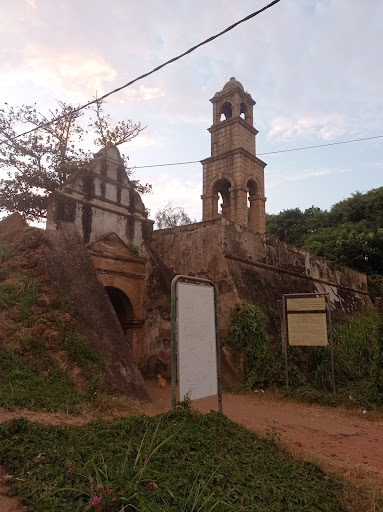
It was captured by Dutch forces commanded by Philip Lucasz, in February 1640.[1] The Portuguese made several attempts to retake it before they were successful in December 1643. They then strengthened the fortifications and managed to defend the fort until it was recaptured by the Dutch under the command of François Caron, in January 1644. The original bastions were destroyed by the Dutch cannons during the siege of the fort. The Dutch subsequently rebuilt it in 1672 however not on the usual square pattern, but on a pentagonal one, though it had only four bulwarks, the fifth was never constructed (possibly due to the cost).[3] The fort was located on a narrow strip of land between a lagoon and an inlet of the sea. It was surrounded by a dry moat, and the gate was accessed via a drawbridge. In February 1796 it was occupied by the British without opposition.[1] In the late 1800s the British authorities decided to demolish the fort and build a prison in its place, constructed from the stones of the fort.[1] Today all that remains is a section of the eastern rampart with mounds at its northern and Southern ends, where the previous bastions existed, and a recessed arched gateway. Above the gateway is a slab of granite, with the date 1678 inscribed, surmounted by a high decorative gable.[1] The site is still used as a prison by the Department of Prisons
Nimantha JayathilakeNimantha Jayathilake
Negombo Dutch Fort is a historic fortification located in the coastal city of Negombo, Sri Lanka. It was built by the Portuguese in the 16th century and later expanded by the Dutch in the 17th century. The fort was used as a military base during the colonial period and played a significant role in the defense of the city against foreign invaders. Today, the Negombo Dutch Fort is a popular tourist attraction and a great place to learn about the city's colonial history. The fort is well-preserved and features a number of interesting architectural elements, including ramparts, bastions, and cannons. Visitors can also explore the fort's interior and see the remnants of the original buildings that once stood there. The fort is located in the heart of Negombo and is easily accessible by foot or by tuk-tuk. It is a popular spot for tourists and locals alike, with many restaurants and cafes located nearby. Overall, the Negombo Dutch Fort is a must-see attraction for anyone interested in Sri Lanka's colonial history and architecture.
See more posts
See more posts
hotel
Find your stay

Pet-friendly Hotels in Western Province

Find a cozy hotel nearby and make it a full experience.

Sri Lanka's Annual Recommended Restaurants
Alice

Alice

hotel
Find your stay

Affordable Hotels in Western Province

Find a cozy hotel nearby and make it a full experience.

Get the Appoverlay
Get the AppOne tap to find yournext favorite spots!
It was captured by Dutch forces commanded by Philip Lucasz, in February 1640.[1] The Portuguese made several attempts to retake it before they were successful in December 1643. They then strengthened the fortifications and managed to defend the fort until it was recaptured by the Dutch under the command of François Caron, in January 1644. The original bastions were destroyed by the Dutch cannons during the siege of the fort. The Dutch subsequently rebuilt it in 1672 however not on the usual square pattern, but on a pentagonal one, though it had only four bulwarks, the fifth was never constructed (possibly due to the cost).[3] The fort was located on a narrow strip of land between a lagoon and an inlet of the sea. It was surrounded by a dry moat, and the gate was accessed via a drawbridge. In February 1796 it was occupied by the British without opposition.[1] In the late 1800s the British authorities decided to demolish the fort and build a prison in its place, constructed from the stones of the fort.[1] Today all that remains is a section of the eastern rampart with mounds at its northern and Southern ends, where the previous bastions existed, and a recessed arched gateway. Above the gateway is a slab of granite, with the date 1678 inscribed, surmounted by a high decorative gable.[1] The site is still used as a prison by the Department of Prisons
Sameera S Senarathna

Sameera S Senarathna

hotel
Find your stay

The Coolest Hotels You Haven't Heard Of (Yet)

Find a cozy hotel nearby and make it a full experience.

hotel
Find your stay

Trending Stays Worth the Hype in Western Province

Find a cozy hotel nearby and make it a full experience.

Negombo Dutch Fort is a historic fortification located in the coastal city of Negombo, Sri Lanka. It was built by the Portuguese in the 16th century and later expanded by the Dutch in the 17th century. The fort was used as a military base during the colonial period and played a significant role in the defense of the city against foreign invaders. Today, the Negombo Dutch Fort is a popular tourist attraction and a great place to learn about the city's colonial history. The fort is well-preserved and features a number of interesting architectural elements, including ramparts, bastions, and cannons. Visitors can also explore the fort's interior and see the remnants of the original buildings that once stood there. The fort is located in the heart of Negombo and is easily accessible by foot or by tuk-tuk. It is a popular spot for tourists and locals alike, with many restaurants and cafes located nearby. Overall, the Negombo Dutch Fort is a must-see attraction for anyone interested in Sri Lanka's colonial history and architecture.
Nimantha Jayathilake

Nimantha Jayathilake

See more posts
See more posts

Reviews of Negombo Dutch Fort

3.3
(340)
avatar
5.0
6y

The Portuguese fort that stood where the current Negombo Fort is situated was mostly destroyed by cannon during the Dutch siege in 1644. The Dutch fort was built on its ruins, not on the usual square pattern, but on a pentagonal one, though it had only four bulwarks. The fifth one was never built. Negombo is home to the largest community of Catholics in Sri Lanka, a legacy of the Portuguese, who industriously spread Catholicism all along the west coast. Portuguese surnames abound here, though the people do not descend from the Portuguese. Their ancestors adopted a Portuguese name when they had been baptised. In the Dutch time Negombo was important because the highest quality cinnamon grew in this area, but with the disappearance of the cinnamon trade it lost its importance.

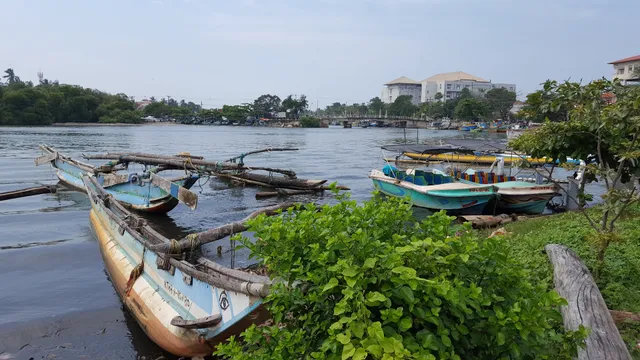
Negombo itself is an ugly town. Beauty is to be found on the beaches and around the lagoons, where colourful fishing boats lie on blue water against a backdrop of palm trees.

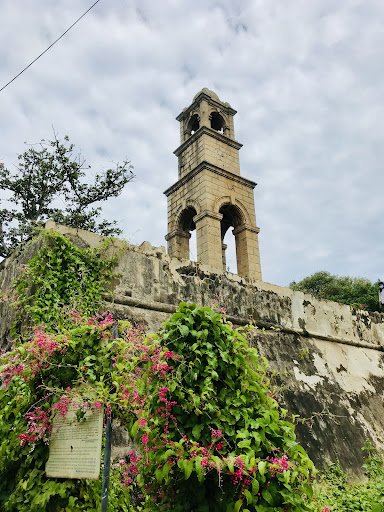
The fort was located on a narrow strip of land between a lagoon and an inlet of the sea. It was surrounded by moats, and the gate was accessed via a drawbridge. Facing it on the landside was a town with the familiar rectangular pattern of streets which was itself protected by earth walls. The area to the west was regularly flooded by the sea, changing the land on which the fort stood into a peninsula. Governor Rumpf described the fort as a ‘fine defensible structure’ when he visited it in 1720, but the painter Heydt, who painted it in 1744, was less enthusiastic and felt that it could have been built ‘somewhat more durably’. Governor Rumpf visited the Negombo Fort to view the improvements that had been recently made to it. The walls had been topped up, new watch towers had been built on the bastions, a big bell tower had been built above the gate, and a wooden palisade had been put up. The Fort in its new splendour is shown in this water colour from 1720.

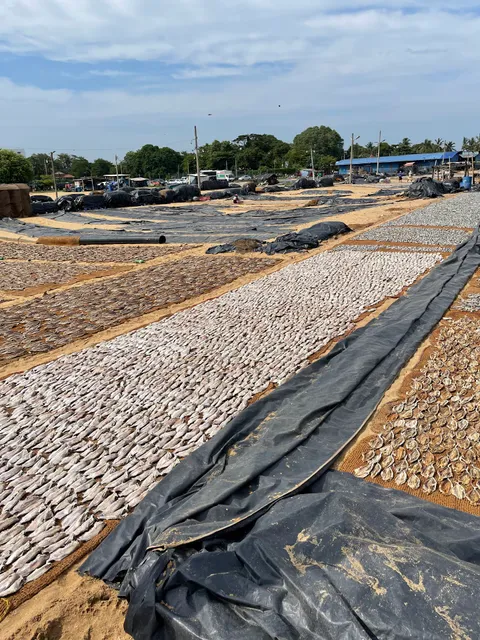
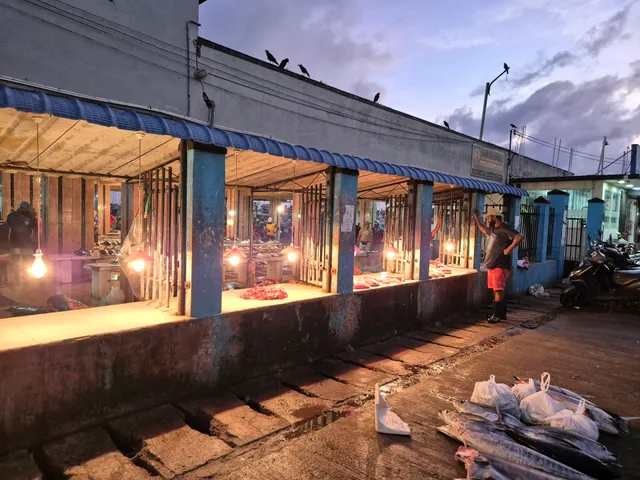
Today only ruins are left. The Fort was demolished in the late nineteenth century by the British, who used its stones to build a prison. The main remnant is an ambivalent mound and part of the eastern wall with the main gate that gives entrance to a tunnel that opens into what was once the courtyard. A clock tower behind it has been added at Queen Victoria’s Jubilee. Nearby on the beach is the fishing market of Negombo. The fish is brought ashore here and sold immediately while the sun beats down. Low coloured boats and fishing nets lie on the beach. Dirty crows and seagulls are everywhere. The old women who sell the fish are very poor and have very...

   Read more
avatar
5.0
8y

Negombo Fort (Sinhalese: මීගමුව බලකොටුව; Tamil: நீர்கொழும்புக் கோட்டை) was a small but important fort in Negombo, approx. 30 km (19 mi) north of Colombo, that was built by the Portuguese to defend Colombo.

1665 Map of Negombo fort In its time the fort at Negombo was probably the next in strategic importance after Colombo, Jaffna and Galle.[1] The original Portuguese fort was a weak structure, which was captured by Dutch forces commanded by Philip Lucasz, in February 1640.[1] The Portuguese made several attempts to retake it before they were successful in December 1640. They then strengthened the fortifications and managed to defend the fort until it was recaptured by the Dutch, commanded by Francois Caron, in January 1644.[1] The original bastions were destroyed by the Dutch cannons during the siege of the fort. The Dutch subsequently rebuilt it in 1672 however not on the usual square pattern, but on a pentagonal one, though it had only four bulwarks, the fifth was never constructed (possibly due to the cost).[2] The fort was located on a narrow strip of land between a lagoon and an inlet of the sea. It was surrounded by a dry moat, and the gate was accessed via a drawbridge.

In February 1796 it was occupied by the British without opposition.[1] In the late 1800s the British authorities decided to demolish the fort and build a prison in its place, constructed from the stones of the fort.[1] Today all that remains is a section of the eastern rampart with mounds at its northern and Southern ends, where the previous bastions existed, and an recessed arched gateway. Above the gateway is a slab of granite, with the date 1678 inscribed, surmounted by a high decorative gable.[1] The site is still used as a prison by the Department of...

   Read more
avatar
5.0
15w

It was captured by Dutch forces commanded by Philip Lucasz, in February 1640.[1] The Portuguese made several attempts to retake it before they were successful in December 1643. They then strengthened the fortifications and managed to defend the fort until it was recaptured by the Dutch under the command of François Caron, in January 1644.

The original bastions were destroyed by the Dutch cannons during the siege of the fort. The Dutch subsequently rebuilt it in 1672 however not on the usual square pattern, but on a pentagonal one, though it had only four bulwarks, the fifth was never constructed (possibly due to the cost).[3] The fort was located on a narrow strip of land between a lagoon and an inlet of the sea. It was surrounded by a dry moat, and the gate was accessed via a drawbridge.

In February 1796 it was occupied by the British without opposition.[1] In the late 1800s the British authorities decided to demolish the fort and build a prison in its place, constructed from the stones of the fort.[1] Today all that remains is a section of the eastern rampart with mounds at its northern and Southern ends, where the previous bastions existed, and a recessed arched gateway. Above the gateway is a slab of granite, with the date 1678 inscribed, surmounted by a high decorative gable.[1] The site is still used as a prison by the...

   Read more
Page 1 of 7
Previous
Next