As I love nature and hiking through unkempt wilderness, it was a no-brainer to visit Storra Mosse. We went on a Saturday in early August during the middle of the day; in hindsight, that was a mistake.
Arriving by car, we found the parking lot almost completely full. After very careful manoeuvring, we eventually squeezed our car in without hitting anything too expensive, and set off on the longest route, which takes you around the lake.
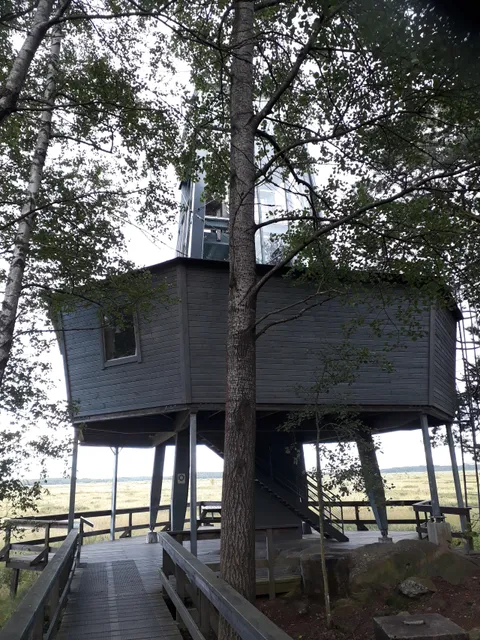
Well, that's the theory anyway. During our three+ hour hike, we maybe saw the lake for five minutes in total. There are lookout towers that offer a great view, but you'd either have to wait for the dozen or so others eager to ascend, or stand shoulder to shoulder with all the other hopeful viewers.
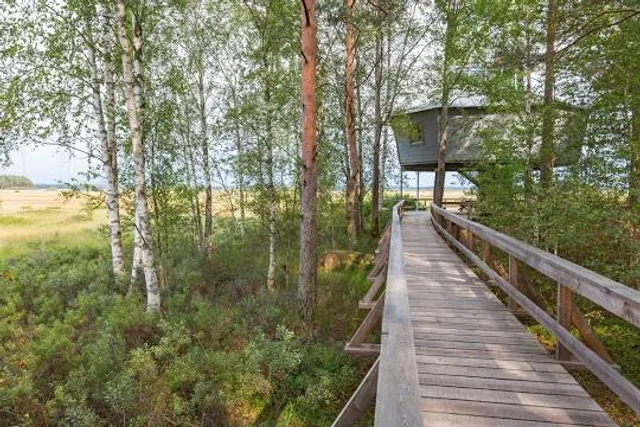
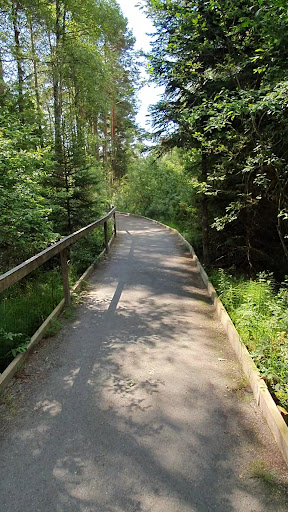
Which brings me to another issue: the park is far too popular for its own good, which means you are walking in a long procession, forced to either overtake the stragglers on narrow rickity boardwalks, or stomp through the marshes to get past, if you don't fancy going at a snail's pace.
Of course, with so many people around, there is absolutely no sign of any wild animals, except for a few scattered birds and the cows near the midway point.
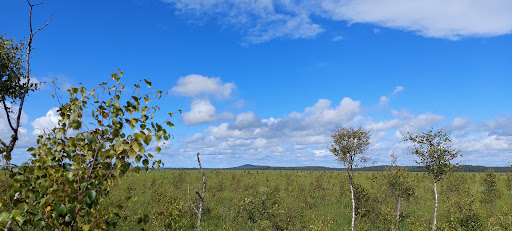
Now, this would of course all be well worth it for some unique views of breathtaking nature. So it's a shame you don't really get any of those. It's marshland. It's nice, but once you've looked at it for ten minutes or so, you've pretty much seen all the variation you can expect for the rest of the hike. The hills near the midway point are a neat feature in the background, but honestly it felt very same-y throughout.
I'm sure that a trained botanist would have a field-day here, and some of the signs really do try to point out the more interesting plants, but really it's a lot of moss and lichen and even in early August, when much of it should be in bloom, it's fairly unimpressive.
All in all, I would strongly recommend against taking the long way round. Walk towards the nearest lookout tower and back and you've seen it all, and saved yourself two hours of waiting...
Read moreI recently had the pleasure of visiting Greater Mosse National Park, and it was a truly memorable experience. This national park is a haven for nature lovers and outdoor enthusiasts alike.
From the moment I arrived, I was captivated by the park's stunning natural beauty. The vast wetlands, diverse flora, and serene landscapes offer a peaceful escape from the hustle and bustle of daily life. The network of well-maintained trails provides an excellent opportunity to explore the park's unique ecosystems. I particularly enjoyed the boardwalks that meander through the bogs and marshes, allowing for close-up views of the fascinating plant and animal life.
Birdwatching here is a delight, with numerous bird species to spot. I was fortunate to see several rare birds, which made the visit even more special. The observation towers strategically placed throughout the park offer fantastic vantage points for taking in the expansive vistas and watching wildlife.
The visitor center is very informative, providing detailed information about the park's history, ecology, and the best routes to take for various interests and fitness levels. The staff were friendly and eager to share their knowledge, enhancing the overall experience.
Greater Mosse National Park is impeccably preserved, reflecting Sweden’s commitment to conservation. The tranquility and natural beauty of the park make it an ideal destination for anyone looking to reconnect with nature. Whether you're hiking, birdwatching, or simply enjoying the peaceful scenery, this park offers something for everyone. I highly recommend a visit to this stunning...
Read moreGeografiskt läge Store Mosse nationalpark ligger i Småland och är Sveriges största till stora delar orörda högmosseområde söder om Lappland. Det finns ett par naturreservat i omedelbar anslutning till nationalparken, Brokullen och Långö Mosse vilket innebär att det skyddade området är nära 8 000 hektar.
Väg 151 mellan Värnamo och Gnosjö i Jönköpings län, skär rakt igenom nationalparken. Största delen av Store Mosse är högmosse, men här finns också skog, främst tallmoskog och sumpskog samt kärr. Vissa delar har även inslag av grov granskog.
Värdefull våtmark Genom beslut av regeringen den 28 juni 1974 har Kävsjön - Store Mosseområdet utpekats som internationell värdefull våtmark enligt våtmarks-konventionen (Ramsar). Området på den så kallade Ramsar-listan omfattar nästan hela nationalparken och har en areal av 7 580 hektar.
Skälet till att ge området denna status är huvudsakligen de omfattande mosse- och kärrområdena samt dess betydelse som häcknings- och rastplats för våtmarksfåglar. I södra delen av nationalparken finns Björnekullakärret som är ett extremrikkärr med orkidéer i kontrast till högmossens sura miljö.
Internationella utmärkelser Store Mosse nationalpark erhöll utmärkelsen "European diploma" Kategori A av Europarådets Ministerkommitté 1988, vilket innebär att kommittén övervakar förvaltningen av området. Revision av Diploma görs vart femte år. Nationalparken ingår också i Natura 2000, EU:s nätverk av skyddsvärda naturtyper.
Förvaltning och skötsel Länsstyrelsen i Jönköpings län är förvaltare av Store Mosse nationalpark och har även i uppdrag att förvalta och driva naturum Store Mosse.
Förvaltningen har fem anställda som arbetar med att sköta om nationalparken, informera och guida besökare och driva naturum. Det finns en skötselplan för nationalparken som bestämmer vilka skötselåtgärder som man ska arbeta med.
Länsstyrelsen får varje år pengar från Naturvårdsverket för detta arbete. Den årliga driftsbudgeten för nationalparken och naturum är på ungefär 3,6 miljoner kronor.
Skyddad fågelsjö Kävsjön mitt i nationalparken är en känd fågelsjö och skyddades som tillfälligt naturreservat 1965. Det skyddet lade grunden till det som blev nationalpark 1982. Vid Kävsjön ligger huvudentrén till nationalparken med naturum, fågeltorn, grillplatser och anpassade leder. Från naturum har man utsikt över gungflyet intill Kävsjön.
Kulturmark Det finns också kulturmarker insprängda i myrkomplexet. Svänö i norra delen av parken, och Lövö i den södra delen. Det är två gamla gårdar som var bebodda fram till 1950-talet. Husen används numera som boende för våra gäster.
Torvgravar vittnar om exploateringen av torv under första halvan av 1900-talet. En del stora områden har återsällts till högmosse igen i EU projektet Ad(d)mire, men en del behålls som referensområde och för att visa och behålla...
Read more