Abisko is situated in the Swedish province of Lapland near the Norwegian border (distance approx. 37 km (23 mi) by railway), and belongs to Kiruna Municipality, Sweden's northernmost and largest municipality. It begins at the shores of Torneträsk, one of Sweden's largest lakes where the village of Abisko is located.
The park was proposed and established in 1909, the same year Sweden's first laws on nature conservation were created, by a group of prominent Swedish scientists, including the well-known geologist Fredrik Svenonius.
The purpose of the Abisko National Park was to "preserve an area with northern Nordic fell nature in its original condition and as a reminiscence for scientific research". The region has proved to be of much scientific interest, as is shown by the Abisko Scientific Research Station which exists to study the area. Furthermore, the national park was intended to be a prominent tourist attraction.
Abisko is also home to the Abisko Scientific Research Station, first established in 1903 approximately 31 km west of Abisko in Vassijaure. After a fire in 1910 a new station was built in its present location in Abisko in 1912 and opening in 1913. The research station was incorporated within the Royal Swedish Academy of Sciences in 1935. It is used primarily for biological, climate, ecological, environmental, and geological research and contains on-site laboratories as well as off-site field research stations.
There are many species of birds in the park.
Of the mammals, smaller ones like the marten, stoat, squirrel, the fell lemming and similar are common parts of the fauna. Of larger animals, the moose and reindeer are common, and moose droppings and tracks are found; however, wolverines, Arctic foxes, lynx and bears are only seen...
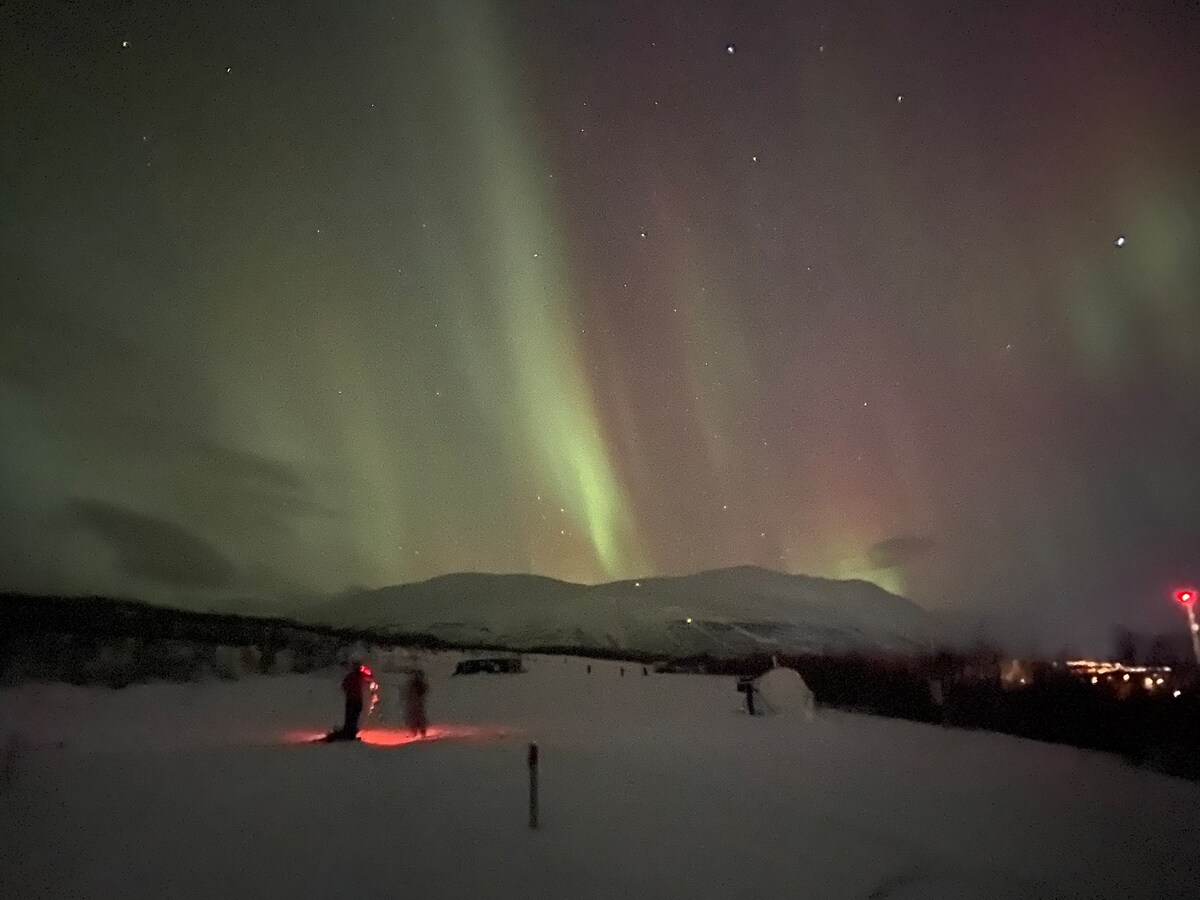
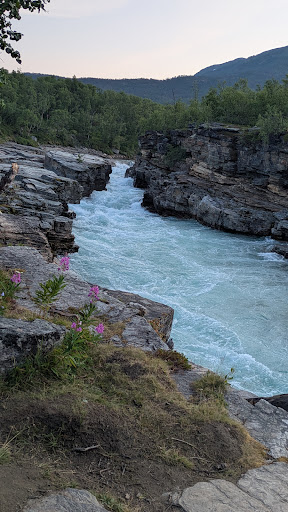
Read moreHere is some information about Abisko National Park: Location: Abisko National Park is located in the Swedish province of Lapland, within Kiruna Municipality, about 195 kilometers north of the Arctic Circle. It is situated near the border with Norway, on the shores of Lake Torneträsk. Landscape: The park features a stunning alpine landscape with a valley surrounded by the Abisko Alps. The Abiskojåkka river flows through the valley and a dramatic canyon. The area is characterized by birch forests, alpine meadows, and permafrost terrain. Key Attractions and Activities: Northern Lights (Aurora Borealis): Abisko is considered one of the best places in the world to view the Northern Lights due to its unique microclimate, which often results in clear skies. The Aurora Sky Station, accessible by a chairlift on Mount Nuolja, provides an excellent vantage point. Midnight Sun: Being well within the Arctic Circle, the park experiences the Midnight Sun during the summer months, a period of continuous daylight. Hiking: The park is the starting point (or end point) for the famous Kungsleden (The King's Trail), a 440-kilometer hiking trail that traverses the Scandinavian mountain range. There are also many shorter, well-maintained trails for day hikes. Other Activities: Depending on the season, visitors can enjoy a variety of activities including snowshoeing, cross-country skiing, snowmobiling, dog-sledding, and ice fishing. Wildlife: The park's fauna includes animals such as reindeer and moose. Smaller herbivores like lemmings are also present. Predators that may be found in the area include golden eagles, brown bears, polar foxes, lynx, and wolverines, though sightings are not guaranteed. The park is also known for its...
Read moreA very interesting & a 'Must Visit' National Park in Sweden. This place is suitable for explorers & adventurers and even recommended for children. There are many species of birds in the park.
Of the mammals, smaller ones like the marten, stoat, squirrel, the fell lemming and similar are common parts of the fauna. Of larger animals, the moose and reindeer are common, and moose droppings and tracks are found; however, wolverines, Arctic foxes, lynx and bears are only seen sporadically. The national park is known for its cross-country skiing opportunities, snowshoeing, and other winter sports (Mount Nuolja and nearby Björkliden provides backcountry skiing and freeriding opportunities). As its location is 195 km north of the Arctic Circle, summer hikers enjoy the midnight sun, while winter visitors may find the light pollution-free location ideal for viewing the...
Read more