The Church of San Giovanni Battista
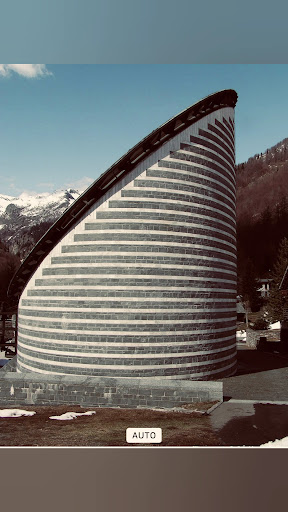
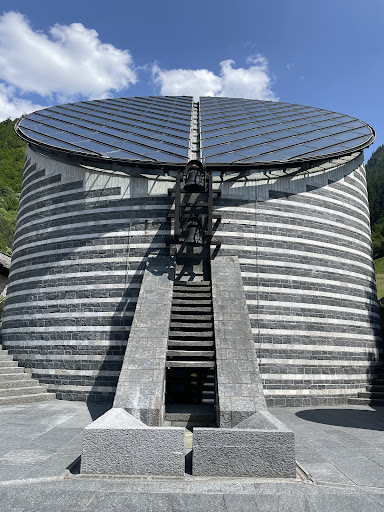
(Mogno ) situated in the charming Swiss village of Mogno, embodies the spirit of transformation and rebirth. Following the devastating loss of its 1636 predecessor to an avalanche in 1986, the church was rebuilt between 1994 and 1996, featuring a striking design by acclaimed architect Mario Botta. By incorporating marble and granite from the surrounding valleys, the church has become an iconic symbol of the community's strength and resilience.
The church's elliptical plan is complemented by a unique, inclined circular glass roof. The building is flanked by two outdoor spaces: a recessed seating area on the west side and a small plaza to the north. In terms of its longitudinal plane, the church's most striking feature is the rampant arch, which serves as a poignant reminder of the ancient church's arch that protected the village of Mogno from the catastrophic avalanche of April 25, 1986. The two bells, which date back to 1746, are the only elements that survived the avalanche. The interior is characterized by a simple, understated aesthetic, with two rows of wooden benches arranged in axis with the altar. The altar itself is made of white marble and consists of two blocks. A statue of the Madonna is situated adjacent to a baptismal font crafted from light marble. The church's construction materials include gneiss from Riveo quarries, white marble from Peccia valley, iron for the roof's supporting structure, and glass for the roof.
The surroundings are distinguished by their beauty and serenity, recreating the ambiance of a 16th-century community, punctuated by the renowned Swiss architect Mario Botta's innovative, stripped-down redesign of the church of St. John the Baptist, augmented by outdoor sculptures created by the acclaimed Mexican artist José Davila, thereby establishing a connection between the remnants of this hyper-local space and the remnants of a colonial era.
As part of an architectural study tour in Europe, we visited Chiesa di San Giovanni Battista (Mogno) on a sunny morning. Despite being unable to park in the village, we enjoyed a brief, pleasant stroll in a peaceful atmosphere. The combination of crisp air, a gentle warm breeze, and birds' songs created a captivating experience.
The modern, dome-shaped church, standing alone in a peaceful village, is an unmistakable landmark. Its modern design surprisingly complements the village's landscape. Upon entering the church, we were astounded by its interior. Austerity and geometry that counterbalance the primordial power of the surrounding mountains and forest. Despite its modest size, the clever design seamlessly merges light, shape, and structure.
As we stepped into the small church, we were captivated by the stunning interplay of light, shape, and form. Seated on the small benches, we felt invigorated by the bold merge of modern and contemporary design, which embodied the spirit of innovation...
Read more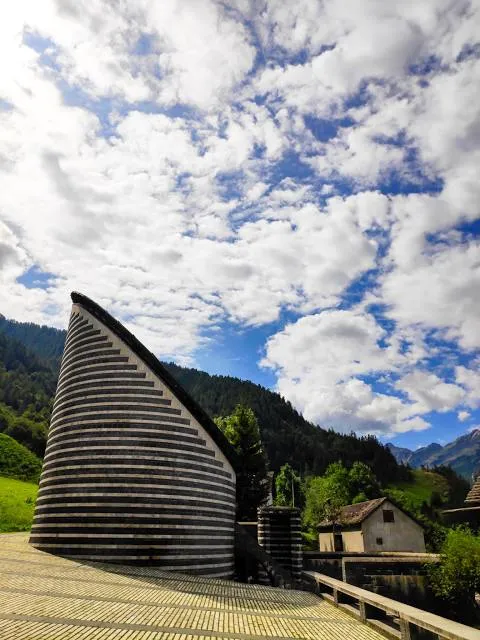
 Learn more insights from Wanderboat AI.