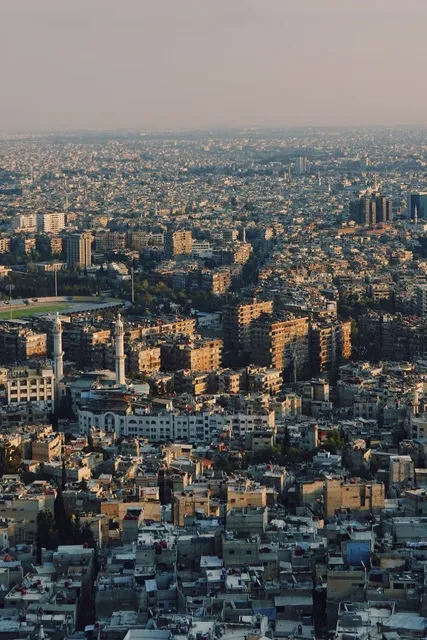
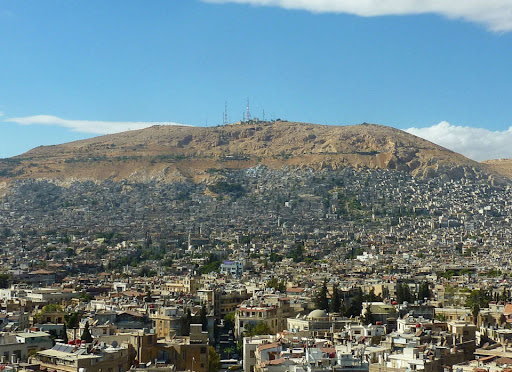
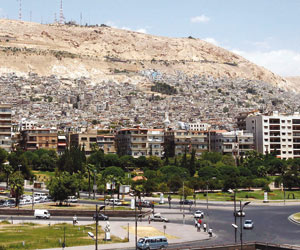
Mount Qasioun (Arabic: جَبَلٌ قَاسِيُونَ, transliterated as Jabal Qāsiyūn) is a mountain overlooking the city of Damascus, Syria. It has a range of restaurants, from which the whole city can be viewed. As the city has expanded over the years, some districts have been established on the foot of the mountain. Its highest point is 1,151 metres (3,776 ft). The mountain has been heavily entrenched with Syrian government forces since the start of the Syrian Civil War, as it is a strategic site in the battle for the outskirts of Damascus.3
The mountain is also host to an endemic species of iris, Iris damascena, which can be found on the steep eastern slopes, at an altitude of 1,200 m (3,900 ft) above sea level.5] The Syrian government has not given the species any protected status. Its only benefiting factor was that part of the habitat of the species lies within a military area near the 'Qassioun Republican Guards Military Base' and other military facilities, which prevents civilians from accessing the area.[6] The base and steepness of the habitat also prevents construction or development, but it is still classified as Critically endangered On the slopes of Jabal Qasiun is a cave steeped in legend. It is said to have been inhabited at one point by the first human-being, Adam; and there are various stories told about Ibrāhīm (Abraham), and 'Īsā (Jesus) also having prayed in it. It is mentioned however in Medieval Arab history books as having been the place where Qābīl (Cain) killed Hābīl (Abel).[9 It was known for hundreds of years as a place where prayers were immediately accepted, and especially in times of drought rulers of Damascus would climb to the cave and pray for rain. Because of the murder that took place there, claimed to be the first committed, it is called Maghārat al-Dam (the Cave of Blood).[11] According to Sunni Muslims, Mount Qasioun is the site of the miḥrābs (prayer niches) of the 40 arch-saints, known as the Abdāl, who are said to pray the night vigil prayers every night. A small mosque has been built over the Cave of Blood containing these miḥrābs.
Further down the mountain from the 'Cave of Blood', there was another cave known as Maghārat al-Jūˁ (the Cave of Hunger). Stories about this cave are somewhat confused. Some say that forty saints died there of hunger;[who?] al-Harawī, however, who lived in the 13th century, writes that it is said that forty prophets died there of hunger.[11] At present, the cave has been concealed by surrounding houses, but that spot is called al-Juyūˁīyah (Roughly 'the Place of the Hungry').
On another flank of the same mountain is yet another cave, which has come down in local legend as being the cave of the Seven Sleepers, mentioned in early Christian sources, as well as in the Quran,[12] where they are known as the Aṣḥāb al-Kahf (Companions of the Cave). This is rather dubious, however, and it is only one of many caves in this part of the world that share the claim. A madrassah has been built over the cave, but pilgrims are still...
Read moreجبل قَاسيون بفتح السين؛ هو الجبل المطل على العاصمة دمشق، وتحيط به هذه المدينة كما يحيط السوار بمعصم اليد، ويحتوي على العديد من المغارات والكهوف ويعود ذلك لطبيعته الصخرية، وكان أول من سكنه المقادسة القادمون من القدس؛ هرباً من بطش الفرنج . يُعتبَرُ قاسيون في الربوة والصالحية مصيفاً للملوك والأمراءوخلفاء بني أمية والعباس، حيث بنوا فيه القصور والملاعب، وكان المرصد الفلكيّ للمأمون؛ لرصد النجوم والكواكب. موقع جبل قاسيون يقع جبل قاسيون في منطقة الشرق الأوسط، في الجمهوريّة العربيّة السّوريّة الواقعة في القارة الآسيويّة، وهو الجبل المطلّ على العاصمة السورية كحامٍ وحارسٍ للمدينة ، ويُعدّ من الناحية الجغرافيّة امتداداً لسلاسل الجبال السوريّة الغربيّة، ويرتفع عن مستوى سطح البحر ألفاً ومئة وخمسين متراً . أصل التسمية لقد عُرف جبل قاسيون عند العرب بعدّة تسميات؛ حيث عُرف بجبل دمشق، وأيضاً بجبل الشّام، وجبل التين، إضافة لجبل الأنبياء، وقد جاء ذكره في أحد المصادر باسم قَيْسُون وأيضاً قايسون، وفي اللغة الآرامية القديمة؛ قَيْصُون، والتي تعني: نهائي، أو أقصى، أو طرفي، وآخر، إضافة إلى أقصى . هناك عدة روايات عن سبب تسميته بهذا الاسم، فالبعض يفسر كلمة قاسيون من المصدر قساوة، لأنه قسا على الكفار فلم يستطيعوا أن يأخذوا من صخوره لصنع أصنامهم، وأيضاً لأنه قسا بصلابته فلم ينبت فيه العشب والأشجار، كباقي سفوح الجبال، ونجد آخرين يعزون التسمية إلى مغارة الدم أو مغارة الأربعين، حيث سكن سيدنا آدم -عليه السلام- بالقرب من التربة (البدرية)، وفي سفحه قتل قابيل أخاه هابيل، ففتح الجبل ليبتلع قاتل أخيه، وفيه كهف جبريل، حيث جاءت الملائكة تُعزِّي سيدنا آدم -عليه السلام- بابنه هابيل المقتول، حيث إن الله جل جلاله أبقى على أثرالدم في صخوره، ليكون عبرة لبني البشر. قرب الربوة في النيرب سكنت (حَنَّة)؛ أم سيدتنا مريم العذراء عليها السلام، ويحكى أن سيدنا يحيى بن زكريا قد نزل فيها وأمه مدة أربعين عاماً،وفيما بعد أتاها حواريّو عيسى -عليه السلام- وكان عددهم أربعين حوارياً، ويضم المسجد المُقام هناك أربعين محراباً . ويُعتَقَدُ في شرق جبل قاسيون في قرية (برزة) أن سيدنا إبراهيم نزل بها، وتعبيراً عن قدسية وشرف هذا الجبل قيل: "بين بَرْزَة وَأَرْزَة أربعون ألف نبي". فيه العديد من الأديرة ومقامات للأولياء الصالحين؛ كدير مَرّان، وقبر النبي ذي الكفل -عليه السلام-، ومقام النبي يونس -عليه السلام-، وقبر العلاَّمة محيي الدين بن العربي، وفيه احتمى النبي يحيى -عليه السلام- من قوم عاد في الغار الذي تحته، وكذلك النبي إليليا، ويعزى أن السيد المسيح وأمه مريم -عليهما السلام- قد نزلا في الربوة. الأحياء الموجودة في جبل قاسيون من أهم الأحياء الموجودة في جبل قاسيون؛ نجد حيَّ الشهداء، وترجع تسميته نسبة إلى الشهداء الإخوة الثلاثة الذين قتلوا في فتح دمشق، ودفنوا فيه وأقيم لهم مسجداً، وهنالك أيضاً حيّ الصالحية، إضافة إلى حي المهاجرين، كما يوجد فيه حيّ الأكراد في (ركن الدين)، وأيضاً حيّ الشعلان، إضافة إلى عَرْنُوس، ونجد أيضاً الروضة، وأبو رمانة، وهنالك المالكي، والبَاشْكَاتِب، وحي الشيخ محي الدين بن عربي، والمُرابط، وحيّ الحبوبي، إضافة إلى حيّ الشهداء، والجسر الأبيض، وأيضاً جادة العفيف، وحارة شرف. المغاورالموجودة في قاسيون فيه العديد من المغاور الطبيعية والمغاور التي أنشأها الإنسان، وأشهرها هي: مغارة الجوعيَّة: أو(الجوع)، وسبب تسميتها بذلك أنه لجأ إليها أربعون نبيّاً خوفاً من الكفار، ولم يكن معهم سوى رغيف واحد من الخبز، فأخذ كلُّ واحد منهم يؤثر رفيقه عليه، حتى ماتوا من الجوع جميعهم. مغارة الأربعين: أو مغارة آدم ومغارة الدمو، -ذكرنا سابقاً سبب التسمية-. مغارة الشيّاح: فيها قبرالشيخ (محمد الشيّاح). بعض ما قيل في وصف قاسيون تناول جبلَ قاسيون العديدُ من الرحّالة والمؤرّخين، حيث أبدعوا في وصفه، فنجد سبط بن الجوزي يقول فيه بأنّه جبل ترتاح النفس في المقام به، ومن يسكنه لا يستطيب له السكن بغيره، وقال فيه محمد بن طولون الصالحي: "سكن أهل المدينة دمشق هذا الجبل قبل أن يسكنوا دمشق، عاشوا فيه أجيالاً طويلة من الزمن، حتى إذا تكاثروا وتناسلوا وارتقت معارفهم وتجاربهم هبطوا إلى السهل المنبسط أسفله، فبنوا مدينتهم دمشق، ولكن مدينتهم الأولى هي قاسيون ففيه نشأوا أولاً وإليه رجعوا"، أمّا ياقوت الحمويّ فقد ذكره بأنّه جبل...
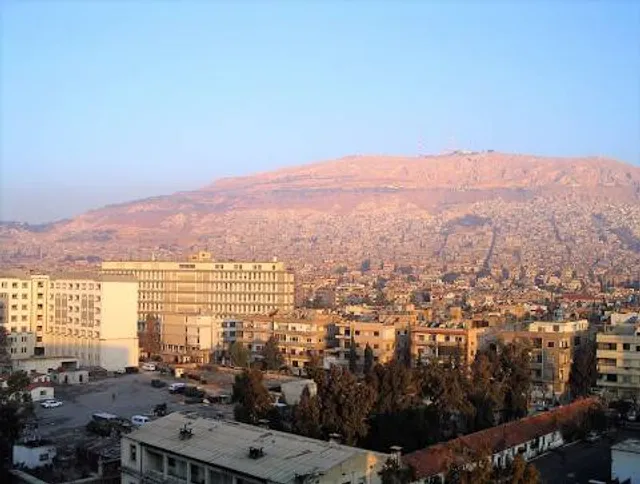
Read moreMount Qasioun (Arabic: جبل قاسيون, transliterated as Jabal Qāsiyūn) is a mountain overlooking the city of Damascus, Syria. It has a range of restaurants, from which the whole city can be viewed. As the city has expanded over the years, some districts have been established on the foot of the mountain. Its highest point is 1,151 metres (3,776 ft).2]
The mountain has been heavily entrenched with Syrian government forces since the start of the Syrian Civil War, as it is a strategic site in the battle for the outskirts of Damascus. [3
The mountain is also host to an endemic species of iris, Iris damascena, which can be found on the steep eastern slopes, at an altitude of 1,200 m (3,900 ft) above sea level.[5] The Syrian government has not given the species any protected status. Its only benefiting factor was that part of the habitat of the species lies within a military area near the 'Qassioun Republican Guards Military Base' and other military facilities, which prevents civilians from accessing the area.[6] The base and steepness of the habitat also prevents construction or development, but it is still classified as Critically...
Read more