HTML SitemapExplore
logo
Find Things to DoFind The Best Restaurants

921 Earthquake Museum of Taiwan — Attraction in Taichung

Name
921 Earthquake Museum of Taiwan
Description
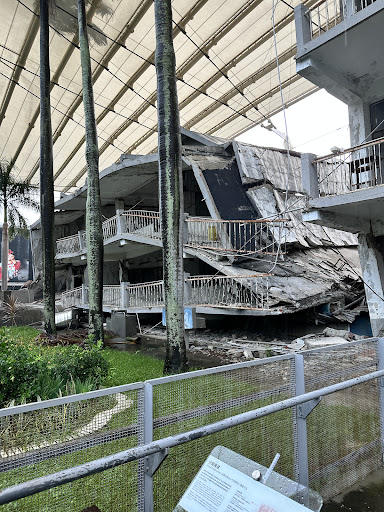
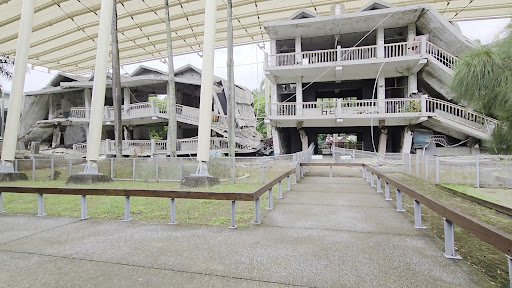
The 921 Earthquake Museum of Taiwan is a national museum in Wufeng District, Taichung, Taiwan. The museum is dedicated to the 7.3 earthquake that struck the center of Taiwan at 01:47:12.6 TST on Tuesday, 21 September 1999.
Nearby attractions
Nearby restaurants
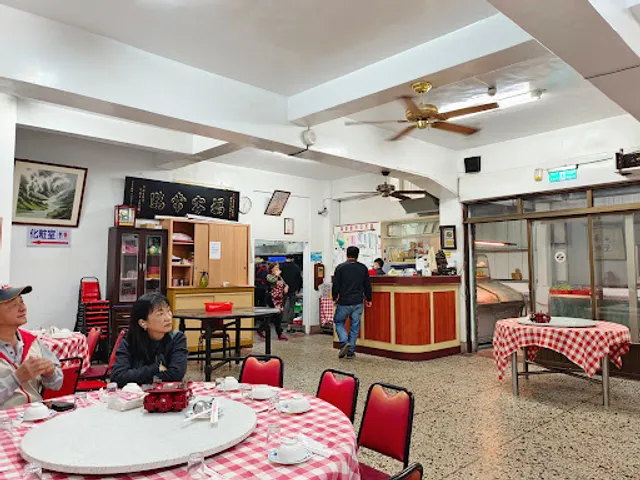
Wan Lixiang Restaurant
No. 480號, Zhongzheng Rd, Wufeng District, Taichung City, Taiwan 413
幸福葷素小吃
No. 614號, Zhongzheng Rd, Wufeng District, Taichung City, Taiwan 413
Nearby hotels
Related posts
Keywords
921 Earthquake Museum of Taiwan tourism.921 Earthquake Museum of Taiwan hotels.921 Earthquake Museum of Taiwan bed and breakfast. flights to 921 Earthquake Museum of Taiwan.921 Earthquake Museum of Taiwan attractions.921 Earthquake Museum of Taiwan restaurants.921 Earthquake Museum of Taiwan travel.921 Earthquake Museum of Taiwan travel guide.921 Earthquake Museum of Taiwan travel blog.921 Earthquake Museum of Taiwan pictures.921 Earthquake Museum of Taiwan photos.921 Earthquake Museum of Taiwan travel tips.921 Earthquake Museum of Taiwan maps.921 Earthquake Museum of Taiwan things to do.
921 Earthquake Museum of Taiwan things to do, attractions, restaurants, events info and trip planning
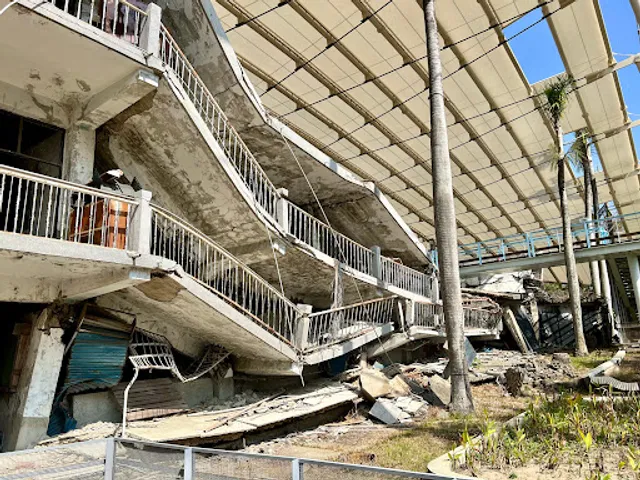
921 Earthquake Museum of Taiwan
TaiwanTaichung921 Earthquake Museum of Taiwan

Basic Info

921 Earthquake Museum of Taiwan

No. 192號, Xinsheng Rd, Wufeng District, Taichung City, Taiwan 413
4.5(4.7K)
Open 24 hours
Save
spot

Ratings & Description

Info

The 921 Earthquake Museum of Taiwan is a national museum in Wufeng District, Taichung, Taiwan. The museum is dedicated to the 7.3 earthquake that struck the center of Taiwan at 01:47:12.6 TST on Tuesday, 21 September 1999.

Cultural
Family friendly
Accessibility
attractions: , restaurants: Wan Lixiang Restaurant, 幸福葷素小吃
logoLearn more insights from Wanderboat AI.
Phone
+886 4 2339 0906
Website
nmns.edu.tw

Plan your stay

hotel
Pet-friendly Hotels in Taichung
Find a cozy hotel nearby and make it a full experience.
hotel
Affordable Hotels in Taichung
Find a cozy hotel nearby and make it a full experience.
hotel
The Coolest Hotels You Haven't Heard Of (Yet)
Find a cozy hotel nearby and make it a full experience.
hotel
Trending Stays Worth the Hype in Taichung
Find a cozy hotel nearby and make it a full experience.

Reviews

Things to do nearby

重新看世界:從找到問題,到為所有人設計 社團講座
Tue, Dec 9 • 11:00 AM
Feng Chia University, No. 100號, Wenhua Rd, Xitun District, Taichung City, Taiwan 407
View details

Nearby restaurants of 921 Earthquake Museum of Taiwan

Wan Lixiang Restaurant

幸福葷素小吃

Wan Lixiang Restaurant

Wan Lixiang Restaurant

4.1

(536)

$$

Click for details
幸福葷素小吃

幸福葷素小吃

4.0

(1)

Click for details
Get the Appoverlay
Get the AppOne tap to find yournext favorite spots!
Wanderboat LogoWanderboat

Your everyday Al companion for getaway ideas

CompanyAbout Us
InformationAI Trip PlannerSitemap
SocialXInstagramTiktokLinkedin
LegalTerms of ServicePrivacy Policy

Get the app

© 2025 Wanderboat. All rights reserved.
logo

Reviews of 921 Earthquake Museum of Taiwan

4.5
(4,678)
avatar
5.0
19w

A well-designed museum that has preserved the collapsed and ruined structures of an old school, in order to showcase the full scale of the devastation of the 21 September 1991 Jiji earthquake. As we live in a country that is not prone to quakes, it was eye-opening to see first-hand how destructive earthquakes can be.

There are lots of signs in Chinese and English to teach you the basics of geology, geography, and earthquake science so it was an extremely educational visit. They also delve into how infrastructure is designed in Taiwan to withstand quakes, and I particularly liked that they had hand-based demonstration stations which are great for engaging kids in explanations.

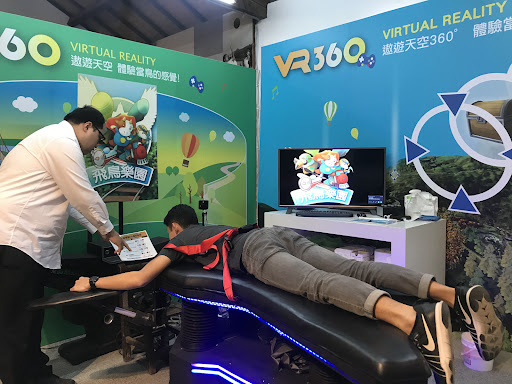
One of the highlights was the earthquake simulation room. This is a separate ticketed-entry area (you have to buy an additional ticket in the museum) and simulations ran every 20 minutes. You step onto a metal platform that raises you up and it shakes violently (about 5 min), while they project 360-degree images and videos around you. I am not sure how realistic the experience is to a real quake, but the footage they showed captured the fear and panic the residents experienced.

If you are interested in learning about earthquakes or geology; or simply want to learn more about this 1991 disaster, this is a must-visit.

However, do be warned there is not much else to do in the area and you will probably have to use a taxi to get there and out as it is quite remote. We paid about 450 NT each way, to get from the museum to our hotel near Taichung station. There is not much traffic so we had to use Uber to call a cab out, though the ticketing desk staff were kind enough to offer to help us...

   Read more
avatar
4.0
5y

This place is very hard to get to if you come by public transportation. I recommend taking the taxi. When I travelled back out, I have to walk a distance before I reach to a bus stop, and taking a bus out to feng chia night market took me about 2 hrs!

The museum is really interesting as much of it is preserved naturally. Hence you could see the very impact of the earthquake. The place I came from (Singapore) does not have natural disaster and this tjis was an eye opener.

They have another room which allows you to “feel” how a magnitude about 7, feels like. The room will start vibrating and etc. We were exciting for this however, it turns out to be rather mundane.

The more interesting items there (in my opinion), is the education and lessons learn after the earthquake. They have experiments to show what kind of buildings could reduce the impact of earthquake. For instance, putting a damper thus reducing the swaying momentum of the building (this is applied to Taipei 101 building).

There are many experiments and those are really memorable, I highly suggest you to try it out!

Unfortunately this place seems pretty old and some of the displays are quite hard to decipher the words.

Given a chance, I will come once and I think that would be enough!

Ticket is needed to enter the museum, and it is very cheap! If I am not wrong, i purchase 2 tickets at...

   Read more
avatar
5.0
50w

Located on a collapsed school site some distance outside of the main city centre. We reached the place at around 1030 in the morning and spent around 3 hours. As with most attractions in Taiwan, entry tickets cost was negligible.

Started off with the zone which explains why, where and how earthquakes occur. A good recap of sec 3 geography: fault lines, fissures types, movement of tectonic plates etc.

Next was the site where one could take a look at the aftermath of the 921 earthquake. The wrecked running track with gaps of a metre or more provided a poignant reminder of the power of nature. Building on a collapsed school site also made it easier for the children to relate to as we passed through the site.

We then moved on to the engineering section where the children spent time constructing various structures and testing if they could withstand an earthquake. Has clear descriptions on how various engineering techniques to help withstand earthquakes.

There was also an earthquake experience show and a zone on earthquake safety tips. This was a novel concept for us as SGP is sheltered country with little exposure to natural disasters. The children spent a bit of time figuring the various actions to take to stay safe and what to pack in the emergency bag when an earthquake occurs.

Overall, a very informative exhibit but it’s...

   Read more
Page 1 of 7
Previous
Next

Posts

KoiKoi
A well-designed museum that has preserved the collapsed and ruined structures of an old school, in order to showcase the full scale of the devastation of the 21 September 1991 Jiji earthquake. As we live in a country that is not prone to quakes, it was eye-opening to see first-hand how destructive earthquakes can be. There are lots of signs in Chinese and English to teach you the basics of geology, geography, and earthquake science so it was an extremely educational visit. They also delve into how infrastructure is designed in Taiwan to withstand quakes, and I particularly liked that they had hand-based demonstration stations which are great for engaging kids in explanations. One of the highlights was the earthquake simulation room. This is a separate ticketed-entry area (you have to buy an additional ticket in the museum) and simulations ran every 20 minutes. You step onto a metal platform that raises you up and it shakes violently (about 5 min), while they project 360-degree images and videos around you. I am not sure how realistic the experience is to a real quake, but the footage they showed captured the fear and panic the residents experienced. If you are interested in learning about earthquakes or geology; or simply want to learn more about this 1991 disaster, this is a must-visit. However, do be warned there is not much else to do in the area and you will probably have to use a taxi to get there and out as it is quite remote. We paid about 450 NT each way, to get from the museum to our hotel near Taichung station. There is not much traffic so we had to use Uber to call a cab out, though the ticketing desk staff were kind enough to offer to help us call a taxi too.
[Personal] Kleeve Hoi[Personal] Kleeve Hoi
This place is very hard to get to if you come by public transportation. I recommend taking the taxi. When I travelled back out, I have to walk a distance before I reach to a bus stop, and taking a bus out to feng chia night market took me about 2 hrs! The museum is really interesting as much of it is preserved naturally. Hence you could see the very impact of the earthquake. The place I came from (Singapore) does not have natural disaster and this tjis was an eye opener. They have another room which allows you to “feel” how a magnitude about 7, feels like. The room will start vibrating and etc. We were exciting for this however, it turns out to be rather mundane. The more interesting items there (in my opinion), is the education and lessons learn after the earthquake. They have experiments to show what kind of buildings could reduce the impact of earthquake. For instance, putting a damper thus reducing the swaying momentum of the building (this is applied to Taipei 101 building). There are many experiments and those are really memorable, I highly suggest you to try it out! Unfortunately this place seems pretty old and some of the displays are quite hard to decipher the words. Given a chance, I will come once and I think that would be enough! Ticket is needed to enter the museum, and it is very cheap! If I am not wrong, i purchase 2 tickets at about 100 NTD.
Joune Seng CheahJoune Seng Cheah
Located on a collapsed school site some distance outside of the main city centre. We reached the place at around 1030 in the morning and spent around 3 hours. As with most attractions in Taiwan, entry tickets cost was negligible. Started off with the zone which explains why, where and how earthquakes occur. A good recap of sec 3 geography: fault lines, fissures types, movement of tectonic plates etc. Next was the site where one could take a look at the aftermath of the 921 earthquake. The wrecked running track with gaps of a metre or more provided a poignant reminder of the power of nature. Building on a collapsed school site also made it easier for the children to relate to as we passed through the site. We then moved on to the engineering section where the children spent time constructing various structures and testing if they could withstand an earthquake. Has clear descriptions on how various engineering techniques to help withstand earthquakes. There was also an earthquake experience show and a zone on earthquake safety tips. This was a novel concept for us as SGP is sheltered country with little exposure to natural disasters. The children spent a bit of time figuring the various actions to take to stay safe and what to pack in the emergency bag when an earthquake occurs. Overall, a very informative exhibit but it’s abit far out.
See more posts
See more posts
hotel
Find your stay

Pet-friendly Hotels in Taichung

Find a cozy hotel nearby and make it a full experience.

A well-designed museum that has preserved the collapsed and ruined structures of an old school, in order to showcase the full scale of the devastation of the 21 September 1991 Jiji earthquake. As we live in a country that is not prone to quakes, it was eye-opening to see first-hand how destructive earthquakes can be. There are lots of signs in Chinese and English to teach you the basics of geology, geography, and earthquake science so it was an extremely educational visit. They also delve into how infrastructure is designed in Taiwan to withstand quakes, and I particularly liked that they had hand-based demonstration stations which are great for engaging kids in explanations. One of the highlights was the earthquake simulation room. This is a separate ticketed-entry area (you have to buy an additional ticket in the museum) and simulations ran every 20 minutes. You step onto a metal platform that raises you up and it shakes violently (about 5 min), while they project 360-degree images and videos around you. I am not sure how realistic the experience is to a real quake, but the footage they showed captured the fear and panic the residents experienced. If you are interested in learning about earthquakes or geology; or simply want to learn more about this 1991 disaster, this is a must-visit. However, do be warned there is not much else to do in the area and you will probably have to use a taxi to get there and out as it is quite remote. We paid about 450 NT each way, to get from the museum to our hotel near Taichung station. There is not much traffic so we had to use Uber to call a cab out, though the ticketing desk staff were kind enough to offer to help us call a taxi too.
Koi

Koi

hotel
Find your stay

Affordable Hotels in Taichung

Find a cozy hotel nearby and make it a full experience.

Get the Appoverlay
Get the AppOne tap to find yournext favorite spots!
This place is very hard to get to if you come by public transportation. I recommend taking the taxi. When I travelled back out, I have to walk a distance before I reach to a bus stop, and taking a bus out to feng chia night market took me about 2 hrs! The museum is really interesting as much of it is preserved naturally. Hence you could see the very impact of the earthquake. The place I came from (Singapore) does not have natural disaster and this tjis was an eye opener. They have another room which allows you to “feel” how a magnitude about 7, feels like. The room will start vibrating and etc. We were exciting for this however, it turns out to be rather mundane. The more interesting items there (in my opinion), is the education and lessons learn after the earthquake. They have experiments to show what kind of buildings could reduce the impact of earthquake. For instance, putting a damper thus reducing the swaying momentum of the building (this is applied to Taipei 101 building). There are many experiments and those are really memorable, I highly suggest you to try it out! Unfortunately this place seems pretty old and some of the displays are quite hard to decipher the words. Given a chance, I will come once and I think that would be enough! Ticket is needed to enter the museum, and it is very cheap! If I am not wrong, i purchase 2 tickets at about 100 NTD.
[Personal] Kleeve Hoi

[Personal] Kleeve Hoi

hotel
Find your stay

The Coolest Hotels You Haven't Heard Of (Yet)

Find a cozy hotel nearby and make it a full experience.

hotel
Find your stay

Trending Stays Worth the Hype in Taichung

Find a cozy hotel nearby and make it a full experience.

Located on a collapsed school site some distance outside of the main city centre. We reached the place at around 1030 in the morning and spent around 3 hours. As with most attractions in Taiwan, entry tickets cost was negligible. Started off with the zone which explains why, where and how earthquakes occur. A good recap of sec 3 geography: fault lines, fissures types, movement of tectonic plates etc. Next was the site where one could take a look at the aftermath of the 921 earthquake. The wrecked running track with gaps of a metre or more provided a poignant reminder of the power of nature. Building on a collapsed school site also made it easier for the children to relate to as we passed through the site. We then moved on to the engineering section where the children spent time constructing various structures and testing if they could withstand an earthquake. Has clear descriptions on how various engineering techniques to help withstand earthquakes. There was also an earthquake experience show and a zone on earthquake safety tips. This was a novel concept for us as SGP is sheltered country with little exposure to natural disasters. The children spent a bit of time figuring the various actions to take to stay safe and what to pack in the emergency bag when an earthquake occurs. Overall, a very informative exhibit but it’s abit far out.
Joune Seng Cheah

Joune Seng Cheah

See more posts
See more posts