HTML SitemapExplore

Tajik National Park — Attraction in Gorno-Badakhshan Autonomous Region

Name
Tajik National Park
Description
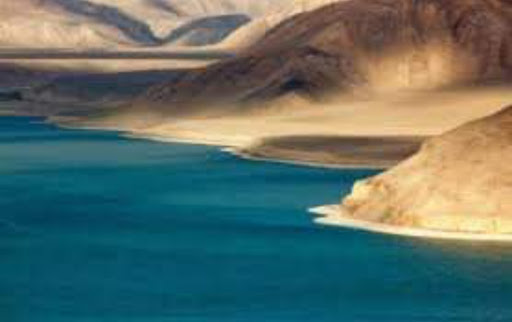
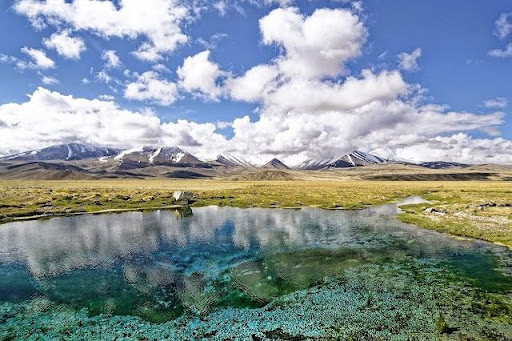
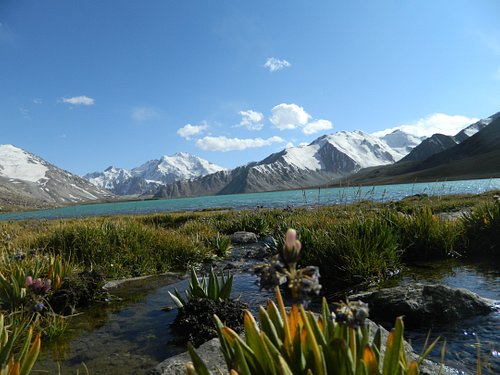
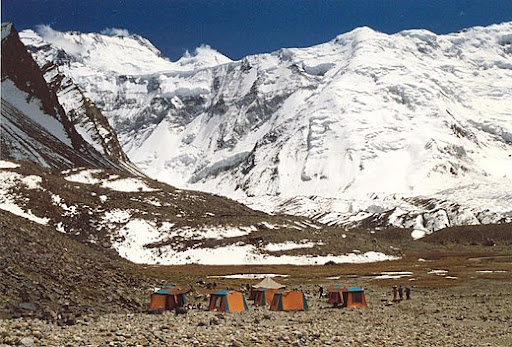
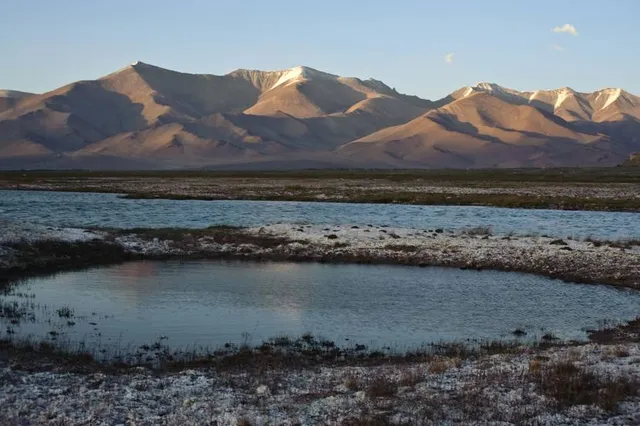
Pamir (aka Tajik) National Park encompasses the high peaks, plateaux and river gorges of the Pamir Mountains of eastern Tajikistan. Unique natural features include Sarez Lake, formed after an earthquake, Karakul Lake in a meteor crater, and massive Fedchenko Glacier. Accessed via the mountain towns of Murghab and Khorugh, the sparsely populated park is home to rare wildlife including snow leopards and Siberian ibex.
Nearby attractions
Nearby restaurants
Nearby local services
Nearby hotels
Related posts
Keywords
Tajik National Park tourism.Tajik National Park hotels.Tajik National Park bed and breakfast. flights to Tajik National Park.Tajik National Park attractions.Tajik National Park restaurants.Tajik National Park local services.Tajik National Park travel.Tajik National Park travel guide.Tajik National Park travel blog.Tajik National Park pictures.Tajik National Park photos.Tajik National Park travel tips.Tajik National Park maps.Tajik National Park things to do.
Tajik National Park things to do, attractions, restaurants, events info and trip planning
Tajik National Park
TajikistanGorno-Badakhshan Autonomous RegionTajik National Park

Basic Info

Tajik National Park

7W4Q+FR4, Нов, Tajikistan
4.3(185)
Open until 12:00 AM
Save
spot

Ratings & Description

Info

Pamir (aka Tajik) National Park encompasses the high peaks, plateaux and river gorges of the Pamir Mountains of eastern Tajikistan. Unique natural features include Sarez Lake, formed after an earthquake, Karakul Lake in a meteor crater, and massive Fedchenko Glacier. Accessed via the mountain towns of Murghab and Khorugh, the sparsely populated park is home to rare wildlife including snow leopards and Siberian ibex.

Outdoor
Adventure
Scenic
Off the beaten path
attractions: , restaurants: , local businesses:
logoLearn more insights from Wanderboat AI.
Open hoursSee all hours
WedOpen 24 hoursOpen

Plan your stay

hotel
Pet-friendly Hotels in Gorno-Badakhshan Autonomous Region
Find a cozy hotel nearby and make it a full experience.
hotel
Affordable Hotels in Gorno-Badakhshan Autonomous Region
Find a cozy hotel nearby and make it a full experience.
hotel
The Coolest Hotels You Haven't Heard Of (Yet)
Find a cozy hotel nearby and make it a full experience.
hotel
Trending Stays Worth the Hype in Gorno-Badakhshan Autonomous Region
Find a cozy hotel nearby and make it a full experience.

Reviews

Get the Appoverlay
Get the AppOne tap to find yournext favorite spots!
Wanderboat LogoWanderboat

Your everyday Al companion for getaway ideas

CompanyAbout Us
InformationAI Trip PlannerSitemap
SocialXInstagramTiktokLinkedin
LegalTerms of ServicePrivacy Policy

Get the app

© 2025 Wanderboat. All rights reserved.

Reviews of Tajik National Park

4.3
(185)
avatar
4.0
5y

The region was ruled over by the mirs of Badakhshan. Sultan Muhammad of Badakhshan was the last of a series of kings who traced their descent to Alexander the Great. He was killed by Abu Sa'id Mirza the ruler of Timurid Empire and took possession of Badakhshan, which after his death fell to his son, Sultan Mahmud Mirza, who had three sons, Baysinghar Mirza, Ali Mirza and Khan Mirza. When Mahmud died, Amir Khusroe Khan, one of his nobles, blinded Baysinghar Mirza, killed the second prince, and ruled as usurper. He submitted to Mughal Emperor Babur in 1504. When Babur took Kandahar in 1506, from Shah Beg Arghun, he sent Khan Mirza as governor to Badakhshan. A son was born to Khan Mirza by the name of Mirza Sulaiman in 1514.

After the death of Khan Mirza, Badakhshan was governed for Babur by Prince Humayun, Sultan Wais Khan (Mirza Sulaiman's father-in-law), Prince Hindal, and lastly, by Mirza Sulaiman, who held Badakhshan till October 8, 1541, when he had to surrender himself and his son, Mirza Ibrahim, to Prince Kamran Mirza. They were released by Emperor Humayun in 1545, and took again possession of Badakhshan. When Humayun had taken Kabul, he made war upon and defeated Mirza Sulaiman who once in possession of his country, had refused to submit; but when the return of Prince Kamran Mirza from Sindh obliged Emperor Humayun to go to Kabul, he reinstated Mirza Sulaiman, who held Badakhshan till 1575. Bent on making conquests, he invaded Balkh in 1560, but had to return. His son, Mirza Ibrahim, was killed in battle.

When Akbar became Mughal Emperor, his stepbrother Mirza Muhammad Hakim's mother had been killed by Shah Abul Ma'ali. Mirza Sulaiman went to Kabul, and had Abul Ma'ali hanged; he then had his own daughter married to Mirza Muhammad Hakim, and appointed Umed Ali, a Badakhshan noble, as Mirza Muhammad Hakim's agent in 1563. But Mirza Muhammad Hakim did not go on well with Mirza Sulaiman, who returned next year to Kabul with hostile intentions; but Mirza Muhammad Hakim fled and asked Akbar for assistance, so that Mirza Sulaiman, though he had taken Jalalabad, had to return to Badakhshan. He returned to Kabul in 1566, when Akbar's troops had left that country, but retreated on being promised tribute.

Mirza Sulaiman's wife was Khurram Begum, of the Kipchak tribe. She was clever, and had her husband so much in her power that he did nothing without her advice. Her enemy was Muhtarim Khanum, the widow of Prince Kamran Mirza. Mirza Sulaiman wanted to marry her; but Khurram Begum got her married, against her will, to Mirza Ibrahim, by whom she had a son, Mirza Shahrukh. When Mirza Ibrahim fell in the war with Balkh, Khurram Begum wanted to send the Khanum to her father, Shah Muhammad of Kashgar; but she refused to go. As soon as Shahrukh had grown up, his mother and some Badakhshi nobles excited him to rebel against his grandfather Mirza Sulaiman. This he did, alternately rebelling and again making peace. Khurram Begum then died. Shahrukh took away those parts of Badakhshan which his father had held, and found so many adherents, that Mirza Sulaiman, pretending to go on a pilgrimage to Makkah, left Badakhshan for Kabul, and crossing the Indus went to India in 1575 CE. Khan Jahan, governor of the Punjab, received orders from Emperor Akbar to invade Badakhshan, but was suddenly ordered to go to Bengal instead, as Mun'im Khan had died and Mirza Sulaiman did not care for the governorship of Bengal, which Akbar had offered him.

Mirza Sulaiman then went to Ismail II of Safavid Iran. When the death of that monarch deprived him of the assistance which he had just received, he went to Muzaffar Husain Mirza at Kandahar, and then to Mirza Muhammad Hakim at Kabul. Not succeeding in raising disturbances in Kabul, he made for the frontier of Badakhshan, and luckily finding some adherents, he managed to get from his grandson the territory between Taiqan and the Hindu Kush. Soon after Muhtarim Khanum died. Being again pressed by Shahrukh, Mirza Sulaiman applied for help to Abdullah Khan Uzbek, king of Turan, who had long...

   Read more

avatar
5.0
3y

Tajik National Park (Mountains of the Pamirs) Tajikistan National Park covers more than 2.5 million hectares in the east of the country, at the centre of the so-called “Pamir Knot”, a meeting point of the highest mountain ranges on the Eurasian continent. It consists of high plateaux in the east and, to the west, rugged peaks, some of them over 7,000 meters high, and features extreme seasonal variations of temperature. The longest valley glacier outside the Polar region is located among the 1,085 glaciers inventoried in the site, which also numbers 170 rivers and more than 400 lakes. Rich flora species of both the south-western and central Asian floristic regions grow in the Park which shelters nationally rare and threatened birds and mammals (Marco Polo Argali sheep, Snow Leopards and Siberian Ibex and more). Subject to frequent strong earthquakes, the Park is sparsely inhabited, and virtually unaffected by agriculture and permanent human settlements. It offers a unique opportunity for the study of plate tectonics and subduction phenomena. Tajik National Park (2,611,674 ha in area) encompasses almost the entire Pamir Mountains, the third highest mountain ecosystem in the world after the Himalaya and Karakorum Mountains. The Pamir Mountains lie at the centre of the ‘Pamir Knot’, the term used by geographers to describe the tangle of the highest mountain ranges on the Eurasian continent. Huge tectonic forces stemming from the collision of the Indian-Australian plate with the Eurasian Plate have progressively thrown up the Himalaya, Karakoram, Hindu Kush, Kunlun and Tien Shan – all radiating out from the Pamir Mountains. Along with the Karakoram Mountains, the Pamir region is one of the most tectonically-active locations in the world.

Tajik National Park stands out as a very large protected area, with a stark treeless landscape of exceptional natural beauty. The outstanding scenic values are enhanced by the landform juxtaposition of heavily-glaciated high peaks and high plateaux with an alpine desert character. The property contains a number of superlative natural phenomena, including: Fedchenko Glacier (the longest glacier in the world outside of the Polar Regions); Lake Sarez (a very high, deep lake impounded just over a century ago by a severe earthquake which generated a huge landslide forming the Uzoi Dam, the highest natural dam in the world); and Karakul Lake, likely to be the world’s highest large lake of meteoric origin. Tajik National Park is one of the largest high mountain protected areas in the Palearctic Realm. The Fedchenko Glacier, the largest valley glacier of the Eurasian Continent and the world’s longest outside of the Polar Regions, is unique and a spectacular example at the global level. The visual combination of some of the deepest gorges in the world, surrounded by rugged glaciated peaks, as well as the alpine desert and lakes of the Pamir high plateaux adds up to an alpine wilderness of exceptional natural beauty. Lake Sarez and Lake Karakul are superlative natural phenomena. Lake Sarez, impounded behind the highest natural dam in the world, is of great geomorphic interest. Lake Karakul is likely to be the highest large lake of meteoric origin. The Pamir Mountains are a major centre of glaciation on the Eurasian continent and Tajik National Park illustrates within one protected area an outstanding juxtaposition of many high mountains, valley glaciers, and deep river gorges alongside the cold continental desert environment of the high Pamir Plateau landforms. An outstanding landform feature of the property’s geologically dynamic terrain is...

   Read more
avatar
5.0
4y

Badakhshan is primarily bordered by Gorno-Badakhshan Autonomous Province and Khatlon Province in Tajikistan to the north and east. In the east of the province a long spur called the Wakhan Corridor extends above northern Pakistan's Chitral and Northern Areas to a border with China. The province has a total area of 44,059 square kilometres (17,011 sq mi), most of which is occupied by the Hindu Kush and Pamir mountain ranges.

Badakhshan was a stopover on the ancient Silk Road trading path and China has shown great interest in the province since the fall of the Taliban, helping to reconstruct roads and infrastructure.

According to the World Wildlife Fund,[citation needed] Badakhshan contains temperate grasslands, savannas, and shrublands, as well as Gissaro-Alai open woodlands along the Pamir River. Common plants found in these areas include pistachio, almond, walnut, apple, juniper, and sagebrush.

Montane grasslands and shrublands are existent in the province, with the Hindu Kush alpine meadow in the high mountains in the northern and southwestern regions.

The Wakhan corridor contains two montane grassland and shrubland regions: the Karakoram-West Tibetan Plateau alpine steppe and in the Pamir Mountains and Kuh-e Safed Khers in Darwaz region.

South of Fayzabad the terrain becomes dominated by deserts and xeric shrublands. Common vegetation includes thorny bushes, zizyphus, acacia, and Amygdatus. Paropamisus xeric woodlands can be found in the province's northwestern and central areas. Common vegetation includes almond, pistachio, willows, and sea-buckthorn.

History✳ Further information: History of Afghanistan The Achaemenid Empire conquered the area in the 1st millennium BC. Badakhshan etymologically derives from the Middle Persian word badaxš, an official title. The suffix of the name, -ān, means the region belonged to someone with the title badaxš.[3]

The territory was ruled by the Uzbek Khanate of Bukhara between the early 16th century and the mid-18th century. It was given to Ahmad Shah Durrani by Murad Beg of Bukhara after a treaty of friendship was reached in or about 1750 and became part of the Durrani Empire. It was ruled by the Durranis followed by the Barakzai dynasty, and was untouched by the British during the three Anglo-Afghan Wars that were fought in the 19th and 20th centuries. It remained peaceful for about 100 years until the 1980s Soviet–Afghan War at which point the Mujahideen began a rebellion against the central Afghan government.

During the 1990s, much of the area was controlled by forces loyal to Burhanuddin Rabbani and Ahmad Shah Massoud,[4] who were de facto the national government until 1996. Badakhshan was the only province that the Taliban did not conquer during their rule from 1996 to 2001. However, during the course of the wars a non-Taliban Islamic emirate was established in Badakhshan by Mawlawi Shariqi, paralleling the Islamic Revolutionary State of Afghanistan in neighboring Nuristan. Rabbani, a Badakhshan native, and Massoud, were the last remnants of the anti-Taliban Northern Alliance during the peak of Taliban control in 2001.

Badakhshan was thus one of the few provinces of the country that witnessed little insurgency in the Afghan wars – however during the 2010s Taliban insurgents managed to attack and take control of several districts in the province.[5]

On 26 October 2015, the 7.5 Mw Hindu Kush earthquake shook northern Afghanistan with a maximum Mercalli intensity of VIII (Severe). This earthquake destroyed almost 30,000 homes, left several hundred dead, and more than...

   Read more
Page 1 of 7
Previous
Next

Posts

MEHRAJ-U-DIN ASHAQMEHRAJ-U-DIN ASHAQ
Tajik National Park (Mountains of the Pamirs) Tajikistan National Park covers more than 2.5 million hectares in the east of the country, at the centre of the so-called “Pamir Knot”, a meeting point of the highest mountain ranges on the Eurasian continent. It consists of high plateaux in the east and, to the west, rugged peaks, some of them over 7,000 meters high, and features extreme seasonal variations of temperature. The longest valley glacier outside the Polar region is located among the 1,085 glaciers inventoried in the site, which also numbers 170 rivers and more than 400 lakes. Rich flora species of both the south-western and central Asian floristic regions grow in the Park which shelters nationally rare and threatened birds and mammals (Marco Polo Argali sheep, Snow Leopards and Siberian Ibex and more). Subject to frequent strong earthquakes, the Park is sparsely inhabited, and virtually unaffected by agriculture and permanent human settlements. It offers a unique opportunity for the study of plate tectonics and subduction phenomena. Tajik National Park (2,611,674 ha in area) encompasses almost the entire Pamir Mountains, the third highest mountain ecosystem in the world after the Himalaya and Karakorum Mountains. The Pamir Mountains lie at the centre of the ‘Pamir Knot’, the term used by geographers to describe the tangle of the highest mountain ranges on the Eurasian continent. Huge tectonic forces stemming from the collision of the Indian-Australian plate with the Eurasian Plate have progressively thrown up the Himalaya, Karakoram, Hindu Kush, Kunlun and Tien Shan – all radiating out from the Pamir Mountains. Along with the Karakoram Mountains, the Pamir region is one of the most tectonically-active locations in the world. Tajik National Park stands out as a very large protected area, with a stark treeless landscape of exceptional natural beauty. The outstanding scenic values are enhanced by the landform juxtaposition of heavily-glaciated high peaks and high plateaux with an alpine desert character. The property contains a number of superlative natural phenomena, including: Fedchenko Glacier (the longest glacier in the world outside of the Polar Regions); Lake Sarez (a very high, deep lake impounded just over a century ago by a severe earthquake which generated a huge landslide forming the Uzoi Dam, the highest natural dam in the world); and Karakul Lake, likely to be the world’s highest large lake of meteoric origin. Tajik National Park is one of the largest high mountain protected areas in the Palearctic Realm. The Fedchenko Glacier, the largest valley glacier of the Eurasian Continent and the world’s longest outside of the Polar Regions, is unique and a spectacular example at the global level. The visual combination of some of the deepest gorges in the world, surrounded by rugged glaciated peaks, as well as the alpine desert and lakes of the Pamir high plateaux adds up to an alpine wilderness of exceptional natural beauty. Lake Sarez and Lake Karakul are superlative natural phenomena. Lake Sarez, impounded behind the highest natural dam in the world, is of great geomorphic interest. Lake Karakul is likely to be the highest large lake of meteoric origin. The Pamir Mountains are a major centre of glaciation on the Eurasian continent and Tajik National Park illustrates within one protected area an outstanding juxtaposition of many high mountains, valley glaciers, and deep river gorges alongside the cold continental desert environment of the high Pamir Plateau landforms. An outstanding landform feature of the property’s geologically dynamic terrain is Lake Sarez..
Ali HussnainAli Hussnain
My trip to Tajik National Park was truly unforgettable. The Pamir Mountains looked like something out of a dream — snow-capped peaks, crystal-clear lakes, and endless valleys filled with silence and beauty. The Fedchenko Glacier, the largest valley glacier outside the polar regions, left me speechless with its sheer size. Visiting Lake Karakul, formed by a meteor impact, and Lake Sarez, created by an ancient earthquake, felt like stepping back into Earth’s history. Wildlife spotting was another highlight — I was lucky enough to see Marco Polo sheep and rare birds, and just knowing that snow leopards roam these mountains made the experience even more magical. The park’s untouched wilderness gave me a sense of peace and connection with nature that’s hard to describe. Overall, this is not just a place to visit, it’s a life-changing journey. If you love nature, adventure, and breathtaking scenery, Tajik National Park is a ‘once-in-a-lifetime’ destination that I would highly recommend." --- 📌 Quick Facts About Tajik National Park Location & Size: Situated in the Pamir Mountains, covering about 26,000 km² (around 18% of Tajikistan’s territory). UNESCO Status: Declared a World Heritage Site in 2013, Tajikistan’s first natural world heritage site. Natural Wonders: Fedchenko Glacier: ~77 km long, the world’s largest glacier outside the polar regions. Lake Sarez: A natural lake formed by an earthquake, one of the most beautiful high-altitude lakes. Lake Karakul: A giant high-altitude lake, created by a meteor impact. Flora & Fauna: Home to rare animals like snow leopards, Marco Polo sheep, Siberian ibex, and over 160 species of birds.
Alireza HooshmandAlireza Hooshmand
Tajik National Park is a national park and nature reserve in eastern Tajikistan. It was established in 1992 and expanded in 2001 to include parts of the Pamir Mountains. The park covers 26,116.74 square kilometres (10,083.73 sq mi) or a little over 18 percent of Tajikistan's total area. From 1989 to 1992, Anvar J. Buzurukov (as the head of the Protected Areas Department of the Ministry of the Environment) initiated, planned and led (under the international scientific camp "Pamir-90") scientific feasibility studies towards establishing the first national and natural parks in the Tajik Soviet Socialist Republic. An area of 12,000 square kilometres (4,600 sq mi) was designated Tajik National Park by Decision of the Tajikistan government on 20 July 1992. A year later the same team established the first nature reserve in Tajikistan, Shirkent Nature Park. In 2001 the area of Tajik National Park was increased to 26,116.74 square kilometres (10,083.73 sq mi) by the Order of the Government of the Republic of Tajikistan. The national park features a mix of steppe, desert, grassland and alpine regions. It has long cold winters and cool summers, with an average annual rainfall of 12.7 cm. Species known to live in the national park include the brown bear, snow leopard, wolves, markhor, Marco Polo sheep, brown-headed gulls and bar-headed geese.
See more posts
See more posts
hotel
Find your stay

Pet-friendly Hotels in Gorno-Badakhshan Autonomous Region

Find a cozy hotel nearby and make it a full experience.

Tajik National Park (Mountains of the Pamirs) Tajikistan National Park covers more than 2.5 million hectares in the east of the country, at the centre of the so-called “Pamir Knot”, a meeting point of the highest mountain ranges on the Eurasian continent. It consists of high plateaux in the east and, to the west, rugged peaks, some of them over 7,000 meters high, and features extreme seasonal variations of temperature. The longest valley glacier outside the Polar region is located among the 1,085 glaciers inventoried in the site, which also numbers 170 rivers and more than 400 lakes. Rich flora species of both the south-western and central Asian floristic regions grow in the Park which shelters nationally rare and threatened birds and mammals (Marco Polo Argali sheep, Snow Leopards and Siberian Ibex and more). Subject to frequent strong earthquakes, the Park is sparsely inhabited, and virtually unaffected by agriculture and permanent human settlements. It offers a unique opportunity for the study of plate tectonics and subduction phenomena. Tajik National Park (2,611,674 ha in area) encompasses almost the entire Pamir Mountains, the third highest mountain ecosystem in the world after the Himalaya and Karakorum Mountains. The Pamir Mountains lie at the centre of the ‘Pamir Knot’, the term used by geographers to describe the tangle of the highest mountain ranges on the Eurasian continent. Huge tectonic forces stemming from the collision of the Indian-Australian plate with the Eurasian Plate have progressively thrown up the Himalaya, Karakoram, Hindu Kush, Kunlun and Tien Shan – all radiating out from the Pamir Mountains. Along with the Karakoram Mountains, the Pamir region is one of the most tectonically-active locations in the world. Tajik National Park stands out as a very large protected area, with a stark treeless landscape of exceptional natural beauty. The outstanding scenic values are enhanced by the landform juxtaposition of heavily-glaciated high peaks and high plateaux with an alpine desert character. The property contains a number of superlative natural phenomena, including: Fedchenko Glacier (the longest glacier in the world outside of the Polar Regions); Lake Sarez (a very high, deep lake impounded just over a century ago by a severe earthquake which generated a huge landslide forming the Uzoi Dam, the highest natural dam in the world); and Karakul Lake, likely to be the world’s highest large lake of meteoric origin. Tajik National Park is one of the largest high mountain protected areas in the Palearctic Realm. The Fedchenko Glacier, the largest valley glacier of the Eurasian Continent and the world’s longest outside of the Polar Regions, is unique and a spectacular example at the global level. The visual combination of some of the deepest gorges in the world, surrounded by rugged glaciated peaks, as well as the alpine desert and lakes of the Pamir high plateaux adds up to an alpine wilderness of exceptional natural beauty. Lake Sarez and Lake Karakul are superlative natural phenomena. Lake Sarez, impounded behind the highest natural dam in the world, is of great geomorphic interest. Lake Karakul is likely to be the highest large lake of meteoric origin. The Pamir Mountains are a major centre of glaciation on the Eurasian continent and Tajik National Park illustrates within one protected area an outstanding juxtaposition of many high mountains, valley glaciers, and deep river gorges alongside the cold continental desert environment of the high Pamir Plateau landforms. An outstanding landform feature of the property’s geologically dynamic terrain is Lake Sarez..
MEHRAJ-U-DIN ASHAQ

MEHRAJ-U-DIN ASHAQ

hotel
Find your stay

Affordable Hotels in Gorno-Badakhshan Autonomous Region

Find a cozy hotel nearby and make it a full experience.

Get the Appoverlay
Get the AppOne tap to find yournext favorite spots!
My trip to Tajik National Park was truly unforgettable. The Pamir Mountains looked like something out of a dream — snow-capped peaks, crystal-clear lakes, and endless valleys filled with silence and beauty. The Fedchenko Glacier, the largest valley glacier outside the polar regions, left me speechless with its sheer size. Visiting Lake Karakul, formed by a meteor impact, and Lake Sarez, created by an ancient earthquake, felt like stepping back into Earth’s history. Wildlife spotting was another highlight — I was lucky enough to see Marco Polo sheep and rare birds, and just knowing that snow leopards roam these mountains made the experience even more magical. The park’s untouched wilderness gave me a sense of peace and connection with nature that’s hard to describe. Overall, this is not just a place to visit, it’s a life-changing journey. If you love nature, adventure, and breathtaking scenery, Tajik National Park is a ‘once-in-a-lifetime’ destination that I would highly recommend." --- 📌 Quick Facts About Tajik National Park Location & Size: Situated in the Pamir Mountains, covering about 26,000 km² (around 18% of Tajikistan’s territory). UNESCO Status: Declared a World Heritage Site in 2013, Tajikistan’s first natural world heritage site. Natural Wonders: Fedchenko Glacier: ~77 km long, the world’s largest glacier outside the polar regions. Lake Sarez: A natural lake formed by an earthquake, one of the most beautiful high-altitude lakes. Lake Karakul: A giant high-altitude lake, created by a meteor impact. Flora & Fauna: Home to rare animals like snow leopards, Marco Polo sheep, Siberian ibex, and over 160 species of birds.
Ali Hussnain

Ali Hussnain

hotel
Find your stay

The Coolest Hotels You Haven't Heard Of (Yet)

Find a cozy hotel nearby and make it a full experience.

hotel
Find your stay

Trending Stays Worth the Hype in Gorno-Badakhshan Autonomous Region

Find a cozy hotel nearby and make it a full experience.

Tajik National Park is a national park and nature reserve in eastern Tajikistan. It was established in 1992 and expanded in 2001 to include parts of the Pamir Mountains. The park covers 26,116.74 square kilometres (10,083.73 sq mi) or a little over 18 percent of Tajikistan's total area. From 1989 to 1992, Anvar J. Buzurukov (as the head of the Protected Areas Department of the Ministry of the Environment) initiated, planned and led (under the international scientific camp "Pamir-90") scientific feasibility studies towards establishing the first national and natural parks in the Tajik Soviet Socialist Republic. An area of 12,000 square kilometres (4,600 sq mi) was designated Tajik National Park by Decision of the Tajikistan government on 20 July 1992. A year later the same team established the first nature reserve in Tajikistan, Shirkent Nature Park. In 2001 the area of Tajik National Park was increased to 26,116.74 square kilometres (10,083.73 sq mi) by the Order of the Government of the Republic of Tajikistan. The national park features a mix of steppe, desert, grassland and alpine regions. It has long cold winters and cool summers, with an average annual rainfall of 12.7 cm. Species known to live in the national park include the brown bear, snow leopard, wolves, markhor, Marco Polo sheep, brown-headed gulls and bar-headed geese.
Alireza Hooshmand

Alireza Hooshmand

See more posts
See more posts