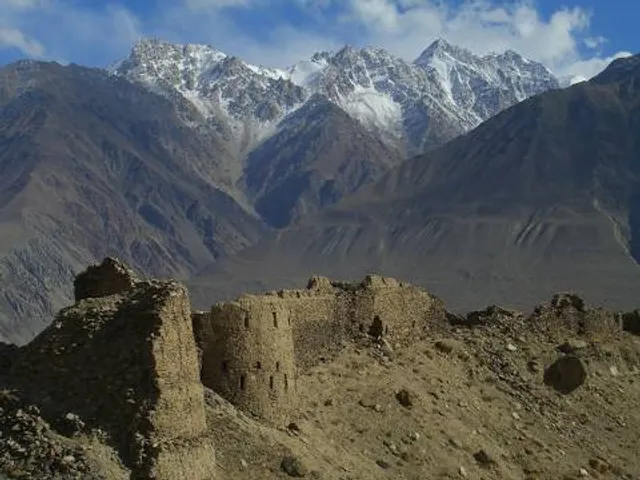
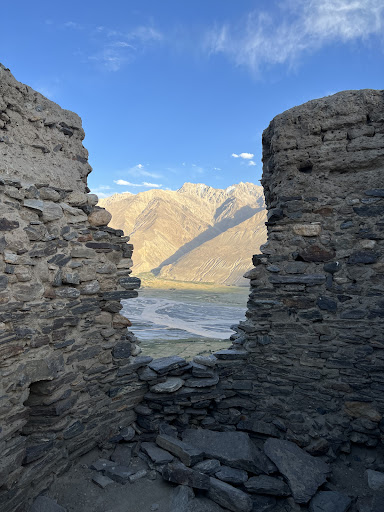
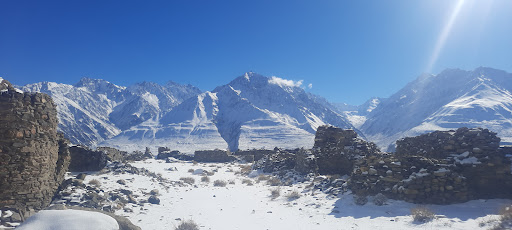
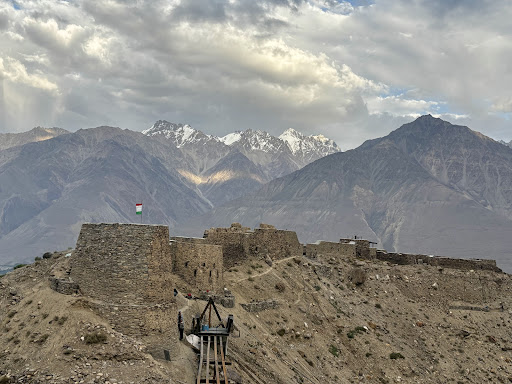
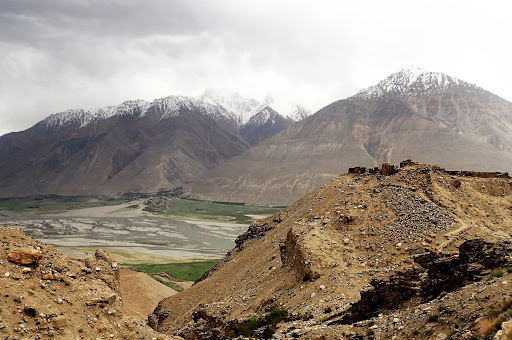
Yamchun Fortress is being shockingly and insensitively “restored”. If as I understand it correctly, UNESCO has funded this vandalism, it should hang its head in shame. Concrete, so it seems, has been poured on the top of walls (now all flat) so they resemble a modern garden perimeter . Rapid building to “fill in the gaps” is “Disneyfying” the fort - done as if afraid to believe that people can use their imagination to admire the atmospheric ruins and picture the castle in its original magnificence, The outstanding heritage of the remains of the original structure is almost invisible now.
To add insult to injury, while I was there, the builders were constructing an ugly and massive metal bridge- a carbuncle if you will -- that is a ridiculous eye-sore directly in front of the fort. The overall effect is to destroy completely any feeling of the fort’s history and how it sat in its stunning landscape.
As bad, steel structures are being added into the heart of the fort (who knows for what ends). Moreover, whilst I was there, a hole dug into the ground seemed to reveal stones of potential archaeological significance - a worker was energetically hacking away at them with a pick-axe!
Doubtless, further insensitive car-parking and other hard-landscaping will follow.
Yamchun Fortress was a treasure that Tajikistan could not afford to lose. What is replacing it is a fake and soulless structure that is a mere shadow of what has stood there (incomplete but authentic and brooding) for centuries.
This is a tragic and heart-breaking...
Read moreYamchun Fort, often mistakenly associated with Chitral, is actually a fascinating historical landmark located in the Wakhan Valley, near the border of Afghanistan and Tajikistan, not in Pakistan's Chitral region. This ancient fortification, perched on a high ridge, overlooks the Panj River, offering stunning views that blend natural beauty with architectural marvel.
Dating back to the 3rd century AD, Yamchun Fort is a testament to the region's strategic importance along the Silk Road, serving as a guardian of this ancient trade route. The remnants of its towering walls and fortifications speak volumes of its past significance in overseeing and protecting the movements of goods, ideas, and cultures between the East and West.
The journey to Yamchun Fort is as mesmerizing as the destination itself, with rugged landscapes and the vibrant hues of the Wakhan corridor unfolding along the way. Visitors are treated to an awe-inspiring panorama that merges the harsh, untamed beauty of the region with a sense of timeless grandeur.
Despite its remote location and the challenges posed by its accessibility, Yamchun Fort attracts those who are passionate about history, architecture, and the great outdoors. It stands as a cultural beacon, inviting exploration and offering a profound connection to the rich tapestry of Central Asian history. For adventurers and history buffs alike, a visit to Yamchun Fort is an unforgettable journey into the heart of the ancient world, highlighting the enduring allure of humanity's architectural and...
Read moreAncient Origins: Yamchun Fort is believed to date back to the Kushan Empire, which flourished from the 1st to the 3rd century CE. It is one of the oldest and most well-preserved forts in the region. Strategic Importance: The fort’s strategic location along the ancient Silk Road trade route made it an important military and trade outpost, providing protection and control over the surrounding area.
Architectural Features:
Robust Construction: Built with large stone blocks and strategically placed on a high cliff, the fort demonstrates advanced architectural techniques of its time. Its robust construction helped it withstand the harsh weather conditions and potential attacks. Defensive Structures: The fort includes multiple layers of walls, towers, and watchtowers, designed to maximize defense and surveillance...
Read more