HTML SitemapExplore
logo
Find Things to DoFind The Best Restaurants

Mausoleum of Sheik Muslihiddin — Attraction in Khujand

Name
Mausoleum of Sheik Muslihiddin
Description
Nearby attractions
Central Mosque Jami
7JHJ+H64, Khujand, Tajikistan
Nearby restaurants
Nearby hotels
Related posts
Keywords
Mausoleum of Sheik Muslihiddin tourism.Mausoleum of Sheik Muslihiddin hotels.Mausoleum of Sheik Muslihiddin bed and breakfast. flights to Mausoleum of Sheik Muslihiddin.Mausoleum of Sheik Muslihiddin attractions.Mausoleum of Sheik Muslihiddin restaurants.Mausoleum of Sheik Muslihiddin travel.Mausoleum of Sheik Muslihiddin travel guide.Mausoleum of Sheik Muslihiddin travel blog.Mausoleum of Sheik Muslihiddin pictures.Mausoleum of Sheik Muslihiddin photos.Mausoleum of Sheik Muslihiddin travel tips.Mausoleum of Sheik Muslihiddin maps.Mausoleum of Sheik Muslihiddin things to do.
Mausoleum of Sheik Muslihiddin things to do, attractions, restaurants, events info and trip planning
Mausoleum of Sheik Muslihiddin
TajikistanSughd RegionKhujandMausoleum of Sheik Muslihiddin

Basic Info

Mausoleum of Sheik Muslihiddin

Masoleum of Sheik Muslihiddin, Sharq Street, Khujand, Tajikistan
4.7(147)
Open 24 hours
Save
spot

Ratings & Description

Info

Cultural
Scenic
Accessibility
attractions: Central Mosque Jami, restaurants:
logoLearn more insights from Wanderboat AI.

Plan your stay

hotel
Pet-friendly Hotels in Khujand
Find a cozy hotel nearby and make it a full experience.
hotel
Affordable Hotels in Khujand
Find a cozy hotel nearby and make it a full experience.
hotel
The Coolest Hotels You Haven't Heard Of (Yet)
Find a cozy hotel nearby and make it a full experience.
hotel
Trending Stays Worth the Hype in Khujand
Find a cozy hotel nearby and make it a full experience.

Reviews

Nearby attractions of Mausoleum of Sheik Muslihiddin

Central Mosque Jami

Central Mosque Jami

Central Mosque Jami

4.8

(99)

Open 24 hours
Click for details
Get the Appoverlay
Get the AppOne tap to find yournext favorite spots!
Wanderboat LogoWanderboat

Your everyday Al companion for getaway ideas

CompanyAbout Us
InformationAI Trip PlannerSitemap
SocialXInstagramTiktokLinkedin
LegalTerms of ServicePrivacy Policy

Get the app

© 2025 Wanderboat. All rights reserved.
logo

Reviews of Mausoleum of Sheik Muslihiddin

4.7
(147)
avatar
4.0
17w

History & Significance of Sheikh Muslihiddin

Who Was Sheikh Muslihiddin?

Full name: Badi-ud-Din Nuri (also known as Sheikh Maslahat-ad-Din), commonly referred to as Sheikh Muslihiddin Khujandi .

He lived from 1129/1130 (Mecca) to 1222 (Khujand) and served as a ruler, poet, philosopher, Sufi sheikh, and esteemed theologian of Khujand .

Local legends venerate him as a miracle-worker and spiritual patron of the city, credited with persuading the Mongols not to destroy Khujand during their invasion (though this view faces scholarly debate) .

Evolution of the Mausoleum

The original structure was a modest brick tomb with terracotta decor, erected in the 12th century where Sheikh Muslihiddin was reburied after his initial burial in a nearby village called Unji .

It was destroyed during the Mongol invasions, and later rebuilt in the 14th century, this time featuring two rooms, though it too eventually fell into ruin .

In the 16th century, a transformed structure rose from the ruins — evolving beyond a simple tomb into a spiritual complex for prayers and rituals, and known as a “mausoleum-khonako” .

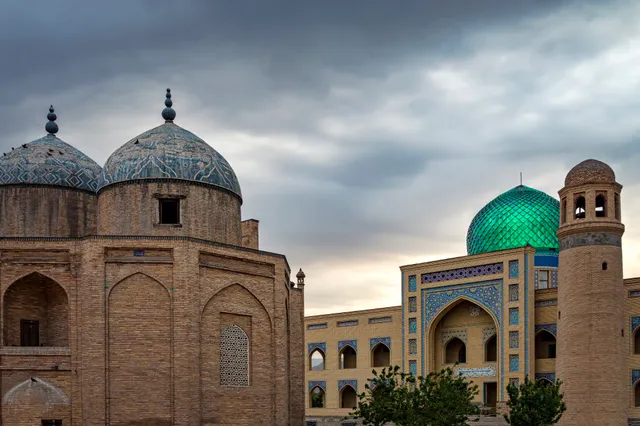
In the late 19th century, a minaret over 20 meters tall was added. The complex today includes a central mosque, the mausoleum, and ancient burials .

Architecture & Features

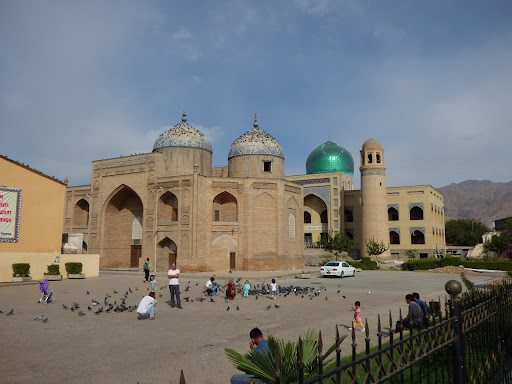
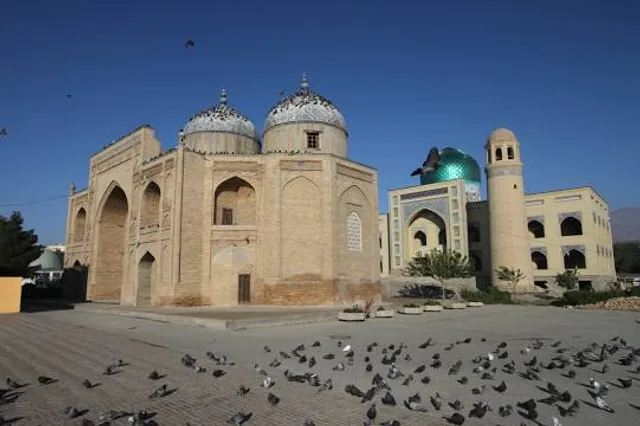
The mausoleum is a two-story, portal-and-dome structure. The entrance features a grand portal leading to the interior .

Inside:

The ziyoratkhona (memorial hall) is where visitors pay their respects.

Directly beneath the dome lies the gurkhona (burial chamber).

At the center stands a wooden sarcophagus (sagona), intricately carved with geometric and vegetal motif inlays .

The facade faces Shark Street and the mausoleum sits adjacent to the historic Panjshanbe (Friday) Bazaar, one of Central Asia’s largest covered markets .

Architectural layout details:

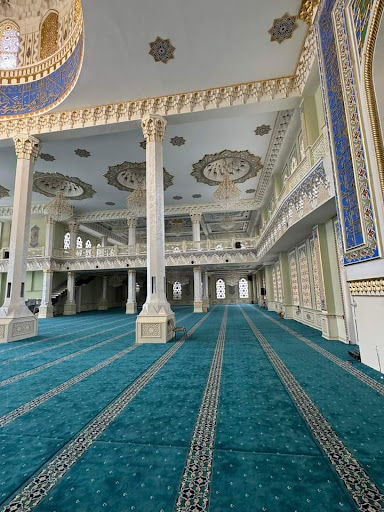
An iwan (arched portal hall) with 30 supporting columns connects to the mosque courtyard.

The winter hall features a grid of columns—six rows of four in the iwan and five rows in the hall.

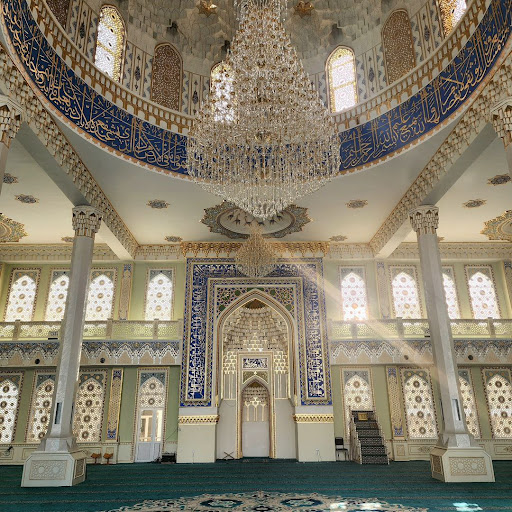
Two central columns are adorned with carved patterns and crowned with a decorative stalactite lintel (muqarnas), remnants of ancient paintings visible .

Ornamental details above the mihrab and on the ceiling feature faded geometric painted woodwork. Walls are also decorated with carved motifs .

The structure is built with a brick frame, plastered walls with niches, clay-adobe flat roofing, and burnt-brick foundations .

It includes hujras (small chambers) along the courtyard and a minaret offering panoramic city views .

Cultural & Touristic Significance

The mausoleum is recognized as a spiritual and cultural heirloom of Sogdiana — attracting pilgrims and visitors alike for its serene atmosphere and historical resonance .

In 2015, it was added to the “Great Silk Road on the Syr Darya” heritage list, further solidifying its importance in regional history and tourism .

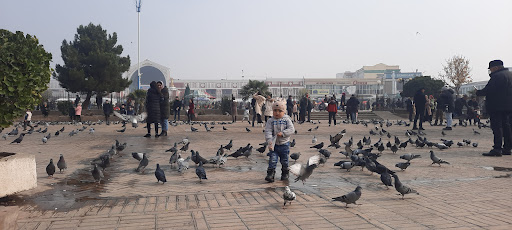
Guests often note the peaceful ambiance: travelers suggest visiting in the morning, when the site is quieter and offers better views of the market across the street, and enjoying feeding pigeons around...

   Read more

avatar
4.0
1y

The Mausoleum of Sheik Muslihiddin (Мавзолей Шейха Муслихиддина) is an important historical and religious site in Khujand, Tajikistan. Built in the 12th century and later restored, it honors Sheik Muslihiddin, a revered poet and ruler of the city. The mausoleum's architecture reflects Islamic styles, with intricate tile work and a serene atmosphere. It's a place of pilgrimage and interest for those seeking to connect with the region's spiritual and...

   Read more
avatar
5.0
6y

Предания гласят, что шейх Муслихиддин был святым чудотворцем. Сначала он был похоронен в селении Унджи (пригород Худжанда), но его почитатели перенесли прах шейха в город и воздвигли на этом месте мавзолей. Это было в XII веке. Тогда мавзолей являл собой небольшую погребальную камеру из жженого кирпича, украшенную терракотой. Эта усыпальница была разрушена в период монгольского нашествия.

В XIV веке мавзолей отстроили вновь, но при этом слегка изменили планировку. Теперь он стал состоять из двух помещений. И это здание, увы, тоже было вскоре разрушено. В XVI веке на останках старого мавзолея было построено новое здание. Оно конструктивно отличалось от прежних строений и стало не просто местом захоронениея, а сооружением, в котором совершались молитвы и ритуальные обряды.

Сегодня Мавзолей Шейха Муслихиддина - архитектурный ансамбль, состоящий из соборной мечети, минарета XIX века (высота свыше 20 м ) и древних захоронений, главное из которых мавзолей шейха Муслихиддина. Нынешний мавзолей двухэтажный, с входом-порталом, широким куполом. В центре находится зиёратхона (зал поминовения) и усыпальница-гурхона под куполом. В центре помещения - деревянное надгробие – сагона, покрытое тонкой геометрической резьбой с растительным орнаментом и...

   Read more
Page 1 of 7
Previous
Next

Posts

Sevinch UzoqovaSevinch Uzoqova
History & Significance of Sheikh Muslihiddin Who Was Sheikh Muslihiddin? Full name: Badi-ud-Din Nuri (also known as Sheikh Maslahat-ad-Din), commonly referred to as Sheikh Muslihiddin Khujandi . He lived from 1129/1130 (Mecca) to 1222 (Khujand) and served as a ruler, poet, philosopher, Sufi sheikh, and esteemed theologian of Khujand . Local legends venerate him as a miracle-worker and spiritual patron of the city, credited with persuading the Mongols not to destroy Khujand during their invasion (though this view faces scholarly debate) . --- Evolution of the Mausoleum The original structure was a modest brick tomb with terracotta decor, erected in the 12th century where Sheikh Muslihiddin was reburied after his initial burial in a nearby village called Unji . It was destroyed during the Mongol invasions, and later rebuilt in the 14th century, this time featuring two rooms, though it too eventually fell into ruin . In the 16th century, a transformed structure rose from the ruins — evolving beyond a simple tomb into a spiritual complex for prayers and rituals, and known as a “mausoleum-khonako” . In the late 19th century, a minaret over 20 meters tall was added. The complex today includes a central mosque, the mausoleum, and ancient burials . --- Architecture & Features The mausoleum is a two-story, portal-and-dome structure. The entrance features a grand portal leading to the interior . Inside: The ziyoratkhona (memorial hall) is where visitors pay their respects. Directly beneath the dome lies the gurkhona (burial chamber). At the center stands a wooden sarcophagus (sagona), intricately carved with geometric and vegetal motif inlays . The facade faces Shark Street and the mausoleum sits adjacent to the historic Panjshanbe (Friday) Bazaar, one of Central Asia’s largest covered markets . Architectural layout details: An iwan (arched portal hall) with 30 supporting columns connects to the mosque courtyard. The winter hall features a grid of columns—six rows of four in the iwan and five rows in the hall. Two central columns are adorned with carved patterns and crowned with a decorative stalactite lintel (muqarnas), remnants of ancient paintings visible . Ornamental details above the mihrab and on the ceiling feature faded geometric painted woodwork. Walls are also decorated with carved motifs . The structure is built with a brick frame, plastered walls with niches, clay-adobe flat roofing, and burnt-brick foundations . It includes hujras (small chambers) along the courtyard and a minaret offering panoramic city views . --- Cultural & Touristic Significance The mausoleum is recognized as a spiritual and cultural heirloom of Sogdiana — attracting pilgrims and visitors alike for its serene atmosphere and historical resonance . In 2015, it was added to the “Great Silk Road on the Syr Darya” heritage list, further solidifying its importance in regional history and tourism . Guests often note the peaceful ambiance: travelers suggest visiting in the morning, when the site is quieter and offers better views of the market across the street, and enjoying feeding pigeons around the mosque .
ajaj
The Mausoleum of Sheik Muslihiddin (Мавзолей Шейха Муслихиддина) is an important historical and religious site in Khujand, Tajikistan. Built in the 12th century and later restored, it honors Sheik Muslihiddin, a revered poet and ruler of the city. The mausoleum's architecture reflects Islamic styles, with intricate tile work and a serene atmosphere. It's a place of pilgrimage and interest for those seeking to connect with the region's spiritual and cultural heritage.
Oriz DildorbekOriz Dildorbek
If you a visiting Khujand it's worth to visit this place. One of the oldest Mausoleum in Tajikistan. Panjshanbe ( Thursday)Bazar is the oldest Bazar in Tajikistan and considered to be the oldest in Central Asia as well. The 5 big M of Central Asia's is 1 place😁😄 MARKET, MINARET, MUSOLEUM, MOSQUE, MADRASAH.
See more posts
See more posts
hotel
Find your stay

Pet-friendly Hotels in Khujand

Find a cozy hotel nearby and make it a full experience.

History & Significance of Sheikh Muslihiddin Who Was Sheikh Muslihiddin? Full name: Badi-ud-Din Nuri (also known as Sheikh Maslahat-ad-Din), commonly referred to as Sheikh Muslihiddin Khujandi . He lived from 1129/1130 (Mecca) to 1222 (Khujand) and served as a ruler, poet, philosopher, Sufi sheikh, and esteemed theologian of Khujand . Local legends venerate him as a miracle-worker and spiritual patron of the city, credited with persuading the Mongols not to destroy Khujand during their invasion (though this view faces scholarly debate) . --- Evolution of the Mausoleum The original structure was a modest brick tomb with terracotta decor, erected in the 12th century where Sheikh Muslihiddin was reburied after his initial burial in a nearby village called Unji . It was destroyed during the Mongol invasions, and later rebuilt in the 14th century, this time featuring two rooms, though it too eventually fell into ruin . In the 16th century, a transformed structure rose from the ruins — evolving beyond a simple tomb into a spiritual complex for prayers and rituals, and known as a “mausoleum-khonako” . In the late 19th century, a minaret over 20 meters tall was added. The complex today includes a central mosque, the mausoleum, and ancient burials . --- Architecture & Features The mausoleum is a two-story, portal-and-dome structure. The entrance features a grand portal leading to the interior . Inside: The ziyoratkhona (memorial hall) is where visitors pay their respects. Directly beneath the dome lies the gurkhona (burial chamber). At the center stands a wooden sarcophagus (sagona), intricately carved with geometric and vegetal motif inlays . The facade faces Shark Street and the mausoleum sits adjacent to the historic Panjshanbe (Friday) Bazaar, one of Central Asia’s largest covered markets . Architectural layout details: An iwan (arched portal hall) with 30 supporting columns connects to the mosque courtyard. The winter hall features a grid of columns—six rows of four in the iwan and five rows in the hall. Two central columns are adorned with carved patterns and crowned with a decorative stalactite lintel (muqarnas), remnants of ancient paintings visible . Ornamental details above the mihrab and on the ceiling feature faded geometric painted woodwork. Walls are also decorated with carved motifs . The structure is built with a brick frame, plastered walls with niches, clay-adobe flat roofing, and burnt-brick foundations . It includes hujras (small chambers) along the courtyard and a minaret offering panoramic city views . --- Cultural & Touristic Significance The mausoleum is recognized as a spiritual and cultural heirloom of Sogdiana — attracting pilgrims and visitors alike for its serene atmosphere and historical resonance . In 2015, it was added to the “Great Silk Road on the Syr Darya” heritage list, further solidifying its importance in regional history and tourism . Guests often note the peaceful ambiance: travelers suggest visiting in the morning, when the site is quieter and offers better views of the market across the street, and enjoying feeding pigeons around the mosque .
Sevinch Uzoqova

Sevinch Uzoqova

hotel
Find your stay

Affordable Hotels in Khujand

Find a cozy hotel nearby and make it a full experience.

Get the Appoverlay
Get the AppOne tap to find yournext favorite spots!
The Mausoleum of Sheik Muslihiddin (Мавзолей Шейха Муслихиддина) is an important historical and religious site in Khujand, Tajikistan. Built in the 12th century and later restored, it honors Sheik Muslihiddin, a revered poet and ruler of the city. The mausoleum's architecture reflects Islamic styles, with intricate tile work and a serene atmosphere. It's a place of pilgrimage and interest for those seeking to connect with the region's spiritual and cultural heritage.
aj

aj

hotel
Find your stay

The Coolest Hotels You Haven't Heard Of (Yet)

Find a cozy hotel nearby and make it a full experience.

hotel
Find your stay

Trending Stays Worth the Hype in Khujand

Find a cozy hotel nearby and make it a full experience.

If you a visiting Khujand it's worth to visit this place. One of the oldest Mausoleum in Tajikistan. Panjshanbe ( Thursday)Bazar is the oldest Bazar in Tajikistan and considered to be the oldest in Central Asia as well. The 5 big M of Central Asia's is 1 place😁😄 MARKET, MINARET, MUSOLEUM, MOSQUE, MADRASAH.
Oriz Dildorbek

Oriz Dildorbek

See more posts
See more posts