The origin of the name Kilimanjaro is not known, but several theories exist. European explorers had adopted the name by 1860 and reported that Kilimanjaro was the mountain's Kiswahili name.The 1907 edition of The Nuttall Encyclopædia also records the name of the mountain as Kilima-Njaro.
Johann Ludwig Krapf wrote in 1860 that Swahilis along the coast called the mountain Kilimanjaro. Although he did not offer any support, he claimed that Kilimanjaro meant either "mountain of greatness" or "mountain of caravans." Under the latter meaning, kilima meant "mountain" and jaro meant "caravans." Jim Thompson claimed in 1885, again without support, that the term Kilima-Njaro "has generally been understood to mean" the mountain (kilima) of greatness (njaro). He also suggested "though not improbably it may mean" the white mountain.
Njaro is an ancient Kiswahili word for "shining."Similarly, Krapf wrote that a chief of the Wakamba people, whom he visited in 1849, "had been to Jagga and had seen the Kima jajeu, mountain of whiteness, the name given by the Wakamba to Kilimanjaro ..." More correctly, in the Kikamba language this would be kiima kyeu, and this possible derivation has been popular with several investigators.
Others have assumed that kilima is Swahili for "mountain." The problem with this assumption is that kilima actually means "hill" and is, therefore, the diminutive of mlima, the proper Swahili word for "mountain." However, " t is ... possible ... that an early European visitor, whose knowledge of [Kiswahili] was not extensive, changed mlima to kilima by analogy with the two Wachagga names: Kibo and Kimawenzi." A different approach is to assume that the kileman- part of Kilimanjaro comes from the Kichagga kileme "that which defeats" or kilelema "that which has become difficult or impossible." The -jaro part would "then be derived from njaare, a bird; or, according to other informants, a leopard; or, possibly from jyaro, a caravan". Considering that the name Kilimanjaro has never been current among the Wachagga people, it is possible that the name was derived from Wachagga saying that the mountain was unclimbable, kilemanjaare or kilemajyaro, and porters misinterpreting this as being the name of the mountain.
An alternative explanation suggested by several sources, that jyaro maybe be referring to a 'god or a deity' which protected the mountains from tresspassers. They knew that birds did not fly on the mountain and local travellers would become sick if they ventured too high - we now understand this to be altitude sickness.
In the 1880s, the mountain became a part of German East Africa and was called Kilima-Ndscharo in German following the Kiswahili name components. On 6 October 1889, Hans Meyer reached the highest summit on the crater ridge of Kibo. He named it Kaiser-Wilhelm-Spitze (Kaiser Wilhelm peak). That name was used until Tanzania was formed in 1964, when the summit was renamed Uhuru Peak, meaning "Freedom Peak"...
Read moreMt.kilimanjaro and other tall Mountains near the equator were known to Europeans as far back as the 1st century A.D.Reference to the heights of these mountains and the excistence of snow on top of their summits were recorded and later became a subject of curiosity to scholars and explorers in Europe...
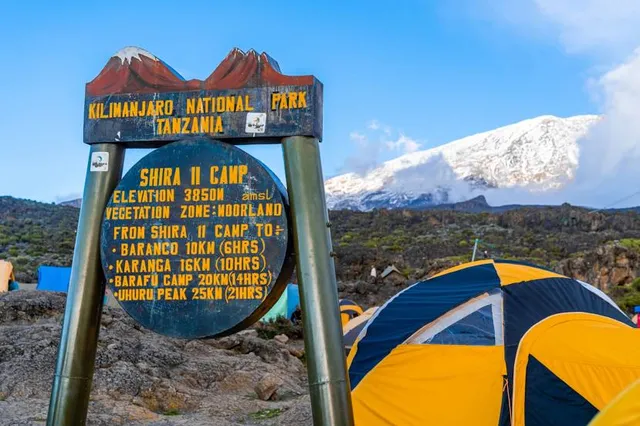
By the midnineteenth century, when European colonials began to flock into East Africa in search of land and wealth, expeditions to kilimanjaro had also begun to investigate as to whether the reports snow on its peak were true..
Numerous attempts to climb and find out ensured, predominantly by English and German explorers, and by 1880s,the saddle at 4600m was regarded as the base Camp for attempting to reach the highest point, Uhuru peak. At that time, what is known today as the marangu route was the route of choice..
HANS MEYER.. Of all explorers attempting the first full ascent,HANS MEYER,a famous geographer from Germany succeeded on his second attempt. His first try was in 1887 where by he reached 5,486m on Kibo but was forced to turn back. His second attempt wasn't until October 1889 when he was accompanied by Ludwig purtscheller, and together they were the first Europeans to Conquer the Roof of Africa...
YOHANI KINYALA LAUWO.. kinyala was born in 1872 and lived his entire life in the village of Marangu. Kinyala lauwo was a tall teenager who had good knowledge of the kilimanjaro Mountane forest. Hans Meyer had just arrived at the palace asking for permission to climb the mountain with guides and porters. The mangi's wachili,advisors, spotted Kinyala, and asked him to guide the expedition. At only eighteen years of age, kinyala lauwo led Hans Meyer and Ludwig purtscheller to the highest point of Africa in October 1889.
PRESIDENT DAY KILIMANJARO.. Kili is the tallest free-standing Mountain in the world with a recorded height of 5895m.There are two main peaks:Kibo and Mawenzi. Kili is one of the biggest volcanoes on the planet, though Mawenzi is extinct and Kibo lies dormant.. Explorer with( Kilimanjaro highlands explorer) For Extremely knowledgeable for Everything we are here for...
Read moreClimbing Mount Kilimanjaro was an experience that reshaped my understanding of both nature and my own personal limits. It’s not just a mountain; it’s a journey through a variety of ecosystems, each with its own unique challenges and beauties.
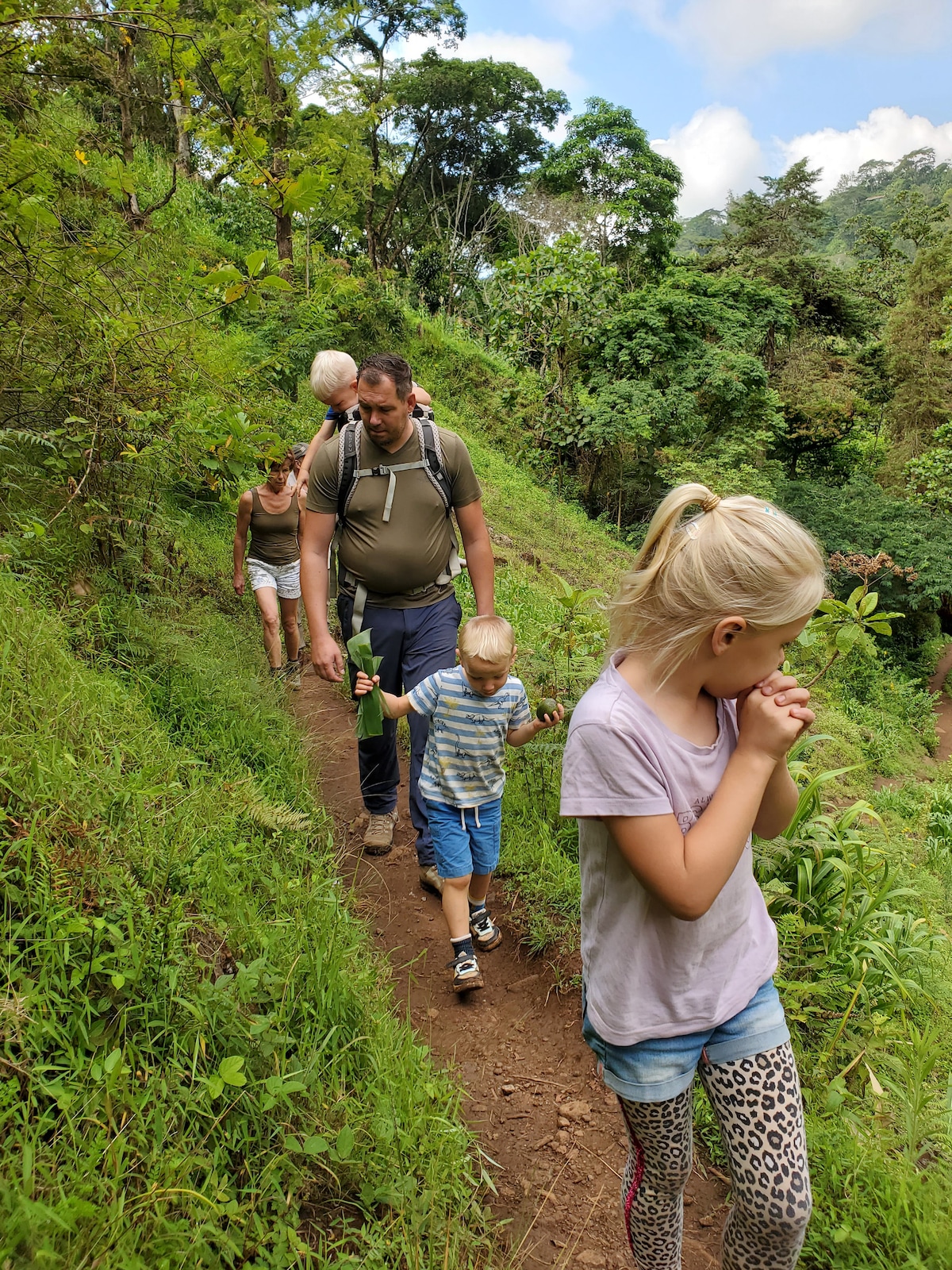
Starting from the lush rainforests at the base, the hike began with the sound of birds and the occasional monkey sighting. The dense canopy overhead provided a cool shade, a sharp contrast to what awaited above. As we ascended, the vegetation thinned, and the trail led us through heath and moorland, where the giant lobelias and groundsel plants seemed to belong to a different world altogether.
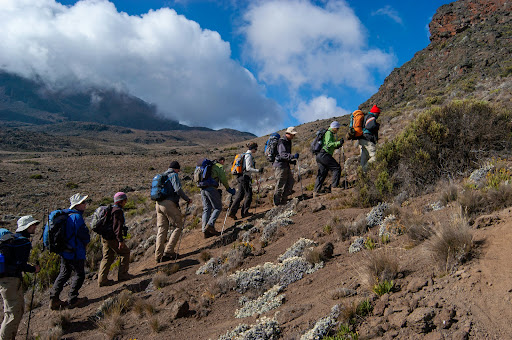
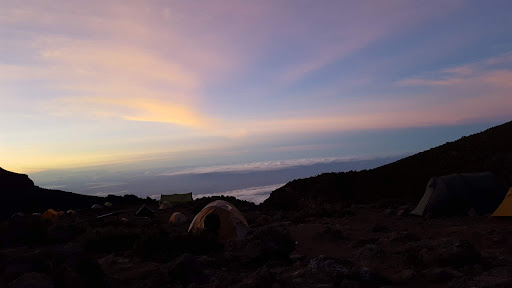
Reaching the alpine desert was surreal. The landscape became stark with wide-open skies and a vast expanse of rocky terrain. During this part of the climb, the full impact of the altitude hit me. Each step required effort, and the nights were biting cold. However, the clear night skies filled with stars made the harsh conditions worthwhile.
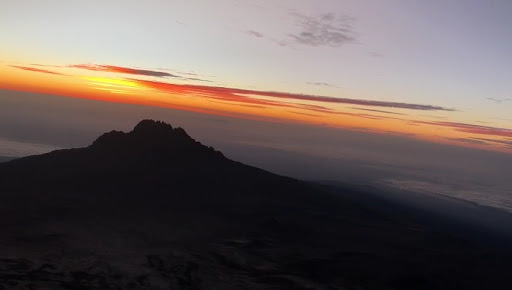
The final ascent to Uhuru Peak began in the early hours of the morning, aimed at reaching the summit for sunrise. This was by far the most challenging part, both physically and mentally. The steep, rocky path, coupled with the thinning air, tested every reserve of energy I had. But the sight of the sun rising over the vast African landscape from the highest point in Africa was indescribable. It was a moment of pure elation and accomplishment.
Descending the mountain, I felt a mix of relief and nostalgia, knowing that the unique environments and the sheer physical challenge of Kilimanjaro were once-in-a-lifetime experiences. Each campsite on the way down offered a moment to reflect on the journey and the diverse beauty of Kilimanjaro’s landscapes.
Climbing Kilimanjaro is more than a tick on a bucket list; it’s a profound journey that challenges the body and invigorates the soul. The sense of community among climbers and the shared determination to reach the summit adds to the richness of the experience. It’s an adventure that I would recommend to anyone seeking a deep connection with nature...
Read more