This was one of the best parts of my trip to Kanchanaburi and (and I mean this genuinely) Thailand.
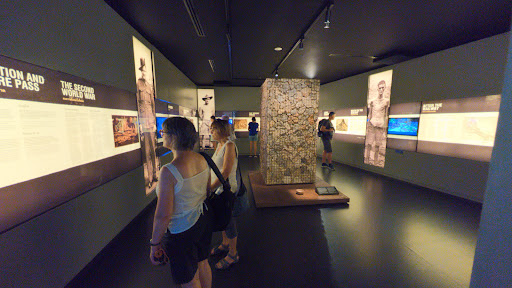
Hellfire Pass Interpretive Center is a modern, beautifully designed museum, both aesthetically and scientifically, with a lot to see.
We were greeted at the entrance by a guide who spoke impeccable English, letting us know the usual times for buses back to Kanchanaburi and the way to the Interpretive Center.
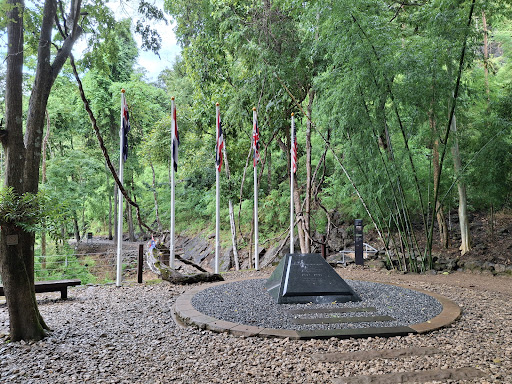
At the Interpretive Center, we were once again greeted by the staff. They were very courteous and really respected the Center as a memorial for the lives lost during the construction of the Thailand-Burma railway.
The exhibition is phenomenal. You will be able to get a detailed account of the events, including images, video and audio descriptions. They seem to explore every detail in a way that does not seem at all tiresome, and in a way that places the events into their relevant historical context.
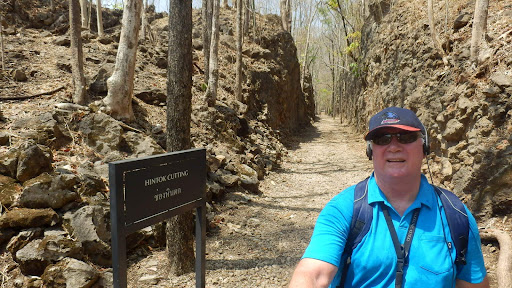
After that, armed with all of this knowledge, you're able to start preparing for your hike, for which you should bring proper hiking shoes (I didn't!). The Center has free lockers for you, and drinks at regular price so you can keep hydrated, as well as free water refilling stations. The audio guide they provide is also free: complete with wired earphones that they also provide to you free of charge (and that you're not meant to return).
Your hike is accompanied through the audio guide by depictions of various elements that you'll see during the walk, narrated by Australian victims of this crime.
At the end of Hellfire Pass, those who came prepared (and warned the staff previously, in order to receive a walkie-talkie) may proceed through the longer path, which also has more audio guide content.
The scenic views show you, just as the soldiers describe in the audio guide, how they didn't lose their spirit despite the famine and violence, living and working in the beautiful forest.
At the end, no money is expected from you and you aren't pushed to make any donations. In fact, you're even invited to take a Hellfire Pass Interpretive Center sticker free of charge. For those who are interested, you're able to make a donation into any of the donation boxes they have, or buy books related to these events, or merchandise, in order to help fund this Center.
Finally, when we got back, the same guide at the entrance said that he hasn't seen a bus come in a while, so hopefully if one is going to arrive it shouldn't be in too long. It quickly arrived and drove us straight to Kanchanaburi for around ~80 THB.
I would recommend doing the following route to get from Kanchanaburi to Hellfire Pass:
Go from Kanchanaburi (or Bangkok) all the way to the terminal station (Nam Tok) by train. The price is 100 THB no matter what stop you leave at. You will be able to travel on the actual runway, over the Bridge Over the River Kwai, and along the Wapong Viaduct. This 2.5-hour journey felt like 30 minutes as we marvelled at the beauty the whole time.
Reaching Nam Tok, we were able to walk 20 minutes to Sai Yok Noi, one of the old stations on the same railway before the tracks were removed. There, you can enjoy a soak at the very slippery but very beautiful waterfall, which when we went barely had anyone else there. There are also places to eat and buy other things nearby.
On the other side of the road from the waterfall, you can take the bus, underneath a big tree to the left of the 7-eleven (when looking straight at it). There's a bus stop sign there, though it's easy to miss.
Buses aren't frequent but are frequent enough, so we waited for about 30-45 minutes (you can check the timings at the waterfall's tourist information barrack) and took the long bus to Hellfire Pass.
It was a marvelous trip that was not only beautiful but also made me more aware of the horrors and complexity of the second world war.
Other locations related to the Thailand-Burma railway are:
The Bridge Over The River Kwai, Tiger Cave Temple, the original JEATH museum (there's a new one; the old one shows old letters from the soldiers to the...
Read more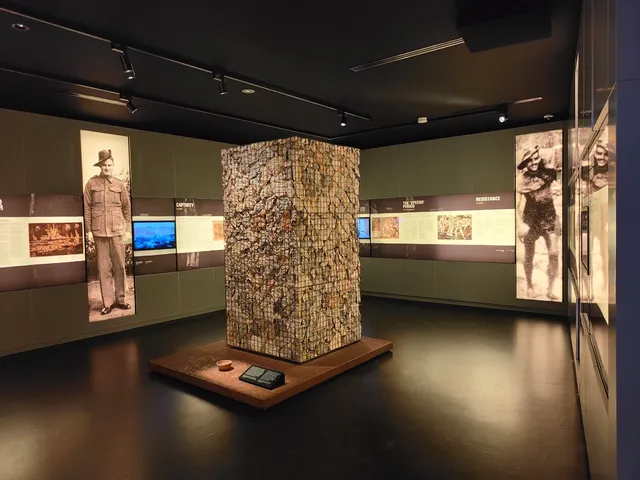
 Learn more insights from Wanderboat AI.