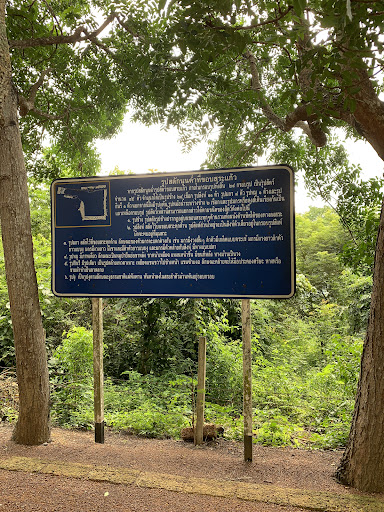
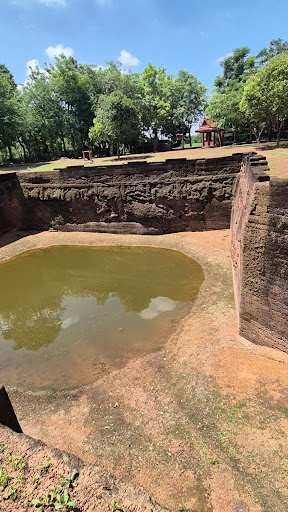
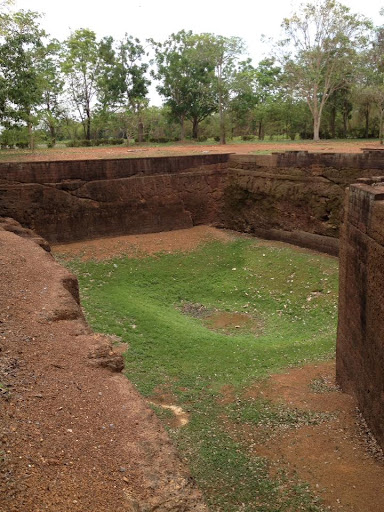
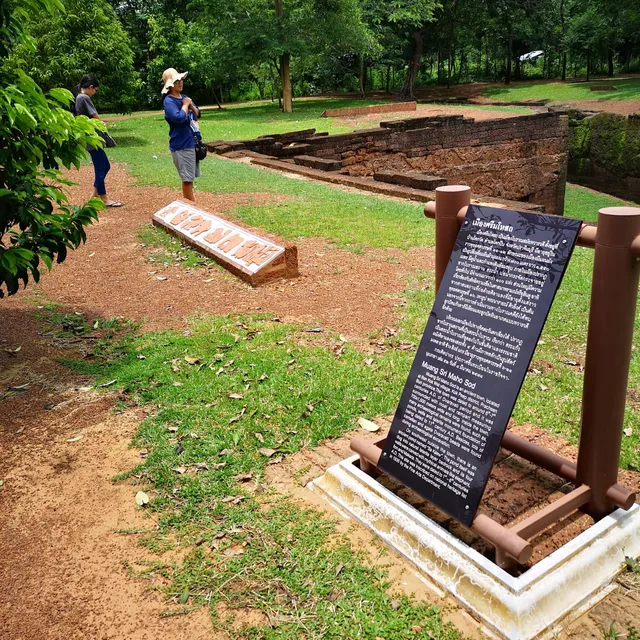
Boran Sathan Sa Kaeo is located in Tambon Khok Peep, Amphoe Si Mahosot, Chang Wat Prachin Buri, 1 kilometer from Amphoe Si Mahosot Administration Office, outside moat on the south area,100 meters from the road. " Boran Sathan Sa Kaeo " (Boran means ancient, Sathan means place or site, sa means pond and Kaeo means beloved, as of such favorable name " Sa Kaeo ", 2 more sites named after, details as follows : " Sa Kaeo Sa Kwan " located in Amphoe Sri Thep, Chang Wat Petchboon and " Sa Kaeo Sa Kwan " Public Park, Chang Wat Sa Kaeo ), this ancient remains is in the group of " Si Mahosot Archaeological Site ", dating back to the 14th -18th century Buddha ( " Sa Kaeo " dated back to 10th - 11th century Buddha ) during Dvaravati period, Indian culture and art heavily influenced Dvaravati civilization and played an important role in introducing Buddhism and Buddhist art to the region. In the ancient time, " Si Mahosot Archaeological Site " was port city and trading station, a part of the maritime routes network that facilitated the exchange of local and foreign goods and culture between India , China, the Middle East and the Roman Empire. Construction materials shown significantly on the laterite and sandstone inscribed,temple structure, monuments, ancient man made water reservoirs ( ponds ), lingas, that were influenced by Indian culture, evidences of these Brahmanism, Hinduism and Buddhism activities shown on the worship of various Hindu gods images such as Phra Narai, Phra Vishnu, Phra Pikanet and Phra Shiva. The appearance of " Sa Kaeo " ( pond ) is square shaped, dug in the laterite naturally with the size of 18 meters of width 18 meters of length and 6 meters of depth, stairs lead to the pond on west side, symbol of 45 auspicious for agricultural animals such as 24 elephants, 11 Sinha, 8 Makorn, 1 pig and 1 Kinree, caduceus between 2 elephants, inscribed on the stone wall...
Read moreโบราณสถานสระแก้วและสระขวัญตั้งอยู่ใกล้ๆและอยู่ตรงข้ามกัน ตรงกลางเป็นลานจอดรถ
ประวัติ สระแก้ว เป็นโบราณสถานที่ตั้งอยู่ในตำบลโคกปีบ อำเภอศรีมโหสถ จังหวัดปราจีนบุรี มีอายุราวพุทธศตวรรษที่ 10–11 (ประมาณ 1,300–1,500 ปี) เชื่อว่าเป็นสระน้ำศักดิ์สิทธิ์ที่ใช้ในพิธีกรรมทางศาสนา หรือพิธีกรรมเพื่อความอุดมสมบูรณ์ของชุมชนในสมัยนั้น
Sa Kaew is an ancient site located in Khok Pip Subdistrict, Si Maha Phot District, Prachinburi Province. It dates back to the 10th–11th Buddhist centuries (approximately 1,300–1,500 years ago) and is believed to have been a sacred pond used in religious rituals or fertility rites of the ancient community.
🐘 ความหมายของสัตว์ที่สลักไว้
บนขอบสระมีภาพสลักนูนต่ำของสัตว์ทั้งหมด 45 ตัว แบ่งเป็น 29 กรอบภาพ แสดงถึงความเชื่อในศาสนาพราหมณ์และพุทธ สัตว์แต่ละตัวมีความหมายเชิงสัญลักษณ์ ดังนี้
There are 45 animals carved in low relief along the pond's edge, grouped into 29 panels. These carvings reflect the combined beliefs of Brahmanism and Buddhism, with each animal symbolizing different meanings:
ช้าง (Elephant) – 24 ตัว: แทนพละกำลัง ความมั่นคง และความอุดมสมบูรณ์ Elephant (24 figures): Represents strength, stability, and abundance
สิงห์ (Lion) – 11 ตัว: สื่อถึงอำนาจและความกล้าหาญ Lion (11 figures): Symbolizes power and bravery
มกร (Makara) – 8 ตัว: สัตว์หิมพานต์ที่สื่อถึงน้ำและพลังแห่งชีวิต Makara (8 figures): A mythical aquatic creature symbolizing water and life force
หมู (Boar) – 1 ตัว: อาจหมายถึงความมั่งคั่งหรือฤทธิ์แรงของธรรมชาติ Boar (1 figure): Possibly represents prosperity or primal power
กินรี (Kinnari) – 1 ตัว: สื่อถึงความงาม ความเมตตา และความอ่อนโยน Kinnari (1 figure): Represents beauty, compassion, and gentleness
งูพันหม้อน้ำ (Serpent coiled around a water jar): สัญลักษณ์แห่งน้ำและความศักดิ์สิทธิ์ Serpent around water jar: A symbol of sacredness and water abundance
🛕 ความสำคัญทางศาสนาและวัฒนธรรม
การปรากฏของภาพสัตว์เหล่านี้บนขอบสระบ่งชี้ว่าสระแก้วไม่ใช่เพียงแหล่งน้ำธรรมดา แต่เป็นพื้นที่ประกอบพิธีกรรมที่มีการกำหนดรูปแบบทางสถาปัตยกรรมและความเชื่ออย่างชัดเจน โดยอาจใช้เป็นสถานที่ถือน้ำพิพัฒน์สัตยา หรือประกอบพิธีกรรมเพื่อขอฝน ความอุดมสมบูรณ์ และอำนาจทางราชา
The presence of these animal carvings indicates that Sa Kaew was not merely a utilitarian water source, but a ritual space shaped by architectural and spiritual design. It may have been used for oath-taking ceremonies, rain-invocation rituals, fertility blessings, or royal...
Read more"สระแก้ว" ตั้งอยู่ใน ต.โคกปีบ อยู่นอกคูเมืองทางทิศใต้ ห่างออกมาประมาณ 100 เมตร ลักษณะของสระแก้วเป็นสระน้ำรูปสี่เหลี่ยมจัตุรัส ที่ขุดลงไปในชั้นศิลาแลงธรรมชาติ ขนาด 18*18 เมตร ทางลงสระอยู่ทางด้านทิศตะวันตก ที่ขอบสระของสระแก้วทางด้านทิศเหนือมีการตัดศิลาแลงเป็นรูปสี่เหลี่ยมผืนผ้า ยื่นเข้ามาในสระ มีบันไดทางลงด้านข้างทั้งสองข้าง และมีร่องรอยของหลุมเสา ซึ่งทำให้สันนิษฐานได้ว่าบริเวณนี้เดิมอาจมีพลับพลาที่สร้างด้วยไม้อยู่ ที่ผนังขอบสระแก้วมีภาพแกะสลักนูนต่ำเป็นสัญลักษณ์ และรูปสัตว์อยู่ภายในกรอบสี่เหลี่ยมได้แก่ ภาพช้าง สิงห์ มกร และงู จำนวน 29 กรอบภาพ มีรูปสัตว์จำนวน 45 ตัว ได้แก่ รูปช้าง 24 รูปสิงห์ 11 รูปมกร 8 รูปหมู 1 และรูปกินรี 1 นอกจากนี้ยังมีรูปงูพันหม้อน้ำระหว่างช้าง 2 ช้าง รูปมกรและหงส์เดินเรียงกันเป็นแถวเหนือกรอบรูป 🦣 รูป "ช้าง" นั้น บางครั้งเป็นรูปช้าง ช้างเดี่ยวอยู่ในกรอบแสดงอิริยาบถต่าง ๆ เช่นยืน เดิน นั่งคุกเข่า หรือจะเป็นรูปช้างหลายช้างแสดงอาการชนกัน หรือเดินเรียงกันเป็นต้น 🦁 รูป"สิงห์" บนขอบสระแก้วนั้นมักจะเป็นรูปสิงห์เดี่ยวอยู่ในกรอบ จะแสดงอาการต่าง ๆ เช่นเผ่น หรือกระโจน 🐉 รูป "มกร" นั้นจะมีลักษณะแตกต่างกัน เช่น มกรมีงวงสั้น งวงยาว ตัวมกรมีเกล็ดคล้ายจระเข้ บางมกรมีลำตัวยาวคล้ายงู บางมกรมีเขา มีหางคล้ายปลา หรือมีหน้าคล้ายสิงห์ก็มี 🐷 สำหรับรูป "หมู" ที่สระแก้วนั้นมีเพียงรูปเดียว ลักษณะคล้ายหมูป่า ยืนย่อขาหลัง แหงนหน้าขึ้น หางม้วน 🐍 ส่วนรูป "งู" นั้น เหมือนงูธรรมชาติแผ่พังพานหันหน้าไปทางสระ ✳️ สันนิษฐานว่า "โบราณสถานสระแก้ว" มีอายุอยู่ในราวพุทธศตวรรษที่ 10-11 เชื่อว่าเป็นสระน้ำศักดิ์สิทธิ์ ใช้ในการประกอบพิธีกรรมทางศาสนา หรืออาจเป็นพิธีกรรมเพื่อความอุดมสมบูรณ์ เนื่องจากภาพสัตว์และสัญลักษณ์ต่าง ๆ ที่ปรากฏอยู่บนขอบสระ รูปช้าง สิงห์ มกร คชลักษมี หรือปูรณกุมภะ ล้วนแต่เป็นสิ่งมงคลในสังคมเกษตรกรรมทั้งสิ้น กรมศิลปากรขึ้นทะเบียนโบราณสถานสระแก้วไว้เมื่อ 8 มีนาคม 2478 ✳️ สำหรับ "สระขวัญ"...
Read more