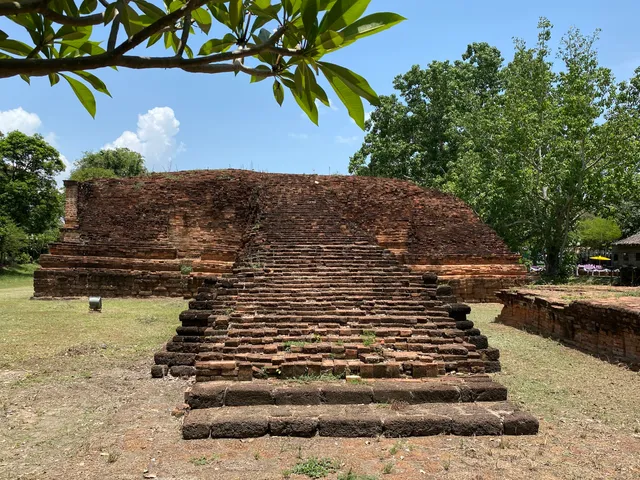
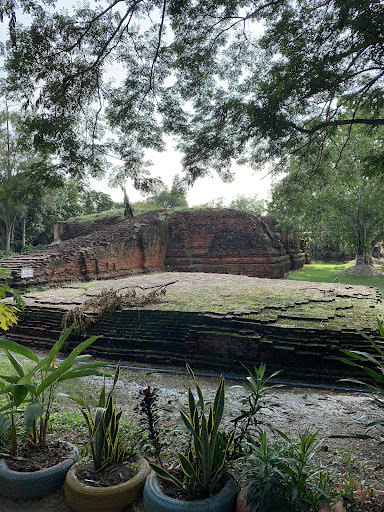
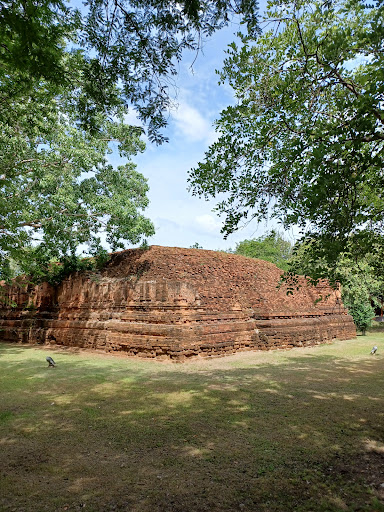
Muang Khu Bua Ancient Remains ( Boran ( ancient ) Sathan ( site or place ) number 18 ), is located behind Khu Bua School, Tambon Khu Bua, Amphoe Mueang Ratchaburi, Chang Wat Ratchaburi. This was once a Mon Boran ( ancient ) 's community, dating back to the 11th-15th Buddhist era, Dhavaravati kingdom 's prosperity that expanded to the central area of Thailand like many others Mueang ( city or town ) Boran ( ancient ) such as Mueang Boran U-Thong Chang Wat Supan Buri ( city or town ), Mueang Boran Sri Thep ( god ) Chang Wat Petchaboon, Mueang Boran Phra Rod Chang Wat Prachin Buri, Mueang Boran Nakhon Chaisri Chang Wat Nakhon Pathom, Mueang Boran Ban Khu Mueang Chang Wat Sinha Buri and Muang Boran Khu Bua Tambon Khu Bua, Amphoe Mueang Ratchaburi, Chang Wat Ratchaburi. During the 16th-18th Buddhist era, Khmer kingdom ' s Phra Chao Chai Woraman 7 expanded his power to Chao Phraya River the central region of Thailand, invaded and conquered Dhavaravati kingdom. In A.D.1804 ( B.E. 2347 ), Tai Yuan from Muaeng Chiang Saen migrated to stay at this place, earned their living on rice planting, plantation, farm ( shrimp and hog ), without knowledge of ancient city in the area, cleared the jungle and land preparation for their career ruined the moats and mounds of ancient remains and archaeological site 's evidence. During A.D.1961 ( B.E. 2504) - A.D.1963 ( B.E. 2506 ), the Fine Art Department excavated the Muang ( city or town ) Boran ( ancient ) Khu Bua, found ancient remains ( stucco and baked clay ) formed human, animals, superstition concerned such as Chao Mae Ta Kian, king of Nagas , religion belief such as Buddha image, Bodhisattiva, nagas,utensils such as weave instruments, lamps, mortas , clothing such as beads, dated back to Dhavaravati era ( 1,400 years ago ), ancient remains founded to preserve and keep at National Museum Ratchaburi and Wat Khlong Suwan Kiri, the fossils of crabs in the area evidenced that this area was close to the sea.Muang Boran Khu Bua ‘s architecture influenced by India, evidenced the Buddhism came to Thailand more than 1,000 years ago. Topography of Muang Boran Khu Bua showed the artifact construction, ditches with the size of 50 meters of width and 2,000 meters of length were excavated for the purpose of protecting city from enemies,walls built from soil which came from the ditches job, totally area was 2,310 rais ( 1 acre...
Read moreเมืองโบราณคูบัว เป็นชุมชนที่มีความสำคัญแห่งหนึ่งในวัฒนธรรมทวารวดีที่อยู่ในลุ่มแม่น้ำแม่กลอง เจริญรุ่งเรืองในช่วงประมาณพุทธศตวรรษที่ 12-17 ที่ตั้งของเมืองโบราณคูบัว ตั้งอยู่ในเขตตำบลคูบัว อำเภอเมือง จังหวัดราชบุรีลักษณะแผนผังของเมืองโบราณเป็นรูปสี่เหลี่ยมผืนผ้าขนาดใหญ่กว้าง 800 เมตร ยาว 2,000 เมตรมีลักษณะเป็นเนินดินตามธรรมชาติอยู่สูงจากระดับน้ำทะเลประมาณ 5 เมตร มีการก่อสร้างคูน้ำ 1 ชั้น และคันดิน 2 ชั้น ล้อมรอบตัวเมืองซึ่งเป็นลักษณะของการสร้างเมืองแบบวัฒนธรรมทวารวดีปัจจุบันแนวของคูน้ำเกือบทุกด้านตื้นเขิน ชาวบ้านใช้เป็นพื้นที่สำหรับทำนา ปลูกผลไม้ขุดบ่อทำนากุ้ง ส่วนแนวคันดินทั้งชั้นนอกและชั้นใน มีการปลูกสร้างบ้านเรือนและทำถนนทับไปเกือบตลอดแนวจากหลักฐานที่ได้ขุดค้น พบโบราณสถานและมีโบราณวัตถุกระจัดกระจายอยู่เป็นจำนวนมากทั้งในและนอกตัวเมืองโบราณคูบัว ซึ่งล้วนเป็นวัฒนธรรมทวารวดีทั้งสิ้น โดยเฉพาะภายในเมืองโบราณนี้มีวัดตั้งอยู่ 2 แห่ง คือวัดคูบัว ตั้งอยู่ในบริเวณตอนเหนือของเมือง และวัดโขลงสุวรรณคีรีตั้งอยู่เกือบใจกลางเมือง ภายในตัวเมืองพบโบราณสถานที่ปรากฏหลักฐานอยู่8 แห่งและโบราณสถานที่สันนิษฐานว่าเคยเป็นโบราณสถานอีก 4 แห่ง ซึ่งถูกทำลายไปจนไม่เหลือส่วนพื้นที่นอกแนวคูน้ำคันดิน ทางด้านตะวันออกพบซากโบราณสถานและแหล่งโบราณคดี 9 แห่ง ทางด้านทิศใต้มีซากโบราณสถาน 11 แห่ง ทางด้านทิศตะวันตกเฉียงเหนือ มีโบราณสถาน 2 แห่ง และซากโบราณสถาน 5 แห่ง ส่วนพื้นที่ทางด้านตะวันตก มีลำห้วยชินสีห์ซึ่งไหลผ่านมาจากบ้านห้วยชินสีห์ไหลเข้าตัวเมืองโบราณคูบัว พื้นที่ด้านนี้พบซากโบราณสถานจำนวน 21 แห่ง วัสดุส่วนใหญ่ที่ใช้ในการก่อสร้างโบราณสถานเหล่านี้มักใช้อิฐซึ่งมีลักษณะเฉพาะตัวของอิฐสมัยทวารวดีคือเป็นอิฐที่มีขนาดใหญ่มาก กว้างประมาณ 18 ซม. ยาว 34 ซม.หนา 8 ซม. ดินที่ใช้เผาอิฐจะผสมด้วยแกลบข้าว การก่อสร้างจะใช้อิฐก่อเรียงกันขึ้นไป โดยใช้ดินเหนียวผสมน้ำอ้อยเป็นดินสอและมีการสอด้วยปูนบ้าง สำหรับแหล่งโบราณที่เป็นแหล่งที่อยู่อาศัย พบร่องรอยที่น่าจะเป็นเนินดิน ซึ่งเป็นแหล่งที่อยู่อาศัย จำนวน 2 แห่ง ได้พบกระดูกสัตว์ปะปนอยู่กับเศษภาชนะดินเผา และเครื่องมือเครื่องใช้ต่าง ๆ ที่ใช้ในชีวิตประจำวัน เช่น แว ตะคัน ตะเกียง ลูกกระสุน เบี้ย หม้อ ไห ชาม กุณฑีฯลฯ นอกจากนี้ยังพบเครื่องใช้เครื่องประดับ และอาวุธที่ทำจากโลหะ หิน แก้ว เช่นตุ้มหูแหวน กำไล ลูกกระพรวน อาวุธ แบบต่าง ๆ ลูกปัดที่ทำด้วยกระดูกสัตว์ หิน แก้ว กระดูกสัตว์ มีทั้ง สัตว์บก สัตว์น้ำสัตว์ครึ่งบกครึ่งน้ำทั้งสัตว์น้ำจืดและน้ำเค็ม มีทั้งสัตว์ป่าและสัตว์เลี้ยง สัตว์เหล่านี้นอกจากใช้เป็นอาหาร พาหนะ และใช้ในการเกษตรกรรมแล้ว ยังเป็นหลักฐานสะท้อนให้เห็นสภาพแวดล้อมของเมืองโบราณคูบัวเมื่อครั้งทวารวดีว่า เคยมีสภาพเป็นป่าโปร่งผสมป่าเบญจพรรณ มีแหล่งน้ำประเภทห้วย หนอง คลอง บึง กระจายอยู่ทั่วไป...
Read moreOne of the prettiest markets I have been to. The sellers are dressed in their ethnic costumes and the market is decorated with colourful lanterns, umbrellas and strips of cloth. There was even a free dance performance when I visited. Despite all these efforts, food sold here is really cheap. They taste great too, and there are lots of seats for you to enjoy them. This is the kind of market I would recommend all my...
Read more