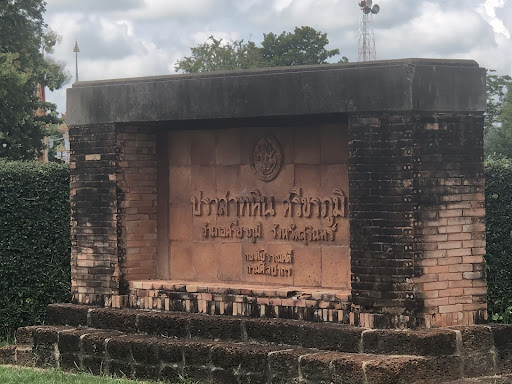
Prasat Si Khoraphum.
Location: Ra Ngang, Si Khoraphum District, Surin Province
GPS Coordinates (WGS84): N 14.944553, E 103.798321
Thai Name: “ปราสาทศีขรภูมิ” Literal English translation: “Castle Si Khoraphum”
Prasat Si Khoraphum is a Khmer temple located between the cities of Surin and Sisaket. It was built in the 12th century by King Suryavarman II for Hindu worship.
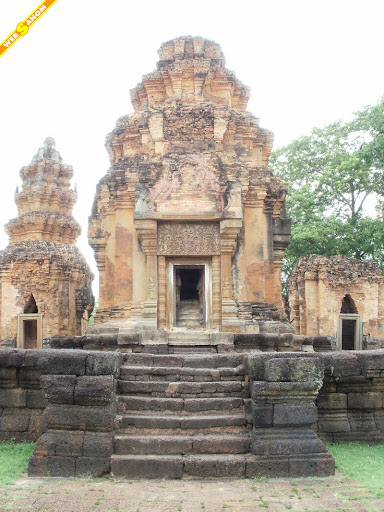
Si Khoraphum is uniquely "Cambodian" in plan and decoration, except of course for the shape of its towers. The temple plan is arranged in quincunx (A temple plan that has five towers arranged in an "X," as at Angkor Wat), which is common in Cambodia but not found in Thailand except for this temple. Since the quincunx plan in Cambodia usually applies to state temples, its effect in this small temple is odd, almost like a miniature. The unusual, layer-cake shape of the towers is due to rebuilding by Laotians in the 15th-16th centuries.
The temple is composed of five sandstone and brick towers, on a base made of laterite. There are sandstone bas-reliefs on the main tower depicting Shiva, Brahma, Ganesha, Vishnu and Uma. The door frames have sets of apsaras, devatas and dvarapalas. The temple was converted for use by Buddhists in the 16th century. Architectural contributions influenced by Laos are evident on the tower roofs. The name comes from the Sanskrit word of South India shikhara, meaning tower sanctuary.
“Dancing Shiva” on East Lintel, Central Tower, Si Khoraphum (Angkor Wat style, Suryavarman II, 1113-1150) The presence of secondary figures, to either side of the central figure, is characteristic of Angkor Wat style. In the center of this magnificent lintel, ten-armed Shiva dances on a hamsa platform. Below, the kala grasps two lions by their hind legs. At Shiva's feet, from photo left to right, are Uma, Vishnu, Brahma with three visible heads, and Shiva's elephant-headed son, Ganesh. Above them, a row of flying celestials. At the bottom is a row of celestials riding dragons.
“Apsarasas” on the door frames, Central Tower, Si Khoraphum (Angkor Wat style Suryavarman II, 1113-1150) The apsarasas (heavenly dancers) shown here are purely Cambodian in style; they would not seem out of place on Angkor Wat itself. Typical features in this style include the dancers' costume; a lotus stem and flower held in one hand, while the other hand grasps the waist of the dress; parrots perched on the maidens' shoulders; and small animals (squirrels?) running up and down the surround. Also characteristic is the sideways view of the apsarasas' feet, whose upturned toes, a dance posture, appear in different perspective than the rest of the foot. Continuing the dance theme, the body sways, if not in tribhanga, at least in a modulated curve which starts at the ankles, proceeds through the knees, hip, and torso, and is finished by a final tilt of the head in the opposite direction to the pointing feet. In spite of these commonalities, the treatment of each figure is individual in body proportions,...
Read moreปราสาทศีขรภูมิ ตั้งอยู่ที่บ้านระแงง อำเภอศีขรภูมิ จังหวัดสุรินทร์ เป็นเทวสถานในศาสนาฮินดู ศิลปะขอม สมัยนครวัด อายุราวพุทธศตวรรษที่ ๑๗ ปราสาทศีขรภูมิประกอบไปด้วยปราสาทอิฐจำนวน ๕ หลัง ก่อสร้างด้วยหินทราย และศิลาแลง ตั้งอยู่บนฐานศิลาแลง องค์กลางเป็นปราสาทประธาน หันหน้าไปทางทิศตะวันออก ล้อมรอบด้วยปราสาทบริวารที่มุมทั้งสี่ ปราสาททั้งหมดล้อมรอบด้วยคูน้ำ ต่อมาในราวพุทธศตวรรษที่ ๒๒ ได้ถูกปรับเปลี่ยนเป็นพุทธสถานของชุมชนในแถบนี้ ดังปรากฏศิลาจารึกอักษรธรรมอีสาน ภาษาไทย และมีการบูรณะเสริมที่ส่วนยอดปราสาท ตามแบบศิลปะลาว
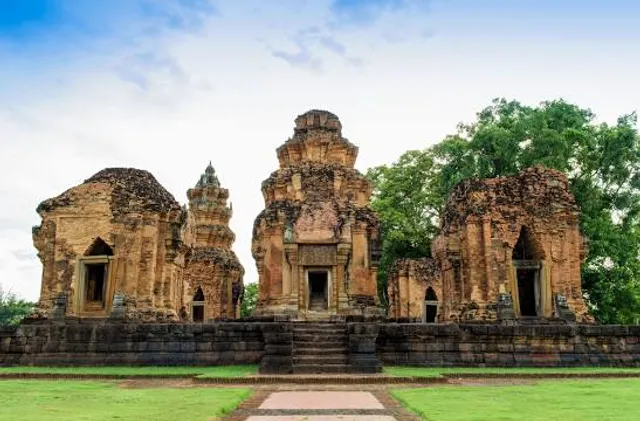
ปราสาทศีขรภูมิ บ้านระแงง อำเภอศีขรภูมิ จังหวัดสุรินทร์ ประกอบด้วยปราสาทก่ออิฐไม่สอปูน จำนวน ๕ หลัง ตั้งอยู่บนฐานศิลาแลงเดียวกัน ขนาดกว้าง ๒๕ เมตร ยาว ๒๖ เมตร และสูง ๑.๕ เมตร มีคูน้ำขนาด ๑๑๑x๑๒๕ เมตร ล้อมรอบทั้ง ๔ ด้าน และเว้นเป็นทางเข้าอยู่ทางทิศตะวันออก
แผ่นศิลาทับหลังเหนือกรอบประตูปราสาทหลังประธาน สลักเป็นภาพพระศิวนาฏราชสิบกร ทรงฟ้อนรำอยู่เหนือเกียรติมุข ภายใต้วงโค้งของลายท่อนพวงมาลัยสลักเป็นภาพพระคเณศ พระพรหมสี่พักตร์ พระนารายณ์สี่กร และพระนางอุมา บริเวณเชิงเสาประดับผนังที่กรอบประตูด้านหน้า สลักเป็นรูปนางอัปสรยืนถือดอกบัว และรูปทวารบาลยืนกุมกระบอง
จากลักษณะลวดลายสลัก ปรากฏอยู่บนแผ่นศิลาทับหลัง และเสาประดับผนัง ปราสาทศีขรภูมิ คงสร้างขึ้นในราวกลางพุทธศตวรรษที่ ๑๗ เนื่องในศาสนาพราหมณ์ลัทธิไศวนิกาย (บูชาพระศิวะเป็นใหญ่) ต่อมามีการบูรณะส่วนยอดของปราสาทหลังทิศตะวันตกเฉียงใต้ ในราวพุทธศตวรรษที่ ๒๒ สมัยศิลปะล้านช้าง ดังมีจารึกอักษรธรรมปรากฏอยู่ ณ ปราสาทแห่งนี้
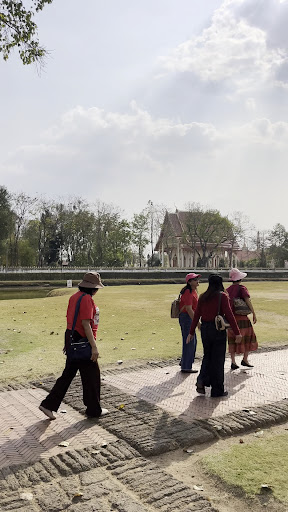
Prasat Si Khoraphum Location : Tambol Baan Ra-Ngang, Si Khoraphum District, Surin Province The compound of the temple is surrounded by A U-Shape pond measured about 111x125 meters leaving an entrance on the east. The five brick prang structures were built on the same laterite base that had a dimension of about 25x26x1.5 meters. The principle structure is situated in the middle and its four satellites are at each corners of the base. Decorated sandstone line at the entrance of the principle structure was carved with the scenes of Shiva Nataraja and miniature scenes of Brahma, Ganesa, Vishnu and U MA. The plasters that flanked the door frame were also carved with the scenes of Apasara and Davarapal (Guardian; The styles of decorative motifs resemble the Angkorian Baphuan and Angkor vat style (11th-12th century). The temple was dedicated to Hinduism and world have been build in the 12th century in the 16th century it was renovated and converted into a Buddhist temple evidenced by the roof structure of the prangs.
Prasat Sikhoraphum is located at Tambon Baan Rangang, Amphoe Sikhoraphum, Changwat Surin. It was built as a Hindu temple during the Angkor Wat Period (1100-1175 AD). The temple, built on a square plan, comprises one principal tower surrounded by four smaller towers and a moat. It faces east. In the 15th – 16th Centuries AD, the tops of some of the towers and altered and became Buddhist temples. There is an inscription in Pali which tells of these...
Read moreFar away from central of Surint along the route 226 heading to Srisakes about 50 kms you will arrive a Prasat interim of Si Khoraphum district. The age is around 800 years (not confirmed) under the influence of Khom civilization which spilled over the highland of Isarn nowaday. The Prasat is believed that it is to pay respect to gods of such the time. You can some 30 min tolook around it. It is easy to accesss to the palace. Please take your chance to be there. The Prasat is waiting...
Read more