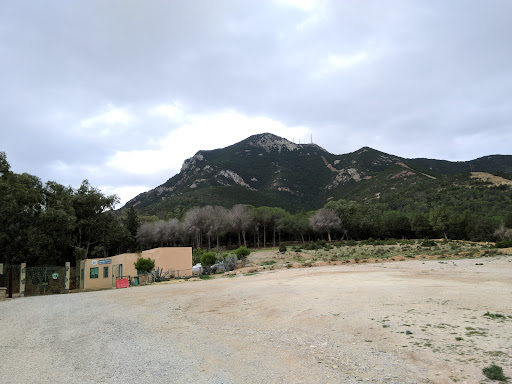
The national park is the most bizarre we've ever been to. When we entered the gate, there was no one there and the side gate was open. When we were about 100m in, a car and a motorcycle were coming towards the exit. Then about another 100m later, the motorcycle guy came back toward us and said the park is not open to visitors except someone with police permit. He nicely apologized to us and we walked to the exit. Just about 100m outside the gate, we saw an elder couple approaching the park, so we informed them, with broken English, French and gestures, that the park was not open. But they confidently replied that it is open as normal and asked us to follow them to the gate. They talked to the guard in Arabic, and then the guard agreed that we go in with them. Later on we realized that we had to stay close with the couple at all times. The couple were very nice, picked some fragrant flowers and herbes for us and showed us interesting things in the park. But they didn't want to go too far, let alone climbing the hills. So we came out in an...
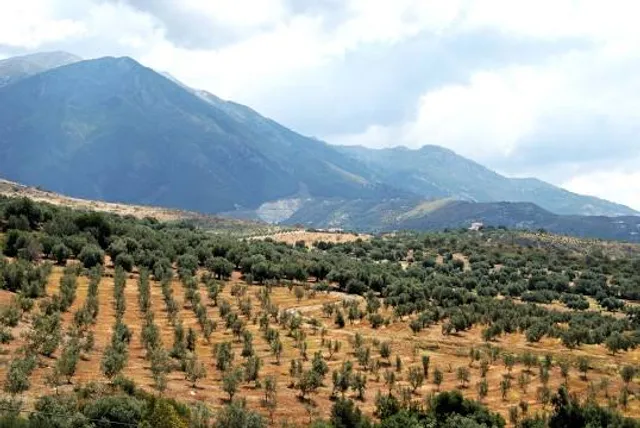
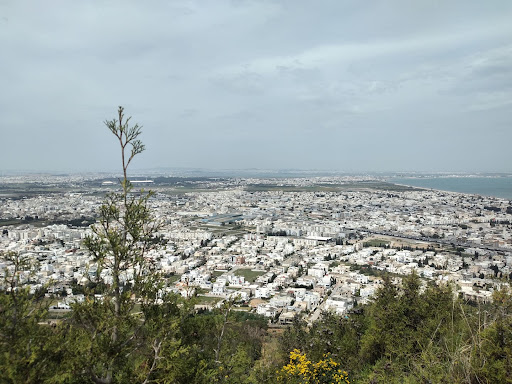
Read moreBoukornine National Park (French: Parc national de Boukornine) is a national park in northern Tunisia. The 1,939-hectare (4,790-acre) park was established on 12 February 1987.[1] It is very near to the town of Hammam-Lif and just 15 kilometres (9.3 mi) to the capital city of Tunis.[2] Wikimedia Commons has media related to Boukornine National Park. At the park, one can find flowers like the Persian cyclamen and animals like the Etruscan shrew (the world's smallest known mammal) and the Mountain gazelle.[2] The park is the site of Jebel Boukornine (a 576-metre mountain) and the Aïn Zargua spring, as well as...
Read moreLe parc national de Boukornine est un parc national du nord de la Tunisiecentré autour du Djebel Boukornine.
Créé le 12 février 1987, il couvre 1 939 hectares. Situé dans le voisinage immédiat de la ville de Hammam Lif et à une dizaine de kilomètres de Tunis, la capitale du pays, il est désigné comme étant un parc péri-urbain.
Ce parc abrite de nombreuses espèces végétales (près de 525), certaines très rares en Tunisie, telle le cyclamen de Perse, les orchidées et les tulipes sauvages. Parmi les 25 espèces mammifères, on peut citer le sanglier, fort répandu et parfois familier, le chacal, le chat sauvage, la gazelle de Cuvier et le porc-épic. Dans les falaises du djebel nichent également un grand nombre de rapaceset plusieurs espèces d'oiseauxsédentaires et migrateurs. Dans le parc, on peut observer par ailleurs des reptilestels les caméléons, le lézard ocellé, la tortue terrestre et des variétés de couleuvre, la plus répandue étant la couleuvre à...
Read more