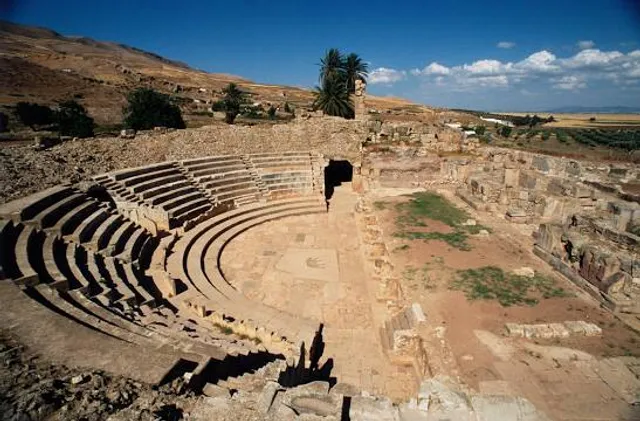
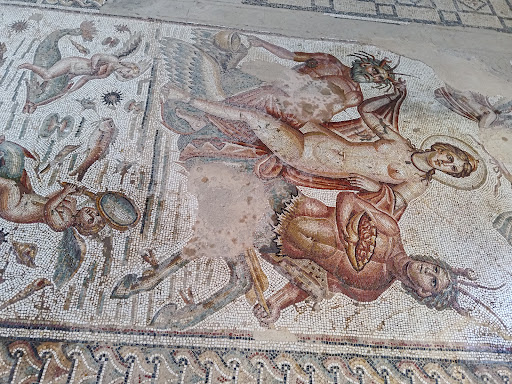
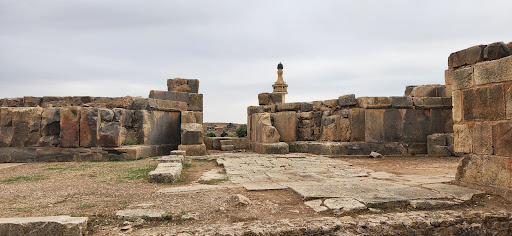
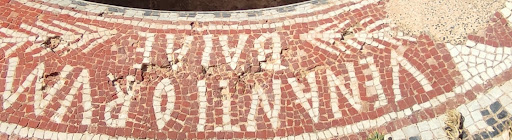
The civic patrona Julia Memmia, the daughter of the former consul of the Memmi family, expended her own money to build the bath complex and porticoes. The plan is relatively straightforward with a single axis from entry to tepidarium, only the calidarium is a bit off axis. The bather entered through a long portico leading to a large vestibule flanked by shops. Bulla Regia was a Berber, Punic, and Roman town near present-day Jendouba, Tunisia. Bulla Regia is unique among the numerous archaeological sites in Tunisia because its domestic architecture was constructed below ground. Scholars have hypothesized that the houses were built in this manner to alleviate the intense heat. Most of the ornate mosaics adorning the houses have remained in situ, and visitors can view the elaborate polychrome mosaics in their original context. The Romans assumed direct control in 46 BC, when Julius Caesar organized the province of Africa and made it a free city. Under Hadrian, it was raised to the status of a Roman colony and its citizens given full citizenship.
LOCATION
Jendouba, Jendouba, Tunisia
C...
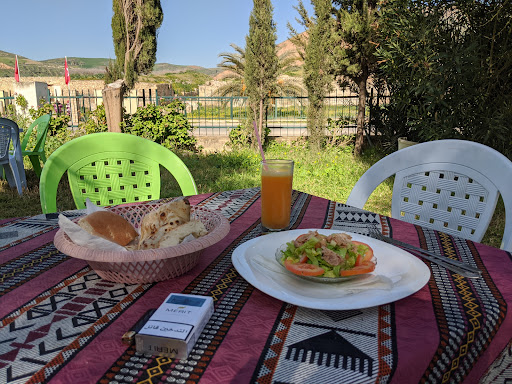
Read moreAfter spending the morning walking around the archaeological site with a guide, all by ourselves, it was perfect to relax here under the shade of trees. The fresh squeezed orange juice is amazing, and the recommended food options were great. An extremely calming place, to sit there and gaze out on the countryside of the archaeological site. Definitely one of my favorite travel memories. I can think back to the exact feeling of sitting there, and I wish I can return soon. The local family that manages the restaurant and guiding is extremely friendly....
Read moreبلاريجيا أو بولا ريجيا (من اللاتينية: Bulla Regia، أي «بولا المَلَكِيّة»، سميت الملكية لأنها كانت عاصمة الملك النوميدي ماسينيسا) هو موقع أثري ومدينة تاريخية تقع قرب مدينة جندوبة شمال غرب البلاد التونسية. ترجع جذور بولا ريجيا إلى القرن الرابع قبل الميلاد إلا أنها لم تصبح ذات أهمية إلا بعد سيطرة القرطاجيين عليها. خضعت المدينة عام 203 ق.م للرومان قبل أن تصبح عام 156 ق.م عاصمة للملك النوميدي ماسينيسا، حليف روما. شهدت المدينة حالة من الركود أثناء العهد البيزنطي ليهجرها سكانها شيئا فشيئا وتختفي معالم الحياة فيها بداية من الألفية الثانية. ابتداءا من منتصف القرن التاسع عشر أقيمت أول الحفريات فيها وتم الكشف عن عدة معالم وآثار طوال القرن العشرين. يحتوي الموقع حاليا على عدة معالم (فوروم، مسرح أثري، حمامات) أغلبها يرجع إلى العهد الروماني. يضم الموقع أيضا متحفا يعرض لوحات فسيفساء وتوابيت إضافة لعدة آثار تعود إلى العهد القرطاجي، النوميدي أو الروماني. يرقى تاريخ «بلاّ» إلى أواخر القرن الخامس و بداية القرن الرابع قبل الميلاد وقد كشفت الحفريات التي قام بها الدكتور – كرتون- حوالي سنة 1900 عن آثار قيمة للغــاية مثل التماثيل و السوق و الحمام و الكنيسة و المسرح و المنازل التي تحت الأرض، و تمتاز هذه الآثار بفسيفسائها الرومانيّة التي زخرفت بها أرضيّة هذه المباني و جدرانها؛ و قد رسمت بها لوحات عجيبة تحكي جوانب من حياة عصرها؛ و قد اتخذت منها تماثيل و قطع أثرية وضعت بالمتحف الوطني . و ببلاريجيا عين جارية عذبة مازالت مياهها إلى اليوم دافقة و كانت قبل جلبها في القنوات إلى مدينة جندوبة تنساب في حقول منخفضة تسمى – شط الحمام- مكونة بحيرة...
Read more