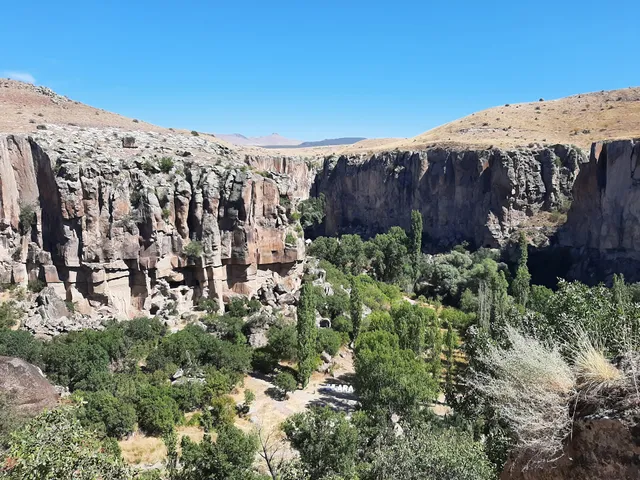
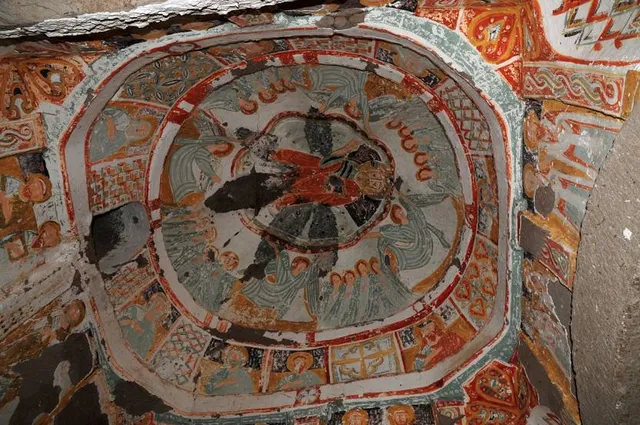
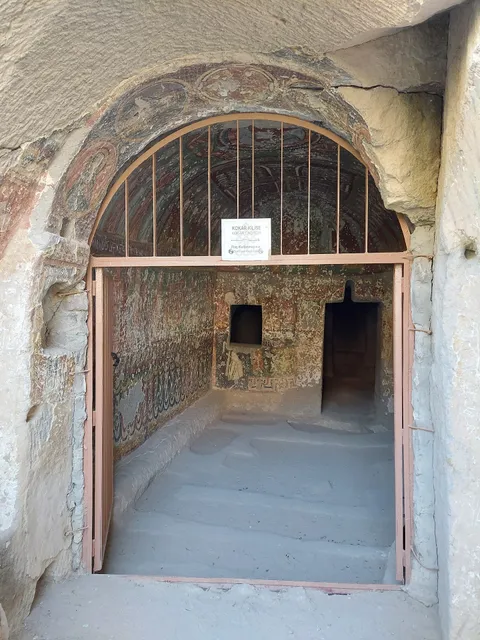
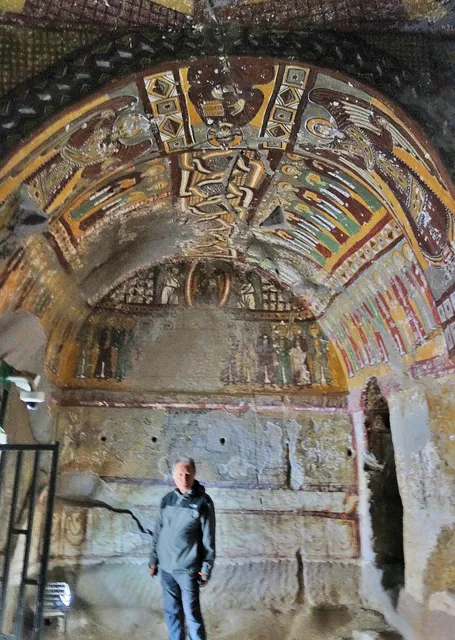
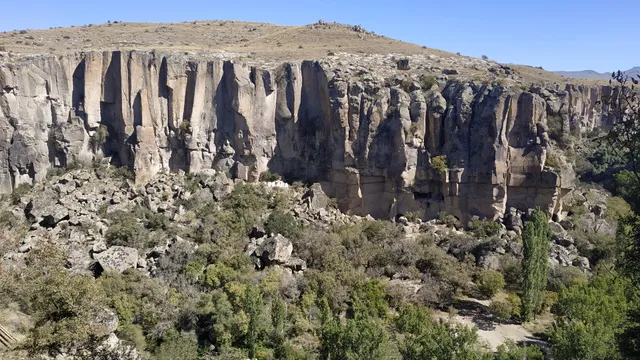
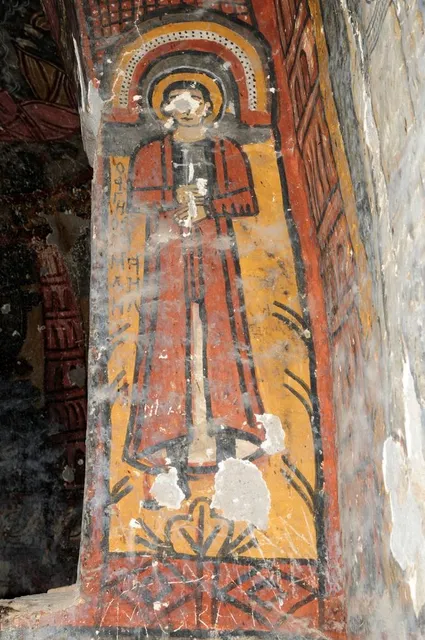
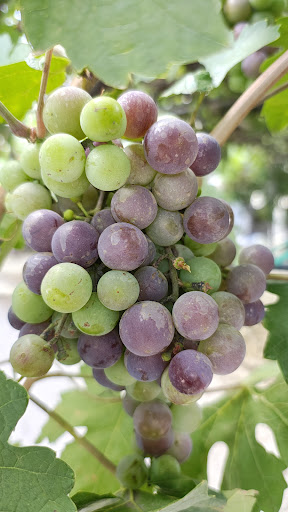
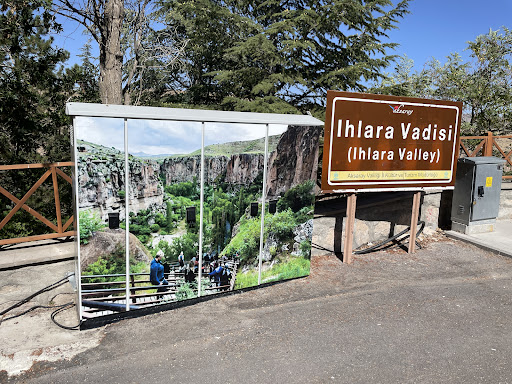
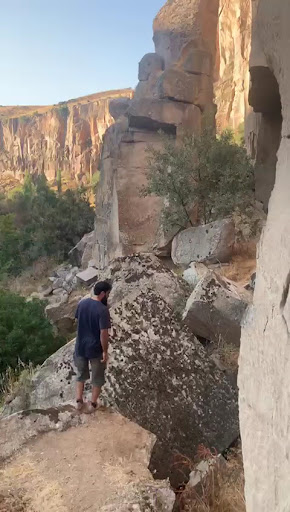
Ihlara Valley - Aksaray Province Ihlara Valley, known as Peristremma in historical sources ; vegetation, churches and chapels are among the rare areas where nature, history, art and culture come together.Where is Ihlara Valley Ihlara Valley, which is located within the borders of Güzelyurt District of Aksaray Province, has an important place among the canyons in the world. 18 km. Ihlara Valley, which has an average length of 150 meters in depth, 200 meters in width, and thousands of living areas, is the largest canyon in the world in which people lived in the past. The Melendiz River that shapes Ihlara Valley and gives life to the valley is the main source of life here. Hundreds of churches and rock carvings created by easy carving of the rocks surrounding the valley made Ihlara Valley one of the most important cultural and civilization centers of the world. Ihlara Valley was formed as a result of thousands of years of erosion of the Melendiz Stream, which progressed over the area which had collapsed following tectonic elevations and the eruption of Hasandağı volcano. The Melendiz River splits the land deep and steeply along the Ihlara Valley, creating magnificent and stunning beauties throughout the valley. The small rivers that originate from the Melendiz Mountains merge and flow in the southeast-northwest direction and reach the Mamasın Dam. Melendiz Stream draws about 30 meanders along the valley. Although the distance between Ilisu and Selime is 10 kilometers, the actual distance is 18 kilometers due to flowing meanders. IhlaraValley ' is another feature that attracts the attention is the nature. There is a dense green strip of vineyards and gardens near the water at the bottom of the steep, deep and narrow valley. It is as if nature has hidden itself into the valley. The valley is dominated by steppe-looking and undersized vegetation. When you come to the slopes of the valley, you will see a rich and green piece of nature hiding in the valley. This concealment has also determined the special location of the valley. Unlike the continental climate in the region, a climate close to the Mediterranean climate is observed at the bottom of the valley. The valley floor is a natural microclimate area with this feature. As a result, a wide variety of plants, especially pistachios, grow on the valley floor. IhlaraValley ' s maintaining the frescoed churches carved into the rock, have survived as a historical treasure not precedent. These frescoed churches and settlements created by the excavation of the rocks from the first years of Christianity are located in Ihlara Valley, which continues from Ihlara to Selime for 14 kilometers . Cappadocia River, in early ages (Patamos Kapadokus) found that a combination in the middle of the historic nature IhlaraValley 'The first examples of these churches in MS IV. century. The painting technique of churches can be divided into two parts. The churches in the vicinity of Ihlara are known as the "Cappadocian Type". Examples include: Eğritaş, Ağaçaltı, Kokar, Pürenliseki and Yılanlı Churches. The ones in Belisırma section are decorated with "Byzantine Type" paintings. Source: Aksaray Provincial Directorate of...
Read moreIhlara Valley, nestled in the heart of Cappadocia, is a true masterpiece of nature. A landscape carved by time and steeped in history. This 14-kilometer gorge, with its dramatic depths of nearly 100 meters, leaves one in awe of nature’s craftsmanship and humanity's resilience.
Walking along the riverbank of the Melindiz River, where centuries-old waters still flow gracefully, was an unforgettable experience. The valley’s vibrant greenery, interwoven with the serene sound of the river, creates an almost surreal atmosphere. This oasis has not only nurtured life over millennia but also safeguarded it; hidden crevices once sheltered communities seeking refuge from Roman soldiers, a testament to the valley's role in human history.
During my Green Tour, lunch was arranged beside the river—a tranquil scene that seemed painted from a dream. Sitting there, surrounded by the calm ripples of water and the whisper of leaves, I felt immersed in the valley's enduring spirit. Following lunch, our walk along the riverbank deepened my appreciation for the harmony of nature and history here. Every step seemed to bridge the past and present in a uniquely peaceful yet awe-inspiring experience.
If you seek a place where natural beauty meets ancient mystery, Ihlara Valley is...
Read moreWe recently visited the Ilhara Valley as part of the Green Tour operated by My Trip Travel. This is a unique 15 km long valley that reaches 150 metres deep in the heart of Cappadocia. The area we visited (15 Euro per foreign visitor for independent visitation) included a roughly 3 km stretch which our tour guide led us down into the valley and along the riverside until existing.
The grounds within the valley were very green and with much vegetation demonstrating a microclimate that felt significantly different to what we found throughout the rest of the region. We saw numerous cliffside cave dwellings used during past centuries including a couple of interesting old churches, one with old frescos that dated back to around the 7th century.
The visit to Ihlara Valley included a break stop at a make-shift riverside cafe for those who fancied a drink or snack break as part of the otherwise gentle hike that lasted around 45 minutes. While the walk was easy for most, it did require a roughly 400 step downward stretch to enter the valley. As part of the guided trip, we were dropped off and then picked up at separate locations. This would present some challenge and planning needs for those visiting...
Read more