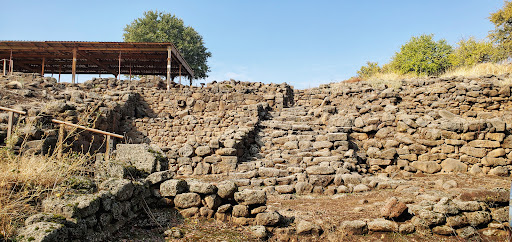
Sadly the museum aspect of this place was looking rather run-down when I was last there.
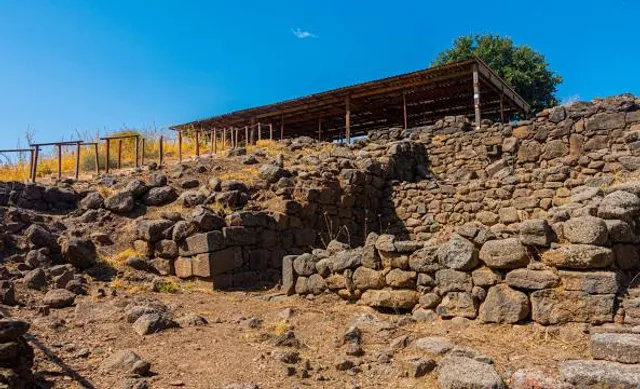
The settlement at Tilmen goes back to around 3400 BC (Calcholithic Age) and reached its height sometime in the Middle Bronze Age. The low hill sits in a marshy wetland, sitting in the bend of a creek; the location was likely chosen to restrict access to the city and make it easier to defend. At its height the city was surrounded by highwalls and a strong gate as well as what protection nature provided.
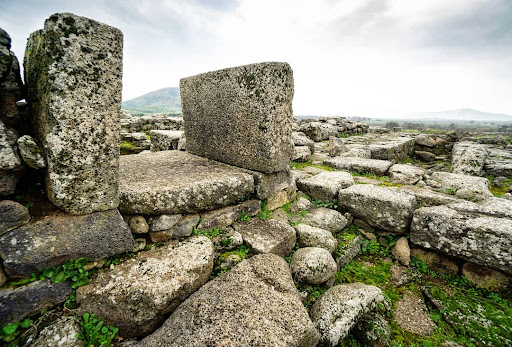
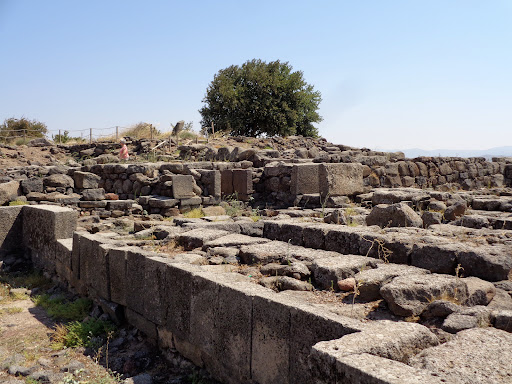
Like most bronze age sites, construction was a combination of stone foundations with mud-brick and woodframe superstructures. Fires, rains, floods, and centuries have erased everything but the stone foundations and the most interesting finds have been removed to museums, but there is still a fair amount to see. You can walk along the old walls to the gateways, up the grand staircase, and through the ruins of palaces and temples.
The exact name of this city is still unknown, though it is thought that it could be known as Zalpa which was said to be in the region and conquered by the Hittites whith the rest of the Yamhad kingdom.
While free entry is always nice, this also means that no one is there to take money and protect the site from vandals and treasure hunters. Hopefully regular maintenance will be done even though the site isn’t...
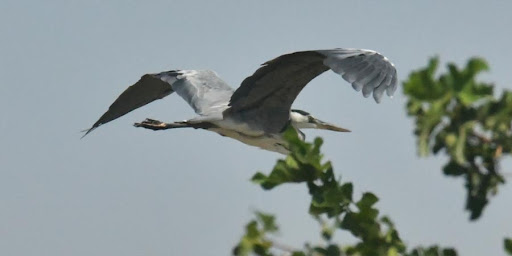
Read moreDie archäologische Stätte von Tilmen Höyük ist ein hervorragendes Beispiel für eine städtische Siedlung aus der Bronzezeit. Selbst Reisende, die sich normalerweise nicht für Geschichte interessieren, sollten sich mit einem Besuch in Tilmen zufrieden geben. Es liegt malerisch in der Biegung des Karasu-Flusses inmitten riesiger Feuchtgebiete, in denen viele Vogelarten leben. Die Gipfel der Amanus- und Kurt-Gebirgszüge sind weit entfernt am Horizont sichtbar. Ein Spaziergang auf dem Hügel ist wegen der üppigen Vegetation, einschließlich wilder Olivenbäume und Eichen, noch angenehmer. Fotografie-Enthusiasten haben die Möglichkeit, die Arten der lokalen Flora und Fauna einzufangen und die Ruinen zu fotografieren.
Dank der intensiven Arbeit italienischer und türkischer Archäologen ist der Besuch in Tilmen Höyük auch eine hervorragende Gelegenheit, das Erscheinungsbild der Siedlung des 2. Jahrtausends vor Christus kennenzulernen.
Entlang des vorbereiteten Pfades in Uhrzeigerrichtung befinden sich zahlreiche Informationstafeln, Fotos, Pläne und Illustrationen. Man sollte zuerst am Office sich an den Tafeln informieren und anschließend über den Parkplatz in nordwestlicher Richtung über eine kleine Brücke - also den eigentlichen Ausgang den Rundgang beginnen. Der Eintritt ist frei.
Die Besichtigung war Bestandteil des Reiseprogramms vom 21.08.2020, den wir im "Reisebericht Rundreise Hatay und Gaziantep" ausführlich mit Fotos...
Read moreTilmen Höyük, Toros dağ sırasından Amik Vadisi’ne uzanan, doğu sınırını Kurt Dağı ve batı sınırını Amanos Dağları’nın çizdiği İslahiye Vadisi olarak bilinen fay hattının üzerinde bulunan arkeolojik yerleşmenin modern Tilmen, Karasu Nehri'nin iki kolu üzerinde verimli toprakları olan bazaltik bir çıkıntı üzerinde bulunur. Yerleşmeye Orta Tunç Çağında Eski Hitit Yıllıklarında bahsedildiği üzere Zalb/war adı verilmiş olabilir. Bunun doğru olduğunu varsayarsak Eski Hitit kaynaklarındaki Puruna Nehri’nin Pyramos/ Ceyhan değil, Afrin olduğu iddiası desteklenmiş olur (bu durumda Atalur Dağı’nın aslında Kurt Dağı ve Haššum kentinin de Kilis yakınlarındaki Oylum Höyük olduğu anlaşılır). Tilmen’deki kalede (Kale Q) “Sumulael’in hizmetkarı, Ibbisin’in oğlu, Katip Lagamalgamil” mührünün yedi baskısını içeren büyük, koni şeklinde bir kapı bullası bulunmuştur. Bu kişi elbette ki bu ismi taşıyan Babil kralıdır (Orta Kronoloji’ye göre yaklaşık olarak MÖ 1880-1845). Bu, bölgede Aššur ile İç Anadolu’yu birbirine bağlayan ağa paralel olan ama biraz daha güneyde bulunan Sippar/Babil’e ait bir ticaret ağının olduğunu işaret eder. Bunun bir başka işareti de Sippar tüccarlarının Sumulael zamanından itibaren Fırat üzerindeki Mari’de...
Read more