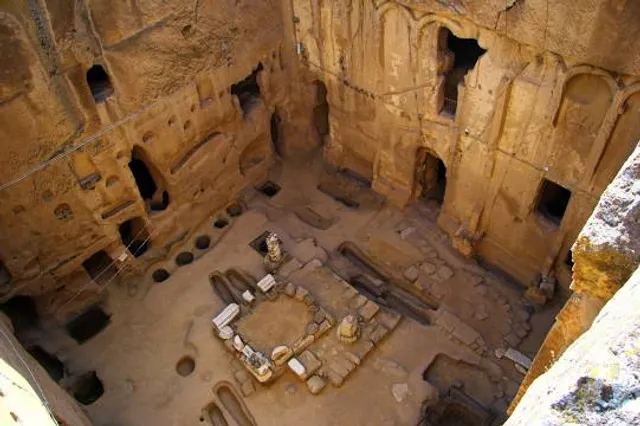
Gümüşler Monastery is one of those rare places where history is carved into stone — quietly, patiently, and with deep meaning. Hidden near the town of Niğde, this rock-cut Byzantine monastery dates back to the 10th or 11th century and was once a refuge and spiritual center for monks seeking silence and solitude. As you walk through its hand-carved rooms, narrow passages, and hollowed-out courtyard, you feel time slow down. The site includes monk cells, a dining area, an altar, and beautifully preserved frescoes — the most famous being a depiction of the Virgin Mary with a faint, mysterious smile, which is especially rare in Byzantine iconography. There’s a quiet stillness here — not of abandonment, but of contemplation. Every stone seems to whisper memories of prayer and a life devoted to something higher. This isn’t a place for loud impressions, but for inner reflection. From above, you can view the full layout of the monastery cut into the rock, and even walk around the top for a different perspective — the surrounding landscape is dry and open, offering contrast to the cool, shaded life inside the stone walls. If you seek something beyond sightseeing — something that quietly speaks to your inner world — Gümüşler Monastery is worth...
Read moreWe went to Gumsuler Monastery a week ago as we entered the Cappadocia region from Mersin. This was the first stop on our route. The approach was really quite surprising as the rock rises on one side just as you enter the town from the plain as you approach. It is quite a small village, with a restaurant and toilets just opposite. This site is not included in the Museum Card and the entrance fee is 15 lira. We were able to park in front of the site. Gumsuler Monastery itself is spread over quite a large area, but only certain areas are accessible. The main area is a large square courtyard which would have been 2 storeys and contains several rooms leading off. There is a chapel to the left which is painted and also another chapel on the second floor up some steep steps, with paintings of deer. I would advise caution as you will need to take care going up and down. Out of the main entrance, turning to the right, there are a number of other dwellings and storage rooms, but note that you may have to dodge the water sprinklers if...
Read morebiraz sira vardi muzekart ile beklemeden gectik.
Kapadokya’da kayaya oyulmus pek çok manastir bulunmaktadir ve bazi bilim adamlari bunlari yemekhaneli(trapezali) ve açik avlulu olmak üzere iki grupta ele almaktadirlar. Gümüsler Manastiri ikinci grup dahilindedir. Bizans sanatinin en güzel ve korunmus eserlerinden birisidir. 1973 yilinda arkeolojik sit alani kabul edilen ören yeri; oldukça büyük ve genis bir kaya kütlesinin içine kazinmistir. Kaya kütlesinin Dogu ve Güneye bakan yüzünün uzunlugu 1.5 km kadardir. Komple kaya olan ön cephe yerleşim merkezi olarak kullanilmistir. Manastır 8-12. yüzyillar arasinda ana kayadan oyularak yapilmistir. Bir orta avlu ve bu avluya baglanan kilise, yeraltı mekanları vb. müstemilattan oluşur. Avlunun dik duvarlarinin yüksekligi 14 m. kadardir. Kuzeydeki büyük oda ve orta avlu tabani mezarlik olarak kullanilmis, Güney tarafta ise iki katli yeralti sehri bulunmaktadir. Avlunun bati duvarinin ic kismi ise iki kat seklinde oyulmustur. Alt katta nartex bölümünden sonra kilise kismina ulasilir. Kapali Yunan haçı plani kilisenin içinde ana kayadan olusturulmus dört sütununun üzeri sivanmis ve rozet motifleriyle bezenmistir. Kuzey has kolunda iki mezar nişi içerisinde üç adet mezar bulunmaktadir. Naosun batisinda da besik tonoz örtülü giris mekâni bulunmaktadir. Duvar resimleri 1960'i yllarda ingiliz Arkeolog-Restoratör Michael Gough tarafindan onarilmistir. Kilisenin duvar resimlerinde en az üç farklı ustanin calistigi düsünülmektedir. Ana apsisteki üç serit halindeki resimlerin en üstünde Deesis (Yakaris-Ortada tahtta oturan Isa yaninda ise günahkarlar için af dileyen Meryem ve havarilerden olusan sahne) sahnesi ile Incil yazarlarinin sembolleri, en alttaki seritte ise Kayserili Büyük Basileios, Nyssa'li (Nevsehir) Gregorios, Naziyanz'li (Bekarlar-Aksaray) Gregorios gibi kilise babalarinin resimleri yer almaktadir. Kuzey haç kolundaki Meryem'e Müjde, isa'nin dogumu ve Tapinaga Takdimi sahneleri ile Vaftizci Yahya ve Aziz Stephanos figürleri ikinci bir sanatcinin elinden cikmis olmalidir. Gabriel ve Mikael figürleri üçüncü sanatçiya aittir. ic narteksten naosa giris kapisinin güneyindeki Meryem ve cocuk isa ile iki yanlarindaki bas melekler Narteksin üstündeki bir odanin duvarlarinda Kapadokya'da örnegi görülmeyen, av sahneleri ile çeşitli hayvanlardan olusan bir kompozisyon dikkat çekmektedir. Kilisedeki resimlerin ikonografik ve üslup özelliklerine göre 11.-12. yy’lara...
Read more