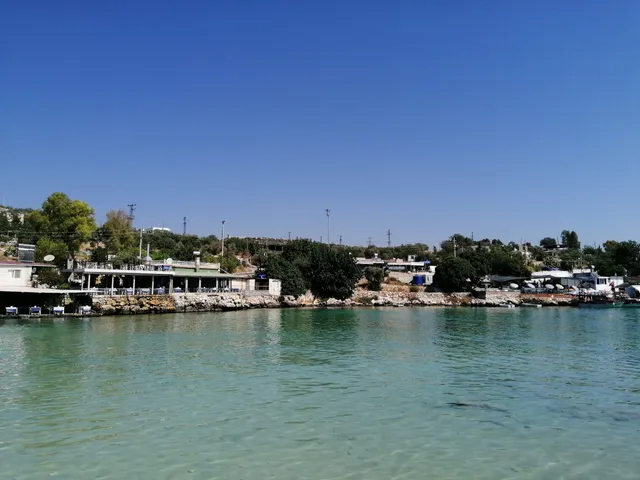
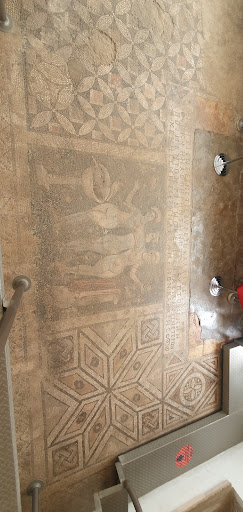
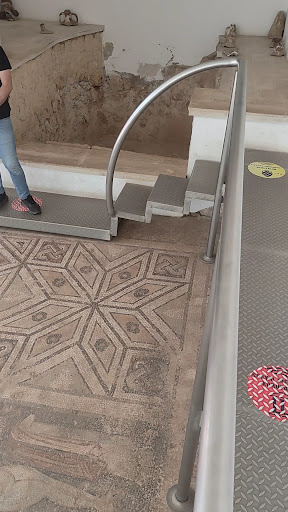
"Narlıkuyu Mosaic Museum - Mersin In 1975-1976, the mosaic floor of the Roman Period bath structure was enclosed in a building and a museum was created. Narlıkuyu Bay was a sea gate for those who came to worship and tour Heaven and Hell during the Ancient and Byzantine Periods. This settlement, known as Porto Calamie in the Middle Ages, had a magnificent bathhouse. From this bath structure dating back to the 4th century AD, only the floor mosaic in the water trough and the washing section has survived to the present day. This mosaic is preserved in the museum building.
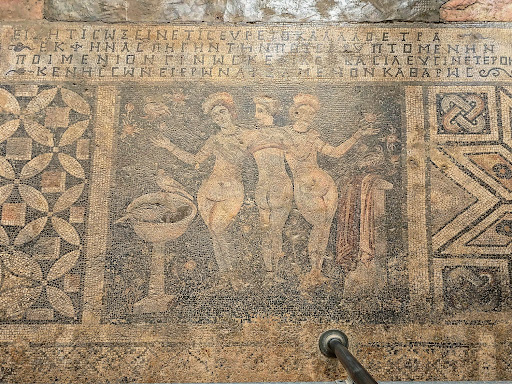
Poimenios, who is understood to have held a high position in the Eastern Roman Imperial administration, had a sink built by passing through the depths of the heavenly sinkhole and taking advantage of the fresh water source that merges into the sea in the small natural wonder of Narlıkuyu, and decorated its floor with mosaics. The mosaic, created with black, white and yellow stones, depicts Aglaia, Thalia and Euphrosine, the three daughters of Zeus, the chief god of the ancient period, with geometric, local bird and flower motifs. These daughters of Zeus were born from Eurynome, the goddess of harmony, famous for her beauty. The three sisters are called Charites. This name is derived from the ancient Greek word kharis, meaning brightness, sparkle and beauty. They are the patrons of all branches of art and the source of inspiration for men and gods. There is also an inscription on the goddesses. In this inscription; "O friend, if you ask who found the hidden source of the water of this beautiful bath, know that that person is Poimenios, who managed the sacred islands honestly and was a friend of the emperors," and gives the name of the person who had the...
Read moreMosaical bottom of the swimming pool, Roman bath constructed in the IV century A.D. in Narlikuyu. Inscription on mosaical pannel says "My friend, if you wonder who has discovered the hidden source of this wonderful bath water then you should know that he is Poimoneis, who ruled the Holy Islands in justice and was the friend of Emperors". This inscription provides us the name of a man who built this bath Poimoneis. Here, you can see three daughters of Zeus, also known as three graces. Their names were Aglaia, Thalia, and Euphorosine. They were also called Kharides in ancient Greek, which means light because Kharide derives from kharis of light. Narlikuyu, Silifke Municipality, Mersin Province, 🇹🇷 Turkey 🇹🇷....
Read moreZiyaret ettiğiniz yerde görüp görebileceğiniz şeylerin fotoğrafını ekledim. Anlam ve önemini de aşağıda paylaşıyorum. Yolunuz düşerse ve müze kartınız varsa tavsiye ederim, bir 5 dakika ziyaret edebilirsiniz.
1975-1976 yıllarında Roma Dönemi hamam yapısına ait mozaik taban bir bina içine alınarak müze oluşturulmuştur. Narlıkuyu Koyu, Antik Çağ ve Bizans Dönemi'nde Cennet-Cehennem’e tapınma ve geziye gelenler için bir deniz kapısı olmuştur. Ortaçağ’da ismi Porto Calamie diye bilinen bu yerleşim yeri görkemli bir hamama sahipti. MS 4'üncü yüzyıla ait bu hamam yapısından bugün sadece su yalağı ile yıkanma bölümündeki taban mozaiği günümüze kadar gelebilmiştir. Bu mozaik müze binası olan yapı içinde korunmaktadır.
Doğu Roma İmparatorluk yönetiminde yüksek bir görev sahibi olduğu anlaşılan Poimenios, cennet obruğunun derinliklerinden geçerek Narlıkuyu’daki doğa harikası küçük körfezde denize karışan tatlı su kaynağından yararlanarak bir yunak yaptırmış, tabanını da mozaikle bezetmiştir. Siyah, beyaz ve sarı renkli taşlarla oluşturulmuş mozaikte geometrik, yöresel kuş ve çiçek motifleri ile antik dönemin baş tanrısı Zeus’un üç kızı Aglaia, Thalia ve Euphrosine resmedilmiştir. Zeus’un bu kızları, güzelliği ile ünlü uyum tanrıçası Eurynome’den doğmuştur. Üç kızkardeş Kharites olarak anılır. Bu isim antik Yunanca’da parlaklık, ışıltı ve güzellik anlamına gelen kharis sözcüğünden türetilmiştir. Sanatın her dalının koruyucusu ve insanlarla tanrıların esin kaynağıdırlar. Ayrıca tanrıçaların üzerinde bir yazıt bulunmaktadır. Bu yazıtta; “Ey, dost, bu güzel hamamın suyunun saklı olan kaynağını kimin bulduğunu sorarsan, bil ki o kişi, kutsal adaları dürüst yöneten ve imparatorların da dostu olan Poimenios’ tur ” ifadeleri bulunmakta ve hamamı yaptıran kişinin adını...
Read more