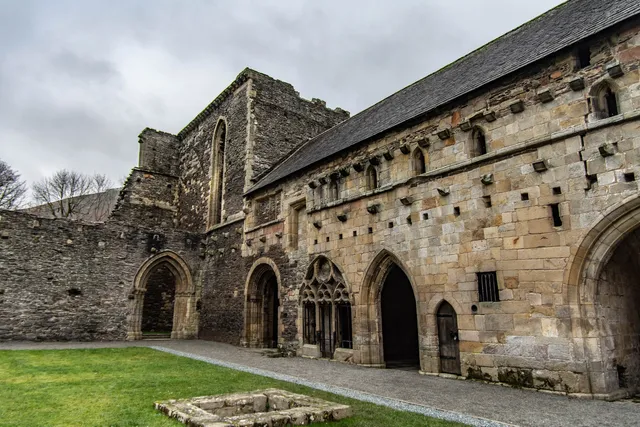
The Abbey at Valle Crucis was founded for monks of the Cistercian order in 1201 by Madog ap Gruffydd Maelor, the ruler of this part of northern Powys.
In attempt to return to St Benedict's primitive spirit of monasticism, the Cistercians were the most successful of the various reformed monastic orders of the 11th and 12th centuries.
The order spread rapidly to become a highly-organized international organization. Within a century there were over 500 abbeys right across Europe, Scandinavia and the near east. In Britain alone the final number was 85. The last of 14 of Cistercian foundations was built in Wales.
The Cistercians, or 'White Monks', were the most popular of the monastic orders in medieval Wales.
The name comes from their first foundation of Cîteaux (Latin: Cistercium) established in Burgundy, France some 900 years ago in 1098.
The white monks they were called because of their garment of undyed wool.
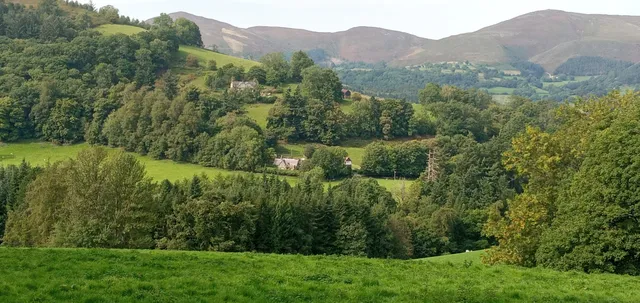
In desire of poverty and isolation, their monasteries were built in remote locations, "far from from the concourse of men", where the monks and lay-brothers combined an austerely religious life with farming on the outlying estates.
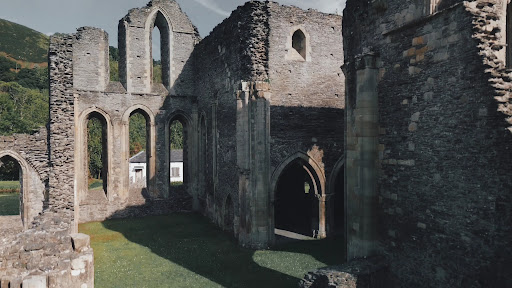
The church, was built in the early 13th century first time, but it was badly damaged by the fire sometime the middle of that century and had to be extensively rebuilt.
The east range of the cloister built around 1400, containing the chapter house and monks' dormitory.
The fish pond you will see there on the left handside of the Abbey is now the only surviving monastic fish pond in Wales!
The Cistercians were the most successful of the monastic orders in Wales with 13 houses founded here between 1131 and 1226.
Valle Crucis Abbey was closed down in 1537, during Henry VIII's dissolution of the monasteries, but parts were converted adterwards into the house.
We have parked just outside of the entrance.
There is a gift shop there and toilet facilities there too.
Lots of information boards there too to get information about each part of the Abbey.
Masks are required to be worn.
It is no doubt by far a very impressive Abbey we have come across on our holiday in Wales and definitely recommend...
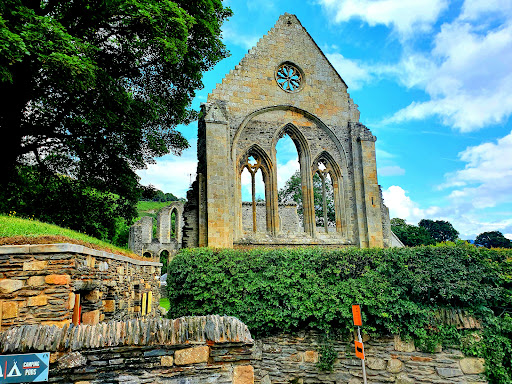
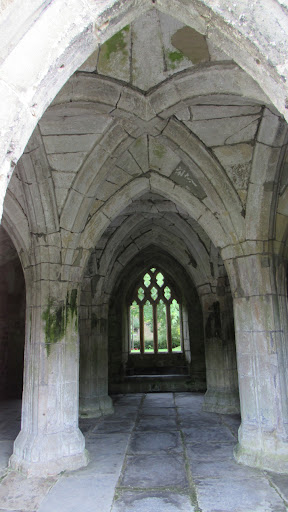
Read moreValle Crucis Abbey was a Cistercian abbey built in 1201. The ruins are now under the care of Cadw. The west end of the large church remains as an imposing welcome, the traewry still intact in the rose window. Inside, the bases of the arcades line the nave through to the transepts and sanctuary. Out into the cloister, little remains of the buildings involved in everyday monastic life aside from the chapter house and monks' dormitory. The ceiling of the chapter house is a stunning display of medieval vaulting, dating from around 1400. Above it is the monks' dormitory, now home to a collection of medieval grave slabs and a large quantity of bird droppings. The best preserved slab, covered in carvings and a spectacular lion belongs to Madog ap Gruffydd, Owain Glyndwr's great grandfather. From the dormitory, monks could descend directly into the church via the night stairs, of which only the doorway remains. The monks would have woken around 2am to begin prayer, directed by the Rule of Saint Benedict. Beyond the church lies the only surviving monastic fish pond in Wales. Monks were forbidden from eating meat, but fish was allowed and the pond provided a steady supply. As the site is cared for by Cadw, there is an admission price for non members. The is no car park to really speak of, but the lane is wide...
Read moreValle Crucis is one of the most beautiful abbeys anywhere in Britain. It is true to say that there is a caravan park next to it, but once you're down in the grounds of the abbey you will barely notice (especially if you go slightly later in the year or at off peak times).
In response to the guy who posted a one-star review,.the owners of the caravan park are not the owners of the abbey, which is in the care of CADW. The caravan park has been there a long time (pre-planning permission, I understand) and there's not a lot that the council or anyone else can do about it. Posting a one-star review is unfair to the abbey itself which is fascinating historically as well as having all the charm of a Cistercian ruin which has much of its architecture intact especially the Chapter House with its vaulted ceiling, and the upstairs buildings above it. There you will find an exhibition of mediaeval grave slabs, one or two of which may have been Hospitaller or Templar knights, the kind of guys who, in one's imagination, might have quested after the Holy Grail. Perhaps they brought it here,...
Read more