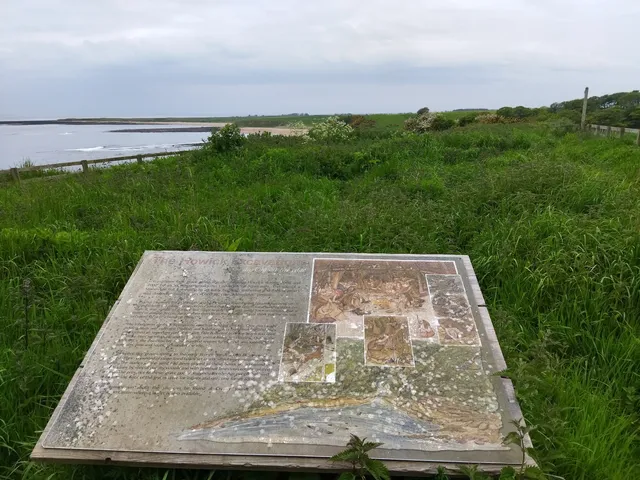
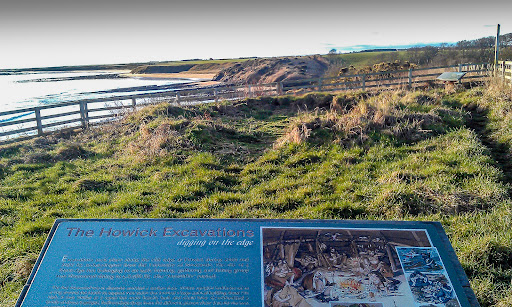
The following was taken from an Information Board at the site of the Howick Excavations in February 2012 (ten years ago)
"Excavations took place along the cliff edge at Howick during 2000 and 2002 by archaeologists from the University of Newcastle. The site of a Stone-Age hut belonging to an early hunting, gathering and fishing group was discovered dating to c.8,000 BC (the 'Mesolithic' period).
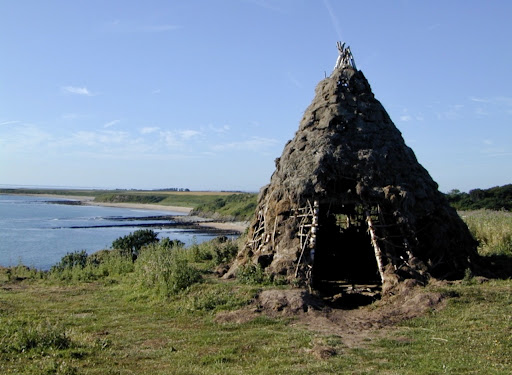
The hut measured 6m in diameter and had a sunken floor. Timber uprights had been set in a ring around the inside to support roof poles that formed a large conical building about 7m high. It was similar to a teepee but more heavily built and could have accommodated a family of about 6 people. Radiocarbon dates from the different phases show that the site was occupied for over a hundred years.
The inhabitants ate meat from animals such as wild pig and fox. They also caught nesting birds and collected shellfish and hazelnuts. It is likely that fish and seals also formed an important part of the diet. Flint collected from the beach was used to make hunting weapons and to prepare animal hides for clothing. During the Mesolithic the coastline lay a few hundred metres further out and woodland of oak, elm, pine and hazel surrounded the site.
A group of five graves dating to the early Bronze-Age (c.2,000 BC) were also found. These consisted of stone-lined boxes set in pits with large capstones above them. The bodies of the dead had been placed in these boxes accompanied in some cases by special pottery vessels and with polished limestone cobbles placed on top. The presence of these 'grave goods' suggests Bronxe-Age people believed in an afterlife. Four of the graves were for infants and only one for an adult.
More information about the site can be found at Craster Tourist Information Centre where a leaflet is...
Read moreThis site is of one of the oldest houses in the UK dating back 7000 - 8000 years. Worth a visit if you’re passing by.
The photo is of the reconstructed hut which a team of archaeologists decided to reconstruct for the BBC documentary series “Coast.” This hut is no longer standing near the site, which is now grassed over and enclosed by a fence. You are allowed to walk inside and it contains two information boards.
Until the recent discovery of the house at the Star Carr archaeological site, the Howick House was believed to be the oldest Mesolithic house in the United Kingdom. The hearths located inside of the hut were radio carbon dated to around 7800 BCE.
The site is the oldest settlement in the Northumberland area. In addition to the hut, there is a cemetery consisting of five...
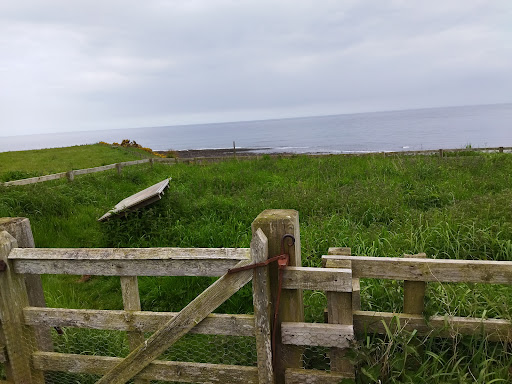
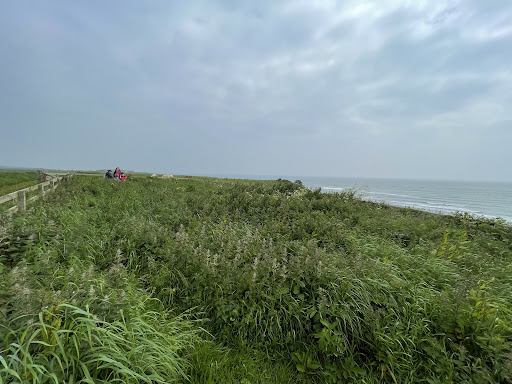
Read moreThere were no signposts at all directing us to the site and an irritated cab driver was not helping matters. But we pushed on because I was looking forward to seeing the reported replica that has been built of Britain's oldest dwelling - a home used by humans who lived on the coast in 7,800 BC! Regrettably, no such replica was visible! Even the original site that had remains of the ancient wood used is no longer visible. It's completely covered by overgrown grasses as the accompanying pictures will show you. Having made the long trip to Howick, it would have been nice to have some history to see... Surely the Archaeological Services can do better. The rating of 3 stars is only because I'm such a fan of ancient history. For most, it'll be a massive...
Read more