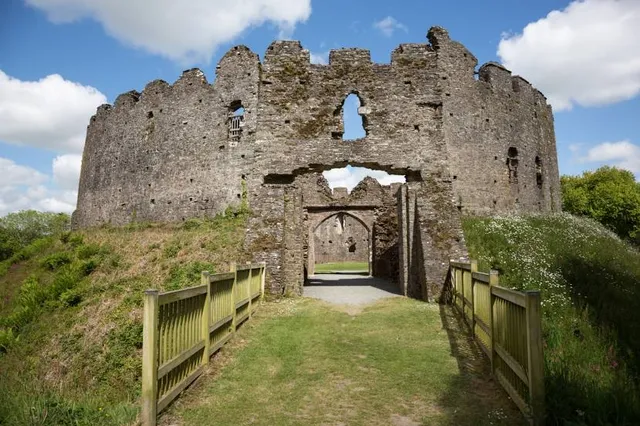
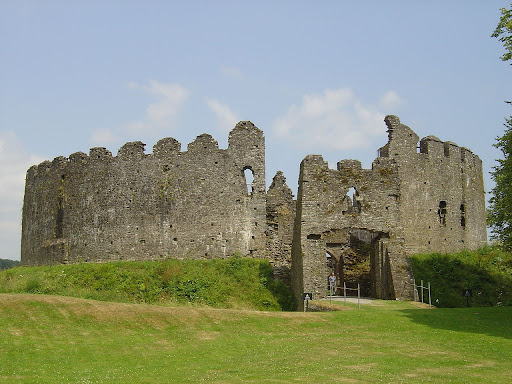
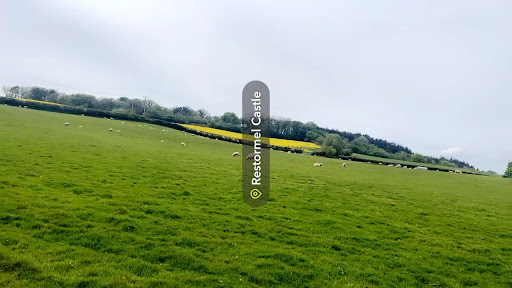
Restormel Castle is a notable historical site located near Lostwithiel in Cornwall, England. Renowned for its perfectly circular design, the castle was constructed in the late 13th century as a luxurious residence for Edmund, Earl of Cornwall. It later became associated with the Duchy of Cornwall and was visited twice by Edward, the Black Prince, in the 14th century.  
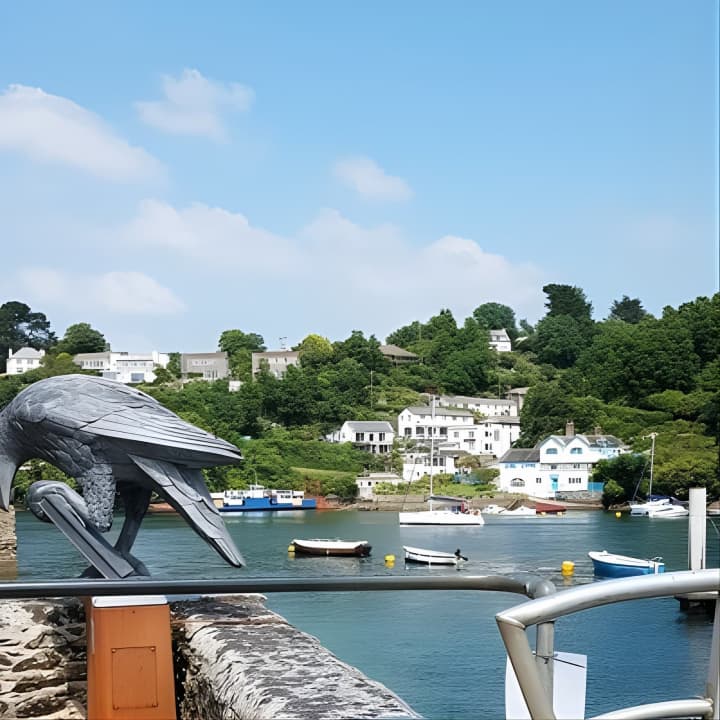
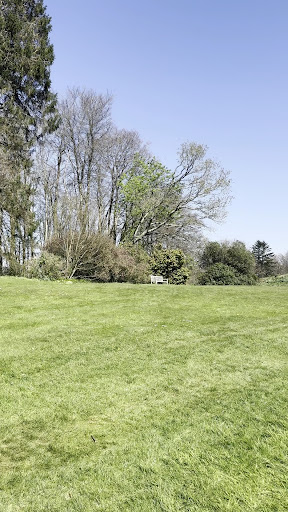
Perched atop a hill, the castle offers commanding views over the River Fowey valley, making it a picturesque spot for visitors. The surrounding grounds, once a deer park, are now popular for picnics and leisurely walks, especially during spring when the landscape is adorned with primroses and daffodils.  
Restormel Castle is managed by English Heritage and is open to the public. Visitors can explore the castle ruins, enjoy the scenic views, and learn about its rich history. For detailed information on opening times, ticket prices, and facilities, please refer to the official English Heritage website. 
Sure! Here’s a more detailed overview of Restormel Castle:
⸻
Overview
Restormel Castle is one of the most remarkable and best-preserved examples of a circular shell keep in England. It sits on a hill above the River Fowey near the town of Lostwithiel in Cornwall, surrounded by lush countryside. The castle is a peaceful yet striking ruin that offers a glimpse into medieval luxury and defense.
⸻
History • Originally built: Late 11th century as a motte-and-bailey. • Rebuilt: In stone in the late 13th century by Edmund, Earl of Cornwall, as a luxurious retreat rather than a fortress. • Royal connections: Visited twice by Edward the Black Prince in the 14th century. • Civil War: Briefly occupied during the English Civil War (1644) by Royalist forces. • Duchy of Cornwall: Remains part of the Duchy to this day.
⸻
Architecture • Shell keep design: Nearly perfect circle with high curtain walls. • Central courtyard: Surrounded by living quarters including the hall, chapel, kitchen, and private rooms. • Panoramic views: The elevated position gives sweeping views across the Fowey Valley.
⸻
Visiting Today • Managed by: English Heritage • Opening Times: Usually open daily from spring through autumn (check website for seasonal hours). • Ticket Prices: • Adults: ~£6.50 • Children: ~£3.90 • Family passes available • Facilities: • Small gift shop • Toilets (including accessible options) • Picnic areas • Free car park (approx. 25 spaces, 70m from the entrance)
⸻
Walking & Surroundings • Lostwithiel to the Castle: ~1.2-mile walk, quite steep in places. • Nature & scenery: Especially beautiful in spring with blooming wildflowers and peaceful...
Read moreRestormel Castle lies by the River Fowey near Lostwithiel in Cornwall, England, UK. It is one of the four chief Norman castles of Cornwall, the others being Launceston, Tintagel and Trematon. The castle is notable for its perfectly circular design. Although once a luxurious residence of the Earl of Cornwall, the castle was all but ruined by the 16th century. It was briefly reoccupied and fought over during the English Civil War but was subsequently abandoned. Now in the care of English Heritage, it is open to the public.
Restormel was part of the fiefdom of the Norman magnate Robert, Count of Mortain, located within the manor of Bodardle in the parish of Lanlivery. Restormel Castle was probably originally built after the Norman conquest of England as a motte and bailey castle around 1100 by Baldwin Fitz Turstin, the local sheriff. Baldwin's descendants continued to hold the manor as vassals and tenants of the Earls of Cornwall for nearly 200 years.
Constructed in the middle of a large deer park, the castle overlooked the primary crossing point over the River Fowey, a key tactical location; it may have been originally intended for use as a hunting lodge as well as a fortification, however.
Robert de Cardinham, lord of the manor between 1192–1225, then built up the inner curtain walls and converted the gatehouse completely to stone, giving the castle its current design. The village of Lostwithiel was established close to the castle at around the same time. The castle belonged to the Cardinhams for several years, who used it in preference to their older castle at Old Cardinham. Andrew de Cardinham's daughter, Isolda de Cardinham, finally married Thomas de Tracey, who then owned the castle until 1264.
The castle was seized in 1264 without fighting by Simon de Montfort during the civil conflicts in the reign of Henry III, and was seized back in turn by the former High Sheriff of Cornwall, Sir Ralph Arundell, in 1265. After some persuasion, Isolda de Cardinham granted the castle to Henry III's brother, Richard of Cornwall in 1270. Richard died in 1271, and his son Edmund took over Restormel as his main administrative base, building the inner chambers to the castle during his residence there and titling it his "duchy palace". The castle in this period resembled a "miniature palace", with luxurious quarters and piped water. It was home to stannary administration and oversaw the local, profitable tin-mines in...
Read moreRestormel Castle is really worth a visit. It's smaller, but there's lots to see, to do and to learn about its history. And it has quite the history! First real evidence dates back to the 13th Century. But there was probably already a castle here in the 12th or even 11th Century. It functioned as a castle until the 17th Century and then was abandoned. Only in the 20th Century it was discovered again, cleared and cleaned. And since 1984 in English Heritages good hands.
It's sitting on top of a small hill, offering some nice views. Even nowadays. Members of EH enter for free and even dogs our allowed - our Bulldog enjoyed the visit very much. As did we. Staff was really friendly here and also helpful with some additional information.
There is a small trail leading around the castle. And inside there are lots of really interesting sections. You also can walk on the wall to enjoy the views.
Picnic area and bathrooms are on site as well. Free parking just a few steps away.
A wonderful visit. And there was a surprisingly small number of visitors on that day. Too bad, because this castle is really no...
Read more