HTML SitemapExplore
logo
Find Things to DoFind The Best Restaurants

Skara Brae Prehistoric Village — Attraction in Mainland

Name
Skara Brae Prehistoric Village
Description
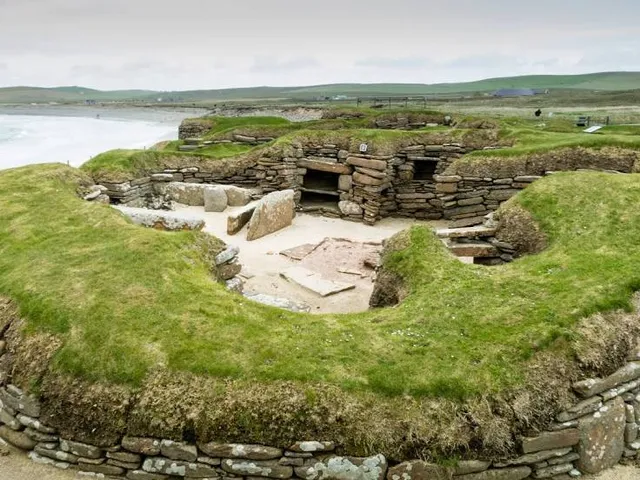
Skara Brae is a stone-built Neolithic settlement, located on the Bay of Skaill on the west coast of Mainland, the largest island in the Orkney archipelago of Scotland.
Nearby attractions
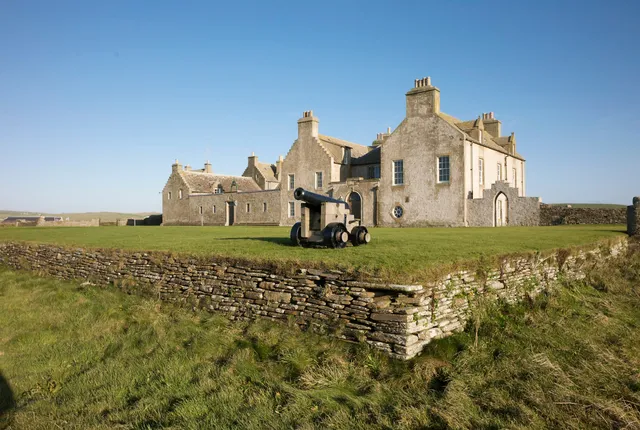
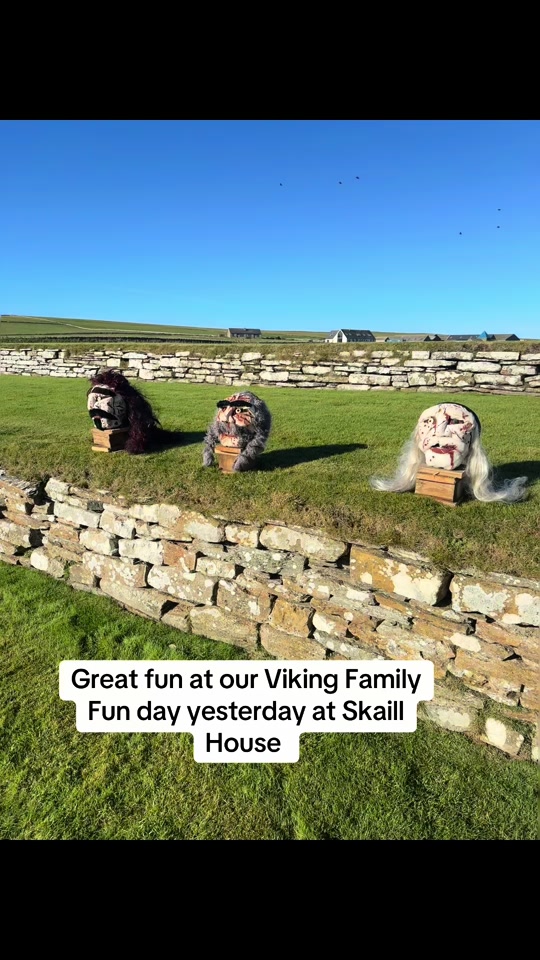
Skaill House
Sandwick, Stromness KW16 3LR, United Kingdom
Nearby restaurants
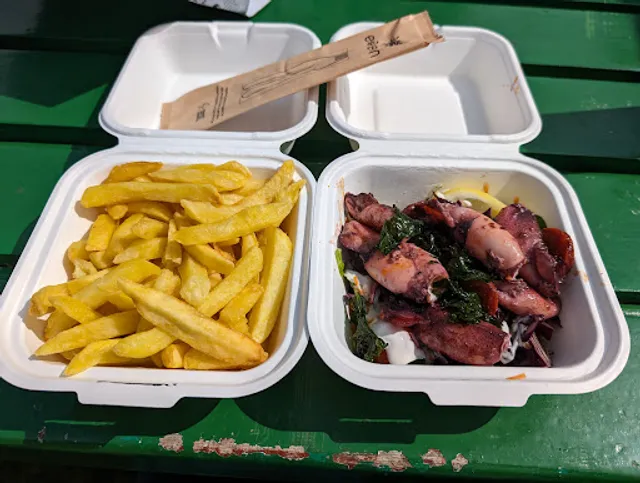
Loki Seafood Shack
2MW7+X9, Stromness KW16 3LR, United Kingdom
Nearby hotels
Related posts
Keywords
Skara Brae Prehistoric Village tourism.Skara Brae Prehistoric Village hotels.Skara Brae Prehistoric Village bed and breakfast. flights to Skara Brae Prehistoric Village.Skara Brae Prehistoric Village attractions.Skara Brae Prehistoric Village restaurants.Skara Brae Prehistoric Village travel.Skara Brae Prehistoric Village travel guide.Skara Brae Prehistoric Village travel blog.Skara Brae Prehistoric Village pictures.Skara Brae Prehistoric Village photos.Skara Brae Prehistoric Village travel tips.Skara Brae Prehistoric Village maps.Skara Brae Prehistoric Village things to do.
Skara Brae Prehistoric Village things to do, attractions, restaurants, events info and trip planning
Skara Brae Prehistoric Village
United KingdomScotlandMainlandSkara Brae Prehistoric Village

Basic Info

Skara Brae Prehistoric Village

Sandwick, Stromness KW16 3LR, United Kingdom
4.7(1.1K)
Open 24 hours
Save
spot

Ratings & Description

Info

Skara Brae is a stone-built Neolithic settlement, located on the Bay of Skaill on the west coast of Mainland, the largest island in the Orkney archipelago of Scotland.

Cultural
Outdoor
Family friendly
attractions: Skaill House, restaurants: Loki Seafood Shack
logoLearn more insights from Wanderboat AI.
Phone
+44 1856 841815
Website
historicenvironment.scot

Plan your stay

hotel
Pet-friendly Hotels in Mainland
Find a cozy hotel nearby and make it a full experience.
hotel
Affordable Hotels in Mainland
Find a cozy hotel nearby and make it a full experience.
hotel
The Coolest Hotels You Haven't Heard Of (Yet)
Find a cozy hotel nearby and make it a full experience.
hotel
Trending Stays Worth the Hype in Mainland
Find a cozy hotel nearby and make it a full experience.

Reviews

Nearby attractions of Skara Brae Prehistoric Village

Skaill House

Skaill House

Skaill House

4.6

(151)

Open 24 hours
Click for details

Nearby restaurants of Skara Brae Prehistoric Village

Loki Seafood Shack

Loki Seafood Shack

Loki Seafood Shack

4.4

(14)

Click for details
Get the Appoverlay
Get the AppOne tap to find yournext favorite spots!
Wanderboat LogoWanderboat

Your everyday Al companion for getaway ideas

CompanyAbout Us
InformationAI Trip PlannerSitemap
SocialXInstagramTiktokLinkedin
LegalTerms of ServicePrivacy Policy

Get the app

© 2025 Wanderboat. All rights reserved.
logo

Reviews of Skara Brae Prehistoric Village

4.7
(1,145)
avatar
5.0
1y

The Neolithic settlement of Skara Brae is one of the best preserved groups of prehistoric houses in Western Europe.

We recommend booking online in advance for the best price and to guarantee entry.

Uncovered by a storm in 1850, Skara Brae gives a remarkable picture of life 5,000 years ago, before Stonehenge was built.

Explore this prehistoric village and see ancient homes fitted with stone beds, dressers and seats. A replica house allows visitors to explore its interior, while the visitor centre provides touch-screen presentations, fact-finding quizzes and an opportunity to see artefacts discovered during the archaeological excavations of the 1970s.

There is a cafe and a well stocked gift shop selling locally-made souvenirs and crafts. Joint ticket with Skaill House available April - September.

For information on accessibility you can download our Access Guide.

Save with an Explorer Pass

An Explorer Pass, valid for 14 consecutive days, is a great way to explore our iconic sites.

More information:

Northern Europe’s best-preserved Neolithic village

The Neolithic village of Skara Brae was discovered in the winter of 1850. Wild storms ripped the grass from a high dune known as Skara Brae, beside the Bay of Skaill, and exposed an immense midden (refuse heap) and the ruins of ancient stone buildings. The discovery proved to be the best-preserved Neolithic village in northern Europe. And so it remains today.

Skara Brae was inhabited before the Egyptian pyramids were built, and flourished for centuries before construction began at Stonehenge. It is some 5,000 years old. But it is not its age alone that makes it so remarkable and so important. It is the degree to which it has been preserved. The structures of this semi-subterranean village survive in impressive condition. So, amazingly, does the furniture in the village houses. Nowhere else in northern Europe are we able to see such rich evidence of how our remote ancestors actually lived.

The profound importance of this remarkable site was given official recognition in 1999 when it was inscribed upon the World Heritage List as part of the Heart of Neolithic Orkney World Heritage Site.

The houses

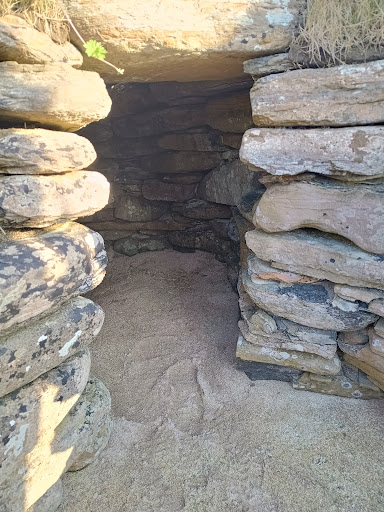
All the houses are well-built of closely-fitting flat stone slabs. They were set into large mounds of midden (household refuse) and linked by covered passages. Each house comprised a single room with a floor space of roughly 40sq m. The ‘fitted’ stone furniture within each room comprised a dresser, where prized objects were probably stored and displayed, two box-beds, a hearth centrally placed and small tanks set into the floor, perhaps for preparing fish bait.

The artefacts

A rich array of artefacts and ecofacts has been discovered during the various archaeological excavations. They include gaming dice, hand tools, pottery and jewellery (necklaces, beads, pendants and pins). Most remarkable are the richly carved stone objects, perhaps used in religious rituals. The villagers were farmers, hunters and fishermen, capable of producing items of beauty and sophistication with rudimentary technology. No weapons have been found and the settlement was not in a readily defended location, suggesting a peaceful life.

Most of the artefacts are now on view in the visitor centre, a short walk away.

The end of village life

Village life appears to have ended around 2,500 BC. No one knows why. Some argue that it was because a huge sandstorm engulfed their houses, others that it was more gradual. As village life came to an end, new monuments were beginning to rise up on mainland Orkney, including most importantly the chambered tomb at Maes Howe and the impressive stone circles at the Ring of Brodgar...

   Read more
avatar
1.0
24w

Utterly crap management by Historic Scotland.

Paid for audio tour, but they don't give you a device to listen through like literally anywhere else would, instead they expect you to download their app and download the enormous audio tour onto your own phone and listen to it through your device.

They failed to send us a confirmation email so we had no idea about any of this, and obviously haven't brought headphones with us.

Even the reception desk staff told us they have "endless issues" with this awful audio guide system. All they could suggest is that we buy a cup of coffee and wait while our phones struggle to download everything (45 minutes so far). We are waiting in the coffee queue now and it isnt even moving.

Oh and the cafe is cash only, just to add to the inconvenience. Customers are having to offer to pay for each other's drinks. Again, even the staff are suffering, taking coins from the tip jar to make up the balance when someone is short of 30p. It's atrocious.

Whole place is a complete shambles. Haven't even seen the neolithic settlement yet but I'm giving 1 star already because it is the worst run attraction I have ever been to. You might think with the number of visitors they get that they'd have come up with an efficient system by now, but they haven't.

Historic Scotland are useless and incompetent.

Gave up on downloading the audio tour in the end (they've promised us a refund, apparently it should be free anyway, so not clear why we were made to pay for it in the first place).

Summoned all the politeness we could for the staff and went on to have a look at Scara Brae - utter disappointment; no access to the actual ruins, you can only look at them from a walkway, BUT you can PAY MORE for an evening tour. As this was the only way we would actually get to properly see the village and we're unlikely to ever come back to Orkney given the distance travelled, we paid and went on the evening tour as well. Evening tour was better, as you actually get to walk among and touch the houses (finally), although you STILL don't get to see inside house 7 (the best preserved) it's unclear who they are trying to preserve it for of no one ever gets to see it anyway.

To anyone visiting - don't bother with the audio tour, don't bother visiting in the day time with the coach loads of foreign tourists, just book the...

   Read more
avatar
5.0
15w

I last visited Skara Brae some fifty years ago when my ship, the Royal Fleet Auxiliary Stromness, berthed at her namesake port in the Orkneys. This time, visiting on Fred Olsen's Balmoral, I achieved all that the £89 ship tour offered - and a lot more besides. I jumped aboard the X1 bus from Kirkwall which stops right outside the Visitor Centre and charges just £10 for a day ticket.

A lot has changed since I last visited. There's a £16 charge, rules and regulations, concrete paths and an impressive building housing an exhibition, souvenir shop and an excellent cafe. Free wifi too. In the 1970's, you just walked onto the site.

The bonus for me was that I didn't even have to pay; as a senior member of English Heritage. Free entry is also granted to card carrying members of Historic Scotland. I can understand why visitors - in much greater numbers than half a century ago - can't wander all over the site, but are shepherded around walkways on top of it. It's such a beautiful location overlooking a lovely crescent-shaped sandy beach, that you can understand why prehistoric man settled there. It was, however, poignant to see a survey taking place to establish just how much of the beach the winter storms had taken away. Since my visit long ago, there's even a solid wall to try and protect this very special place.

The wifi wasn't up to downloading the audio tour, but I paid the £3 and listened to it later, while viewing the photographs of my visit, some of which illustrate this review. Of particular note is the meticulous reconstruction of one of Skara Brae's houses in the Visitor Centre's exhibition. I was there before all the tour buses arrived, which was perfect.

However you go - and you must - Skara Brae is a very special...

   Read more
Page 1 of 7
Previous
Next

Posts

En Yin LiewEn Yin Liew
The Neolithic settlement of Skara Brae is one of the best preserved groups of prehistoric houses in Western Europe. We recommend booking online in advance for the best price and to guarantee entry. Uncovered by a storm in 1850, Skara Brae gives a remarkable picture of life 5,000 years ago, before Stonehenge was built. Explore this prehistoric village and see ancient homes fitted with stone beds, dressers and seats. A replica house allows visitors to explore its interior, while the visitor centre provides touch-screen presentations, fact-finding quizzes and an opportunity to see artefacts discovered during the archaeological excavations of the 1970s. There is a cafe and a well stocked gift shop selling locally-made souvenirs and crafts. Joint ticket with Skaill House available April - September. For information on accessibility you can download our Access Guide. Save with an Explorer Pass An Explorer Pass, valid for 14 consecutive days, is a great way to explore our iconic sites. More information: Northern Europe’s best-preserved Neolithic village The Neolithic village of Skara Brae was discovered in the winter of 1850. Wild storms ripped the grass from a high dune known as Skara Brae, beside the Bay of Skaill, and exposed an immense midden (refuse heap) and the ruins of ancient stone buildings. The discovery proved to be the best-preserved Neolithic village in northern Europe. And so it remains today. Skara Brae was inhabited before the Egyptian pyramids were built, and flourished for centuries before construction began at Stonehenge. It is some 5,000 years old. But it is not its age alone that makes it so remarkable and so important. It is the degree to which it has been preserved. The structures of this semi-subterranean village survive in impressive condition. So, amazingly, does the furniture in the village houses. Nowhere else in northern Europe are we able to see such rich evidence of how our remote ancestors actually lived. The profound importance of this remarkable site was given official recognition in 1999 when it was inscribed upon the World Heritage List as part of the Heart of Neolithic Orkney World Heritage Site. The houses All the houses are well-built of closely-fitting flat stone slabs. They were set into large mounds of midden (household refuse) and linked by covered passages. Each house comprised a single room with a floor space of roughly 40sq m. The ‘fitted’ stone furniture within each room comprised a dresser, where prized objects were probably stored and displayed, two box-beds, a hearth centrally placed and small tanks set into the floor, perhaps for preparing fish bait. The artefacts A rich array of artefacts and ecofacts has been discovered during the various archaeological excavations. They include gaming dice, hand tools, pottery and jewellery (necklaces, beads, pendants and pins). Most remarkable are the richly carved stone objects, perhaps used in religious rituals. The villagers were farmers, hunters and fishermen, capable of producing items of beauty and sophistication with rudimentary technology. No weapons have been found and the settlement was not in a readily defended location, suggesting a peaceful life. Most of the artefacts are now on view in the visitor centre, a short walk away. The end of village life Village life appears to have ended around 2,500 BC. No one knows why. Some argue that it was because a huge sandstorm engulfed their houses, others that it was more gradual. As village life came to an end, new monuments were beginning to rise up on mainland Orkney, including most importantly the chambered tomb at Maes Howe and the impressive stone circles at the Ring of Brodgar and Stenness.
Arthur NArthur N
Utterly crap management by Historic Scotland. Paid for audio tour, but they don't give you a device to listen through like literally anywhere else would, instead they expect you to download their app and download the enormous audio tour onto your own phone and listen to it through your device. They failed to send us a confirmation email so we had no idea about any of this, and obviously haven't brought headphones with us. Even the reception desk staff told us they have "endless issues" with this awful audio guide system. All they could suggest is that we buy a cup of coffee and wait while our phones struggle to download everything (45 minutes so far). We are waiting in the coffee queue now and it isnt even moving. Oh and the cafe is cash only, just to add to the inconvenience. Customers are having to offer to pay for each other's drinks. Again, even the staff are suffering, taking coins from the tip jar to make up the balance when someone is short of 30p. It's atrocious. Whole place is a complete shambles. Haven't even seen the neolithic settlement yet but I'm giving 1 star already because it is the worst run attraction I have ever been to. You might think with the number of visitors they get that they'd have come up with an efficient system by now, but they haven't. Historic Scotland are useless and incompetent. Gave up on downloading the audio tour in the end (they've promised us a refund, apparently it should be free anyway, so not clear why we were made to pay for it in the first place). Summoned all the politeness we could for the staff and went on to have a look at Scara Brae - utter disappointment; no access to the actual ruins, you can only look at them from a walkway, BUT you can PAY MORE for an evening tour. As this was the only way we would actually get to properly see the village and we're unlikely to ever come back to Orkney given the distance travelled, we paid and went on the evening tour as well. Evening tour was better, as you actually get to walk among and touch the houses (finally), although you STILL don't get to see inside house 7 (the best preserved) it's unclear who they are trying to preserve it for of no one ever gets to see it anyway. To anyone visiting - don't bother with the audio tour, don't bother visiting in the day time with the coach loads of foreign tourists, just book the evening tour.
Michael D. ScottMichael D. Scott
I last visited Skara Brae some fifty years ago when my ship, the Royal Fleet Auxiliary Stromness, berthed at her namesake port in the Orkneys. This time, visiting on Fred Olsen's Balmoral, I achieved all that the £89 ship tour offered - and a lot more besides. I jumped aboard the X1 bus from Kirkwall which stops right outside the Visitor Centre and charges just £10 for a day ticket. A lot has changed since I last visited. There's a £16 charge, rules and regulations, concrete paths and an impressive building housing an exhibition, souvenir shop and an excellent cafe. Free wifi too. In the 1970's, you just walked onto the site. The bonus for me was that I didn't even have to pay; as a senior member of English Heritage. Free entry is also granted to card carrying members of Historic Scotland. I can understand why visitors - in much greater numbers than half a century ago - can't wander all over the site, but are shepherded around walkways on top of it. It's such a beautiful location overlooking a lovely crescent-shaped sandy beach, that you can understand why prehistoric man settled there. It was, however, poignant to see a survey taking place to establish just how much of the beach the winter storms had taken away. Since my visit long ago, there's even a solid wall to try and protect this very special place. The wifi wasn't up to downloading the audio tour, but I paid the £3 and listened to it later, while viewing the photographs of my visit, some of which illustrate this review. Of particular note is the meticulous reconstruction of one of Skara Brae's houses in the Visitor Centre's exhibition. I was there before all the tour buses arrived, which was perfect. However you go - and you must - Skara Brae is a very special place indeed.
See more posts
See more posts
hotel
Find your stay

Pet-friendly Hotels in Mainland

Find a cozy hotel nearby and make it a full experience.

The Neolithic settlement of Skara Brae is one of the best preserved groups of prehistoric houses in Western Europe. We recommend booking online in advance for the best price and to guarantee entry. Uncovered by a storm in 1850, Skara Brae gives a remarkable picture of life 5,000 years ago, before Stonehenge was built. Explore this prehistoric village and see ancient homes fitted with stone beds, dressers and seats. A replica house allows visitors to explore its interior, while the visitor centre provides touch-screen presentations, fact-finding quizzes and an opportunity to see artefacts discovered during the archaeological excavations of the 1970s. There is a cafe and a well stocked gift shop selling locally-made souvenirs and crafts. Joint ticket with Skaill House available April - September. For information on accessibility you can download our Access Guide. Save with an Explorer Pass An Explorer Pass, valid for 14 consecutive days, is a great way to explore our iconic sites. More information: Northern Europe’s best-preserved Neolithic village The Neolithic village of Skara Brae was discovered in the winter of 1850. Wild storms ripped the grass from a high dune known as Skara Brae, beside the Bay of Skaill, and exposed an immense midden (refuse heap) and the ruins of ancient stone buildings. The discovery proved to be the best-preserved Neolithic village in northern Europe. And so it remains today. Skara Brae was inhabited before the Egyptian pyramids were built, and flourished for centuries before construction began at Stonehenge. It is some 5,000 years old. But it is not its age alone that makes it so remarkable and so important. It is the degree to which it has been preserved. The structures of this semi-subterranean village survive in impressive condition. So, amazingly, does the furniture in the village houses. Nowhere else in northern Europe are we able to see such rich evidence of how our remote ancestors actually lived. The profound importance of this remarkable site was given official recognition in 1999 when it was inscribed upon the World Heritage List as part of the Heart of Neolithic Orkney World Heritage Site. The houses All the houses are well-built of closely-fitting flat stone slabs. They were set into large mounds of midden (household refuse) and linked by covered passages. Each house comprised a single room with a floor space of roughly 40sq m. The ‘fitted’ stone furniture within each room comprised a dresser, where prized objects were probably stored and displayed, two box-beds, a hearth centrally placed and small tanks set into the floor, perhaps for preparing fish bait. The artefacts A rich array of artefacts and ecofacts has been discovered during the various archaeological excavations. They include gaming dice, hand tools, pottery and jewellery (necklaces, beads, pendants and pins). Most remarkable are the richly carved stone objects, perhaps used in religious rituals. The villagers were farmers, hunters and fishermen, capable of producing items of beauty and sophistication with rudimentary technology. No weapons have been found and the settlement was not in a readily defended location, suggesting a peaceful life. Most of the artefacts are now on view in the visitor centre, a short walk away. The end of village life Village life appears to have ended around 2,500 BC. No one knows why. Some argue that it was because a huge sandstorm engulfed their houses, others that it was more gradual. As village life came to an end, new monuments were beginning to rise up on mainland Orkney, including most importantly the chambered tomb at Maes Howe and the impressive stone circles at the Ring of Brodgar and Stenness.
En Yin Liew

En Yin Liew

hotel
Find your stay

Affordable Hotels in Mainland

Find a cozy hotel nearby and make it a full experience.

Get the Appoverlay
Get the AppOne tap to find yournext favorite spots!
Utterly crap management by Historic Scotland. Paid for audio tour, but they don't give you a device to listen through like literally anywhere else would, instead they expect you to download their app and download the enormous audio tour onto your own phone and listen to it through your device. They failed to send us a confirmation email so we had no idea about any of this, and obviously haven't brought headphones with us. Even the reception desk staff told us they have "endless issues" with this awful audio guide system. All they could suggest is that we buy a cup of coffee and wait while our phones struggle to download everything (45 minutes so far). We are waiting in the coffee queue now and it isnt even moving. Oh and the cafe is cash only, just to add to the inconvenience. Customers are having to offer to pay for each other's drinks. Again, even the staff are suffering, taking coins from the tip jar to make up the balance when someone is short of 30p. It's atrocious. Whole place is a complete shambles. Haven't even seen the neolithic settlement yet but I'm giving 1 star already because it is the worst run attraction I have ever been to. You might think with the number of visitors they get that they'd have come up with an efficient system by now, but they haven't. Historic Scotland are useless and incompetent. Gave up on downloading the audio tour in the end (they've promised us a refund, apparently it should be free anyway, so not clear why we were made to pay for it in the first place). Summoned all the politeness we could for the staff and went on to have a look at Scara Brae - utter disappointment; no access to the actual ruins, you can only look at them from a walkway, BUT you can PAY MORE for an evening tour. As this was the only way we would actually get to properly see the village and we're unlikely to ever come back to Orkney given the distance travelled, we paid and went on the evening tour as well. Evening tour was better, as you actually get to walk among and touch the houses (finally), although you STILL don't get to see inside house 7 (the best preserved) it's unclear who they are trying to preserve it for of no one ever gets to see it anyway. To anyone visiting - don't bother with the audio tour, don't bother visiting in the day time with the coach loads of foreign tourists, just book the evening tour.
Arthur N

Arthur N

hotel
Find your stay

The Coolest Hotels You Haven't Heard Of (Yet)

Find a cozy hotel nearby and make it a full experience.

hotel
Find your stay

Trending Stays Worth the Hype in Mainland

Find a cozy hotel nearby and make it a full experience.

I last visited Skara Brae some fifty years ago when my ship, the Royal Fleet Auxiliary Stromness, berthed at her namesake port in the Orkneys. This time, visiting on Fred Olsen's Balmoral, I achieved all that the £89 ship tour offered - and a lot more besides. I jumped aboard the X1 bus from Kirkwall which stops right outside the Visitor Centre and charges just £10 for a day ticket. A lot has changed since I last visited. There's a £16 charge, rules and regulations, concrete paths and an impressive building housing an exhibition, souvenir shop and an excellent cafe. Free wifi too. In the 1970's, you just walked onto the site. The bonus for me was that I didn't even have to pay; as a senior member of English Heritage. Free entry is also granted to card carrying members of Historic Scotland. I can understand why visitors - in much greater numbers than half a century ago - can't wander all over the site, but are shepherded around walkways on top of it. It's such a beautiful location overlooking a lovely crescent-shaped sandy beach, that you can understand why prehistoric man settled there. It was, however, poignant to see a survey taking place to establish just how much of the beach the winter storms had taken away. Since my visit long ago, there's even a solid wall to try and protect this very special place. The wifi wasn't up to downloading the audio tour, but I paid the £3 and listened to it later, while viewing the photographs of my visit, some of which illustrate this review. Of particular note is the meticulous reconstruction of one of Skara Brae's houses in the Visitor Centre's exhibition. I was there before all the tour buses arrived, which was perfect. However you go - and you must - Skara Brae is a very special place indeed.
Michael D. Scott

Michael D. Scott

See more posts
See more posts