St Blanes
There is a profound sense of tranquility here connected with its sense of seclusion, intimacy and sanctuary.
Saint Blane, Bishop and Abbot
Saint Blane lived from about 530 to 590. He was a monk born on the Isle of Bute who went on to found a monastery at what is now known as Dunblane. The wider picture in Scotland at the time is set out in our Historical Timeline.
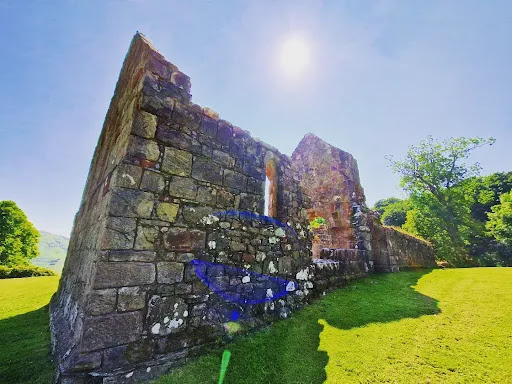
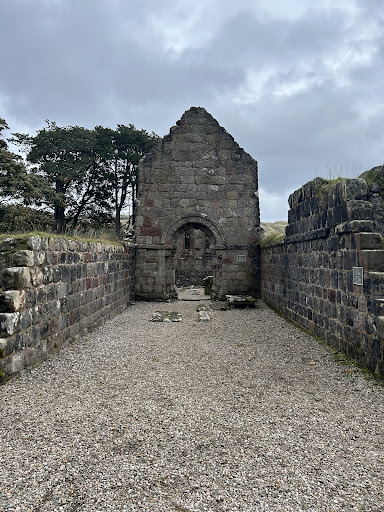
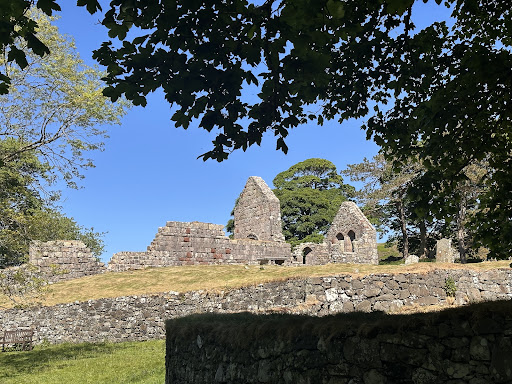
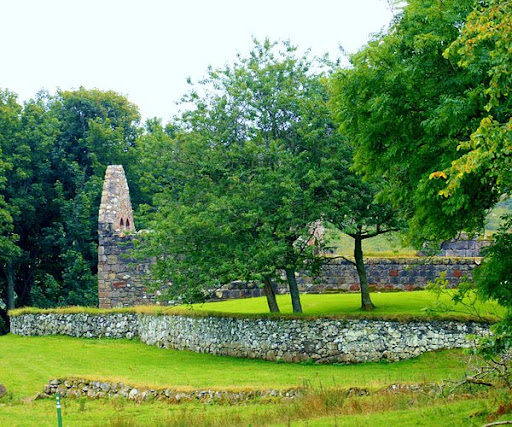
Blane is said to have been born on the Isle of Bute and educated at a monastery in Ireland. He was a nephew of St Catan or Cathan, who in the mid 500s founded a monastery at the southern end of the Isle of Bute. St Catan was succeeded as abbot at the monastery, and bishop of the wider area, by Blane. The monastery seems to have thrived until rendered unviable by Norse attacks in the years around 800. The ruins of St Blane's Church, built on the site of the monastery in the 1200s can still be seen.
St Blane moved from the Isle of Bute to central Scotland and established a monastery on the site of an old Roman fort (or "dun") five miles north of Stirling. This was redeveloped into a stone church in about 1150 in what by then was known as Dunblane, and this first stone church in turn formed the core of today's Dunblane Cathedral. After his death in 590, Blane's body was returned to Bute for burial there, at the monastery he had led and in the shadow of what is now called St Blane's Hill.
St Blane is also remembered in the name of the Blane Water, a river that flows in the shadow of the Campsie Fells; as well as in Strath Blane, the valley through which it flows; the village of Strathblane; and the Strathblane Hills, which form part of...
Read more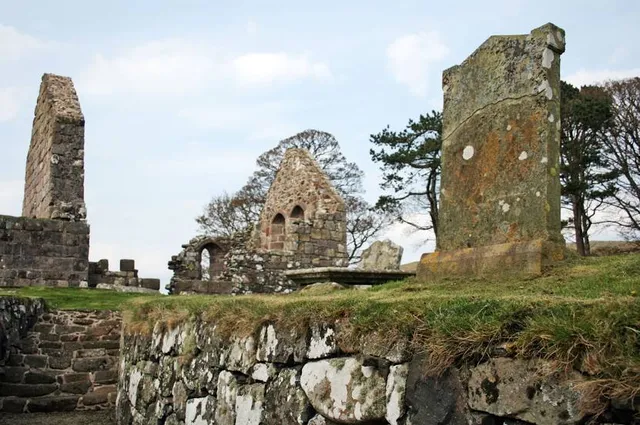
 Learn more insights from Wanderboat AI.