Stoney Littleton Long Barrow isn’t just a historical site—it’s a profound, almost spiritual encounter with Britain’s ancient past. Dating back to around 3500 BC, this Neolithic chambered tomb is one of the finest accessible examples of its kind in England. From the moment you glimpse it silhouetted against the Somerset hills, you feel the weight of its 5,500-year history .
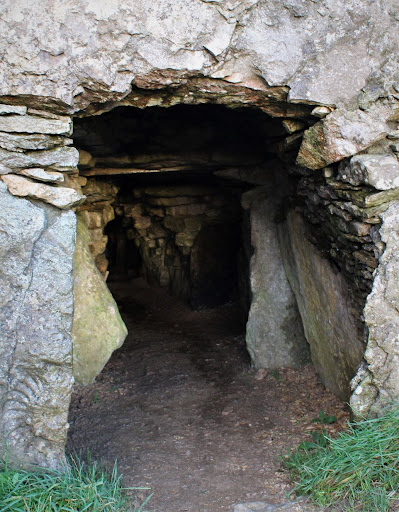
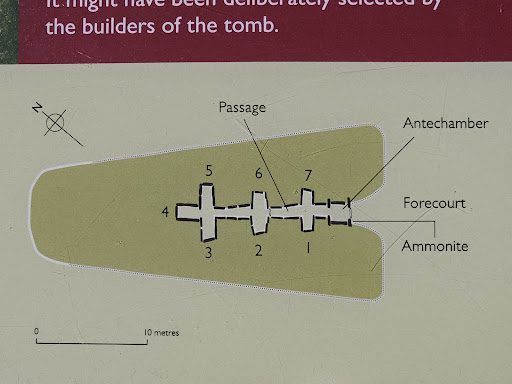
The 30-meter-long barrow features a 12.8-meter central gallery with three pairs of side chambers and an end chamber. Crawling (or crouching!) through the passage by torchlight is an adventure—like stepping into a time machine. The corbelled stone roof and intricate masonry are astonishingly preserved .
Winter Solstice Magic: The entrance aligns with the midwinter sunrise, allowing sunlight to flood the passage around December 21st. Even off-season, standing in this sacred space evokes the ingenuity of Neolithic astronomers .
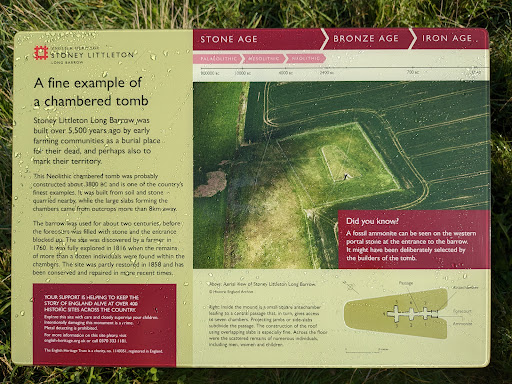
Look for the giant ammonite fossil embedded in the left doorjamb—a natural masterpiece revered by the tomb’s builders. The limestone walls glitter with ancient marine fossils, blending geology and human history .
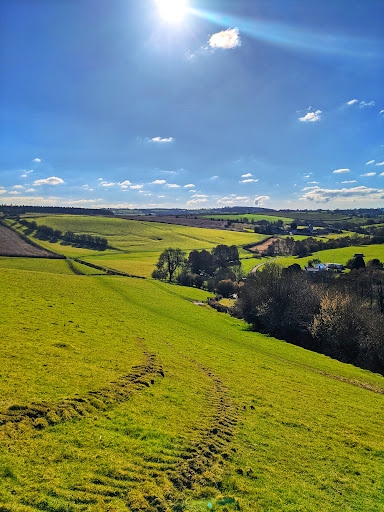
Surrounded by rolling fields and overlooking Wellow Brook, the barrow feels wonderfully remote. I spotted pheasants, sheep, and wildflowers en route—a perfect blend of nature and heritage .
Park at the free car park on Littleton Lane** (postcode BA2 8LL). The 1.4-mile round trip involves a moderate climb with five stiles and can get muddy—wear sturdy boots! The final approach across a sheep field is well-signposted . Bring a torch to explore the chambers fully. The passage is low (prepare to duck!) but utterly mesmerizing . Nearby Gems: Pair your visit with Stanton Drew Stone Circles (15 mins’ drive) for a full prehistoric immersion .
Whether you’re a history buff, a nature lover, or seeking a unique family adventure, Stoney Littleton delivers. It’s free, uncrowded, and humbling. Standing in a tomb built millennia before Stonehenge, you’ll feel a deep connection to the people who shaped this land. Don’t just read about Neolithic...
Read moreThe chambered long barrow was built around 3500 BC. The tomb was first opened around 1760 by a local farmer to obtain stone for road building. The site was excavated by John Skinner and Richard Hoare in 1816-17, along with a labourer Zebedee Weston, who gained the entry through the hole which was made previously. The excavation revealed the bones (some burned) of several individuals. The mound was restored in 1858 by Thomas Joliffe. Some of the artefacts from the excavations are in the Bristol City Museum and Art Gallery. It is about 30 metres (98 ft) in length and 15 metres (49 ft) wide at the south-east end, it stands nearly 3 metres (10 ft) high. Internally it consists of a 12.8 metres (42 ft) long gallery with three pairs of side chambers and an end chamber. The passage and entrance are roughly aligned towards the midwinter sunrise. The roof is made of overlapping stones. There is a fossil ammonite impression decorating the left-hand doorjamb. Definitely worth the short walk to it, one of the best, and the best part is you can go in it and see the overlapping roof stones which are normally missing from long barrows. Remember...
Read moreGetting to this neolithic tomb was an adventure in and of itself. Please mind the fact that the only way to access this landmark is by driving down an extremely narrow road that is a two-way path. Be prepared to drive in reverse to let others pass. Once you've parked your car you can start the climb towards the tomb (make sure you follow the NH signs, use the wooden steps). The tomb itself is a fascinating piece of history and fully accessible as long as you can crouch/kneel. You can learn more about the tomb on the website and on the signs near it. We combined this trip with Stanton Drew Circles & Cove, a 35m drive away.
🚻🛒🍽 | Please be aware that this tomb is located in the middle of nowhere and that there are no restaurants, shops or toilets nearby. You may want to bring lunch and toilet paper.
♿️ | This location is inaccessible to anyone who is in a wheelchair or...
Read more