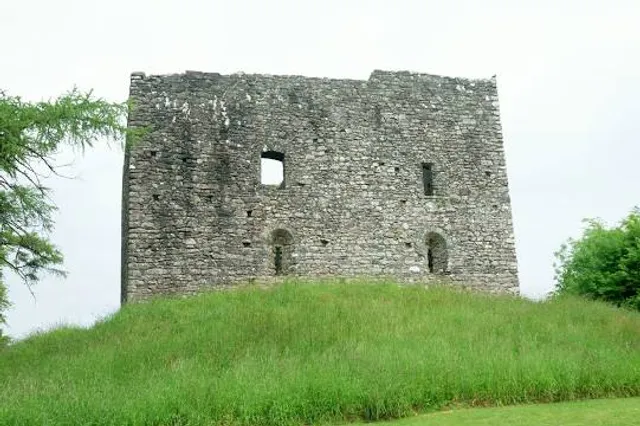
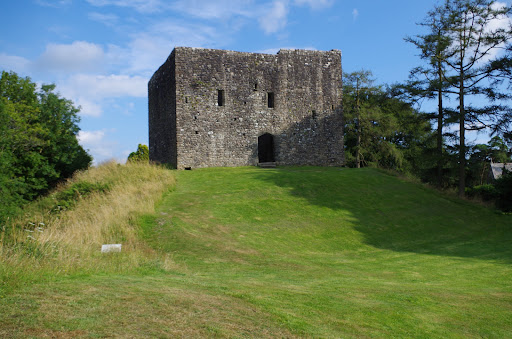
Lydford Castle is a medieval castle in the town of Lydford, Devon, England. The first castle in Lydford, sometimes termed the Norman fort, was a small ringwork built in a corner of the Anglo-Saxon fortified burh in the years after the Norman conquest of England. It was intended to help control Devon following the widespread revolt against Norman rule in 1068. The Norman fort had been abandoned by the middle of the 12th century.
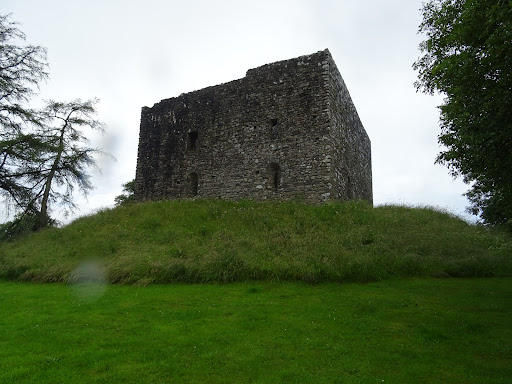
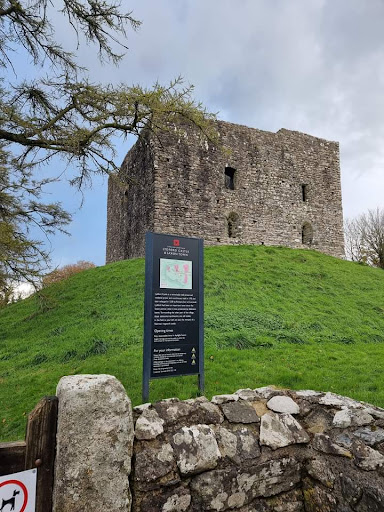
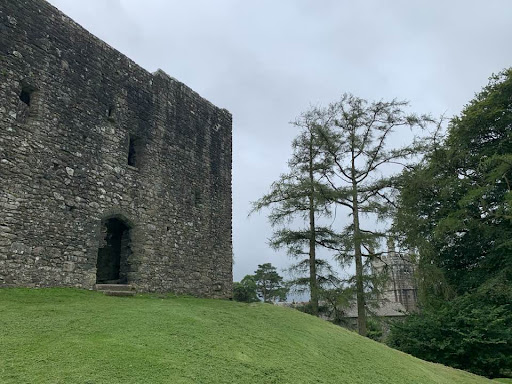
The second castle in Lydford was constructed in 1195 following a wave of law and order problems across England. It included a stone tower with a surrounding bailey, and rapidly became used as a prison and court to administer the laws in the Forest of Dartmoor and the Devon stannaries. The tower was rebuilt in the middle of the 13th century, probably in the 1260s by Richard, the Earl of Cornwall. It was redesigned to resemble a motte and bailey castle, an antiquated design for the period but one that was heavily symbolic of authority and power. In 1342 the castle, still being used as a prison and courtroom, passed to the Duchy of Cornwall, who owned it until the 20th century.
The castle was repeatedly renovated and then left to deteriorate, so its condition varied considerably over time. Nonetheless, other than a period during the English Civil War and the Restoration in the 17th century, Lydford Castle played an important part in stannary and forest administration until the 19th century. The castle acquired a bad reputation for injustice in the 14th century, and complaints about "Lydford Law" persisted for centuries. In the early 19th century, however, Dartmoor Prison was constructed, and Lydford ceased to be the centre for legal administration. The castle had fallen into ruin by the middle of the century.
In 1932, Lydford Castle passed into the hands of the state, and in the 21st century is run by English Heritage as a tourist attraction. Historian Andrew Saunders has described the castle as architecturally significant, being "the earliest example of a purpose-built gaol" in England. The earthworks of the Norman fort are owned by the National Trust and are open...
Read moreLydford boasts a large amount of history from an Anglo-Saxon Burh to being occupied by the Normans who built two castles inside it, a ringwork and a motte and bailey. Lydford was one of four Anglo-Saxon burhs in Devon built by Alfred the Great and was first recorded in 997. The burh uses the steep sides of two ravines formed by the River Lyd and a bank and ditch built forming a triangular defensive village. In the reign of Ethelred the Unready Lydford held a royal mint and during Edward the Confessors reign it was the most populous centre in Devon after Exeter. The ringwork is thought to have been built shortly after the invasion in 1066. It is in the S/W corner of the Saxon burh and uses steep ravines to protect it on two sides and a rock cut ditch on the third. It was most likely abandoned in favour of the new castle being built in 1194, it was built as a square stone tower which was used as a prison for detaining royal prisoners. In the 13th century soil was piled against the keep to form a motte and to the Northern side a bailey was added, this was not a unique way of building a motte and bailey castle but was not the common way either, normally the motte would have been built and a keep placed on top of it. It may have been used as a Court of Law and as the administration office for the Royal Forest of Dartmoor, it was used as a prison for several centuries and was used again by the Royalists during the ECW to hold Parliamentary supporters...
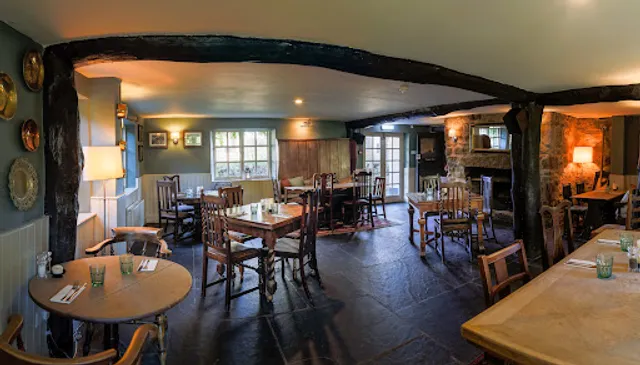
Read moreWhilst there is not enough to see to justify a stand-alone visit, it is certainly worthwhile taking a look around, perhaps in combination with a visit to the nearby National Trust site at Lydford Gorge. The remains of the castle consist of an imposing stone keep on top of an earthwork mound with little else to view. There are also earthworks nearby (at the rear of the adjacent church) which mark the site of an earlier Norman fort. This is still garrisoned by an army of nervous looking sheep, so be careful where you are treading on your walk across the field. At the other end of the village there are further earth walls demarking the Saxon town boundary. Access to all of these English Heritage sites is available at any reasonable time and there is no admission charge. The village car park is free and refreshment is available at the Castle Inn opposite...
Read more