HTML SitemapExplore
Find Things to DoFind The Best Restaurants

Castner Glacier Ice Cave — Attraction in Alaska

Name
Castner Glacier Ice Cave
Description
Nearby attractions
Nearby restaurants
Nearby hotels
Related posts
Alaska Blue Ice Cave
Keywords
Castner Glacier Ice Cave tourism.Castner Glacier Ice Cave hotels.Castner Glacier Ice Cave bed and breakfast. flights to Castner Glacier Ice Cave.Castner Glacier Ice Cave attractions.Castner Glacier Ice Cave restaurants.Castner Glacier Ice Cave travel.Castner Glacier Ice Cave travel guide.Castner Glacier Ice Cave travel blog.Castner Glacier Ice Cave pictures.Castner Glacier Ice Cave photos.Castner Glacier Ice Cave travel tips.Castner Glacier Ice Cave maps.Castner Glacier Ice Cave things to do.
Castner Glacier Ice Cave things to do, attractions, restaurants, events info and trip planning
Castner Glacier Ice Cave
United StatesAlaskaCastner Glacier Ice Cave

Basic Info

Castner Glacier Ice Cave

Milepost 217.3, Richardson Hwy, Delta Junction, AK 99737
4.7(176)
Open 24 hours
Save
spot

Ratings & Description

Info

Outdoor
Adventure
Scenic
attractions: , restaurants:
logoLearn more insights from Wanderboat AI.

Plan your stay

hotel
Pet-friendly Hotels in Alaska
Find a cozy hotel nearby and make it a full experience.
hotel
Affordable Hotels in Alaska
Find a cozy hotel nearby and make it a full experience.
hotel
The Coolest Hotels You Haven't Heard Of (Yet)
Find a cozy hotel nearby and make it a full experience.
hotel
Trending Stays Worth the Hype in Alaska
Find a cozy hotel nearby and make it a full experience.

Reviews

Get the Appoverlay
Get the AppOne tap to find yournext favorite spots!
Wanderboat LogoWanderboat

Your everyday Al companion for getaway ideas

CompanyAbout Us
InformationAI Trip PlannerSitemap
SocialXInstagramTiktokLinkedin
LegalTerms of ServicePrivacy Policy

Get the app

© 2025 Wanderboat. All rights reserved.

Reviews of Castner Glacier Ice Cave

4.7
(176)
avatar
5.0
39w

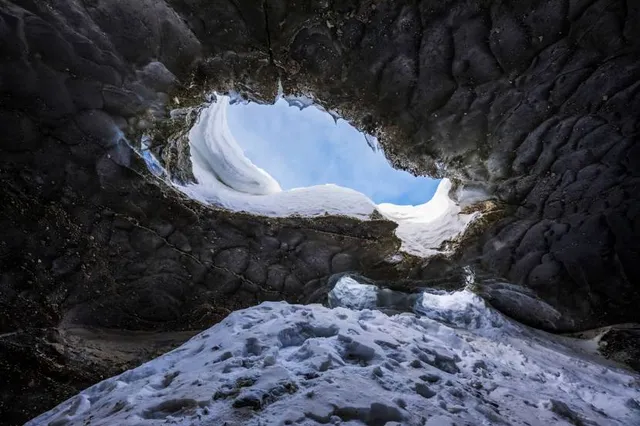
Castner Glacier Ice Cave in Alaska: Geological Formation and Human History

Geological Formation of Castner Glacier and Ice Cave:

Castner Glacier is situated on the southern slopes of the Delta Range in the eastern Alaska Range. It stretches approximately 12 to 17 miles through a mountainous landscape, and is classified as a valley glacier, more specifically a dendritic glacier. This means that the glacier has multiple branches—most notably the Warrior and Princess glaciers—that merge and flow downwards into a main ice channel.

The origins of Castner Glacier trace back to the last significant ice age during the Pleistocene epoch, thousands of years ago. Like all glaciers, Castner began as snowfall accumulating year after year in the high-altitude basins of the Alaska Range. Snowfall compacted and hardened into firn—a dense intermediate stage between snow and ice—and eventually compressed further into solid glacier ice. As this ice accumulated and thickened over centuries, gravity began pulling it slowly downhill through existing valleys, shaping and carving the land into its current dramatic forms.

Throughout its geological history, Castner Glacier has experienced multiple cycles of advance and retreat, linked closely with climate fluctuations. Studies show significant glacial advance roughly 14,700 years ago during the Late Pleistocene epoch. More recently, between approximately the 17th and 19th centuries, the glacier surged again during what is known as the Little Ice Age, leaving behind distinct ridges of rocky debris called moraines. Researchers have determined through geological dating techniques that prominent moraines formed around 1627 AD and again around 1842 AD, clearly marking Castner Glacier’s historical maximum positions during these cooler climatic periods.

Since the end of the Little Ice Age in the mid-1800s, Castner Glacier has been steadily retreating due to increasing global temperatures. However, compared to many Alaskan glaciers that have rapidly receded, Castner Glacier’s retreat has been comparatively slow. This relative stability results primarily from thick layers of rocky debris—fallen stones, gravel, and sediment—that cover its lower portions. These layers insulate and protect the underlying ice from direct sunlight and warmer air temperatures, substantially slowing the rate of melt.

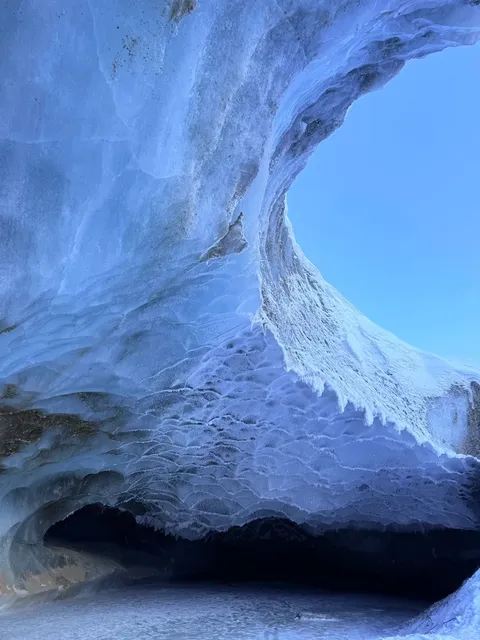
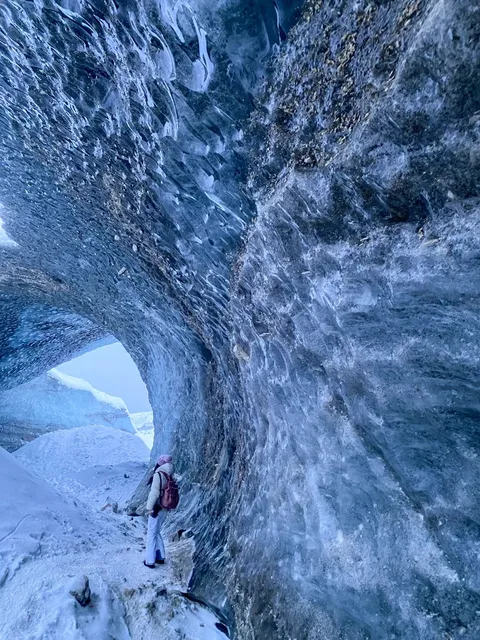
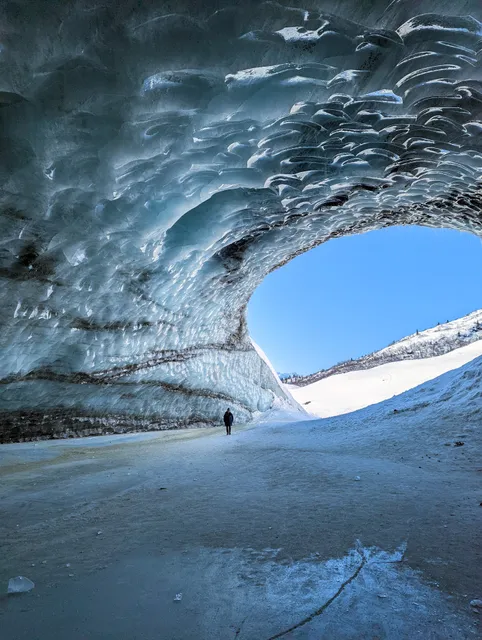
The famous Castner Ice Cave is a direct product of the glacier’s melting dynamics. During summer, warming temperatures cause substantial meltwater runoff from the surface and interior of the glacier. This meltwater flows through cracks and channels within and beneath the ice, eventually tunneling out at the glacier’s terminus as Castner Creek. Over the years, this continuous water flow carves out large tunnels or caverns within the glacier. When winter arrives, colder temperatures reduce the meltwater flow dramatically, allowing these hollowed-out spaces to stabilize and freeze into impressive ice caves.

However, the Castner Ice Cave is far from a static geological feature; it is highly dynamic and continually evolving. Each summer, heavy meltwater flows actively erode the cave, often collapsing sections of ice walls and ceilings. Ice blocks calve off and accumulate inside, sometimes closing off passages or reshaping the entire cave structure. Conversely, winter’s freezing temperatures often re-solidify sections, creating new shapes and spectacular crystal formations. Over time, as the glacier slowly recedes, the cave’s entrance migrates, shifting location and configuration regularly, sometimes annually.

These processes were vividly demonstrated in recent years, notably during unusually warm summers. For instance, a particularly warm season in 2022 accelerated the cave’s partial collapse, with large sections breaking away visibly in just a matter of days. Despite these fluctuations, the cave typically remains stable and accessible during winter months, sometimes extending several hundred meters beneath the...

   Read more

avatar
5.0
50w

Completed this short flat hike in the dead of winter. Took about a round trip time of 2 hours total from trailhead and back with spending 45 minutes in the cave. Beautiful mountain scenery on the way in and a gorgeous ice cave at the end. The cave itself runs quite deep where you have to duck and crawl into tight spaces (if you want). The river flows through the cave. Most people stick to the main opening of the cave but if you want adventure you can continue deeper inside. This place sounds like a rage room in winter. Shattering the ice is super satisfying but sounds like breaking glass. Very slippery surfaces so be careful when walking around on the ice! Pretty popular place to be especially in winter. Very crowded inside the cave at times but without these people the trail would be lost. It’s an unmarked trail and without people traveling it constantly the snow would cover it up. My only advice is to bundle up, use hand and feet warmers and stick to the footprint path in the snow. You’ll see tons of other hikers on the trail so it’s safe. Highly recommend for those who love hiking and want to see an ice cave. This is an easy hike with almost...

   Read more
avatar
5.0
1y

This has been the highlight of my visit to AK as of yet. It's not as spectacular as some of the pictures from before the collapse, but it's 100% worth a visit. The hike was easy enough for my 5yo, and the cave is beautiful. The drive from Fairbanks was long but stunning. There was an outhouse at the trailhead on the other side of the highway (it was filthy). The hike itself is mostly flat and packed with snow today. The snow off the well trodden path was waist deep in spots, so watch your steps. It took us about an hour to get to the glacier toe with 3 young kids. The view the entire time is breathtaking, and the cave itself is wondrous! I highly recommend you go see it before it's gone! Make sure to pack snacks and plan on being back to Delta Junction by 7:30 if you plan on stopping for food. Everything...

   Read more
Page 1 of 7
Previous
Next

Posts

Alaska Blue Ice Cave
Wilson MiaWilson Mia
Alaska Blue Ice Cave
Your browser does not support the video tag.
fsdeb2fsdeb2
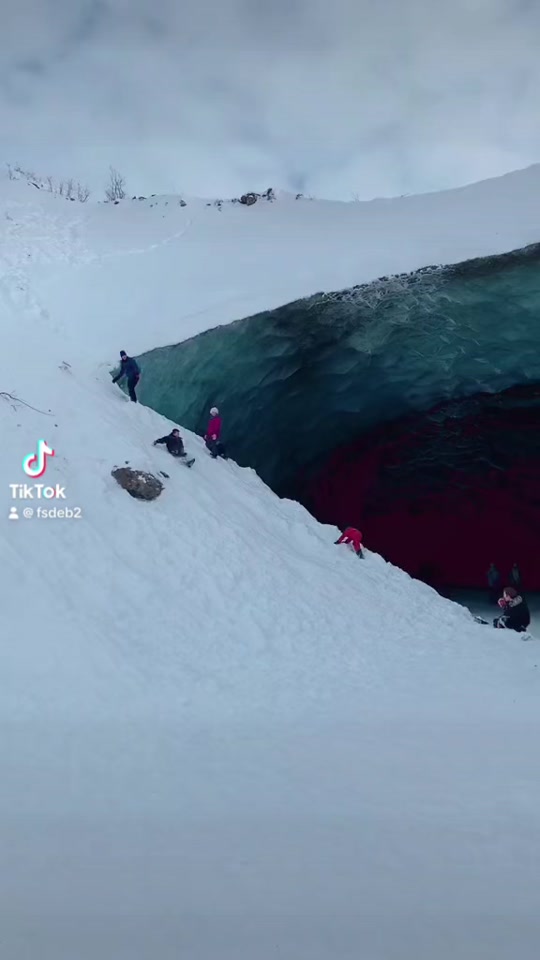
Castner glacier before it collapsed #alaska #glacier #outside #beauty #cold
Chris WilesChris Wiles
Castner Glacier Ice Cave in Alaska: Geological Formation and Human History Geological Formation of Castner Glacier and Ice Cave: Castner Glacier is situated on the southern slopes of the Delta Range in the eastern Alaska Range. It stretches approximately 12 to 17 miles through a mountainous landscape, and is classified as a valley glacier, more specifically a dendritic glacier. This means that the glacier has multiple branches—most notably the Warrior and Princess glaciers—that merge and flow downwards into a main ice channel. The origins of Castner Glacier trace back to the last significant ice age during the Pleistocene epoch, thousands of years ago. Like all glaciers, Castner began as snowfall accumulating year after year in the high-altitude basins of the Alaska Range. Snowfall compacted and hardened into firn—a dense intermediate stage between snow and ice—and eventually compressed further into solid glacier ice. As this ice accumulated and thickened over centuries, gravity began pulling it slowly downhill through existing valleys, shaping and carving the land into its current dramatic forms. Throughout its geological history, Castner Glacier has experienced multiple cycles of advance and retreat, linked closely with climate fluctuations. Studies show significant glacial advance roughly 14,700 years ago during the Late Pleistocene epoch. More recently, between approximately the 17th and 19th centuries, the glacier surged again during what is known as the Little Ice Age, leaving behind distinct ridges of rocky debris called moraines. Researchers have determined through geological dating techniques that prominent moraines formed around 1627 AD and again around 1842 AD, clearly marking Castner Glacier’s historical maximum positions during these cooler climatic periods. Since the end of the Little Ice Age in the mid-1800s, Castner Glacier has been steadily retreating due to increasing global temperatures. However, compared to many Alaskan glaciers that have rapidly receded, Castner Glacier’s retreat has been comparatively slow. This relative stability results primarily from thick layers of rocky debris—fallen stones, gravel, and sediment—that cover its lower portions. These layers insulate and protect the underlying ice from direct sunlight and warmer air temperatures, substantially slowing the rate of melt. The famous Castner Ice Cave is a direct product of the glacier’s melting dynamics. During summer, warming temperatures cause substantial meltwater runoff from the surface and interior of the glacier. This meltwater flows through cracks and channels within and beneath the ice, eventually tunneling out at the glacier’s terminus as Castner Creek. Over the years, this continuous water flow carves out large tunnels or caverns within the glacier. When winter arrives, colder temperatures reduce the meltwater flow dramatically, allowing these hollowed-out spaces to stabilize and freeze into impressive ice caves. However, the Castner Ice Cave is far from a static geological feature; it is highly dynamic and continually evolving. Each summer, heavy meltwater flows actively erode the cave, often collapsing sections of ice walls and ceilings. Ice blocks calve off and accumulate inside, sometimes closing off passages or reshaping the entire cave structure. Conversely, winter’s freezing temperatures often re-solidify sections, creating new shapes and spectacular crystal formations. Over time, as the glacier slowly recedes, the cave’s entrance migrates, shifting location and configuration regularly, sometimes annually. These processes were vividly demonstrated in recent years, notably during unusually warm summers. For instance, a particularly warm season in 2022 accelerated the cave’s partial collapse, with large sections breaking away visibly in just a matter of days. Despite these fluctuations, the cave typically remains stable and accessible during winter months, sometimes extending several hundred meters beneath the glacier surface.
See more posts
See more posts
hotel
Find your stay

Pet-friendly Hotels in Alaska

Find a cozy hotel nearby and make it a full experience.

Alaska Blue Ice Cave
Wilson Mia

Wilson Mia

hotel
Find your stay

Affordable Hotels in Alaska

Find a cozy hotel nearby and make it a full experience.

Get the Appoverlay
Get the AppOne tap to find yournext favorite spots!
Castner glacier before it collapsed #alaska #glacier #outside #beauty #cold
fsdeb2

fsdeb2

hotel
Find your stay

The Coolest Hotels You Haven't Heard Of (Yet)

Find a cozy hotel nearby and make it a full experience.

hotel
Find your stay

Trending Stays Worth the Hype in Alaska

Find a cozy hotel nearby and make it a full experience.

Castner Glacier Ice Cave in Alaska: Geological Formation and Human History Geological Formation of Castner Glacier and Ice Cave: Castner Glacier is situated on the southern slopes of the Delta Range in the eastern Alaska Range. It stretches approximately 12 to 17 miles through a mountainous landscape, and is classified as a valley glacier, more specifically a dendritic glacier. This means that the glacier has multiple branches—most notably the Warrior and Princess glaciers—that merge and flow downwards into a main ice channel. The origins of Castner Glacier trace back to the last significant ice age during the Pleistocene epoch, thousands of years ago. Like all glaciers, Castner began as snowfall accumulating year after year in the high-altitude basins of the Alaska Range. Snowfall compacted and hardened into firn—a dense intermediate stage between snow and ice—and eventually compressed further into solid glacier ice. As this ice accumulated and thickened over centuries, gravity began pulling it slowly downhill through existing valleys, shaping and carving the land into its current dramatic forms. Throughout its geological history, Castner Glacier has experienced multiple cycles of advance and retreat, linked closely with climate fluctuations. Studies show significant glacial advance roughly 14,700 years ago during the Late Pleistocene epoch. More recently, between approximately the 17th and 19th centuries, the glacier surged again during what is known as the Little Ice Age, leaving behind distinct ridges of rocky debris called moraines. Researchers have determined through geological dating techniques that prominent moraines formed around 1627 AD and again around 1842 AD, clearly marking Castner Glacier’s historical maximum positions during these cooler climatic periods. Since the end of the Little Ice Age in the mid-1800s, Castner Glacier has been steadily retreating due to increasing global temperatures. However, compared to many Alaskan glaciers that have rapidly receded, Castner Glacier’s retreat has been comparatively slow. This relative stability results primarily from thick layers of rocky debris—fallen stones, gravel, and sediment—that cover its lower portions. These layers insulate and protect the underlying ice from direct sunlight and warmer air temperatures, substantially slowing the rate of melt. The famous Castner Ice Cave is a direct product of the glacier’s melting dynamics. During summer, warming temperatures cause substantial meltwater runoff from the surface and interior of the glacier. This meltwater flows through cracks and channels within and beneath the ice, eventually tunneling out at the glacier’s terminus as Castner Creek. Over the years, this continuous water flow carves out large tunnels or caverns within the glacier. When winter arrives, colder temperatures reduce the meltwater flow dramatically, allowing these hollowed-out spaces to stabilize and freeze into impressive ice caves. However, the Castner Ice Cave is far from a static geological feature; it is highly dynamic and continually evolving. Each summer, heavy meltwater flows actively erode the cave, often collapsing sections of ice walls and ceilings. Ice blocks calve off and accumulate inside, sometimes closing off passages or reshaping the entire cave structure. Conversely, winter’s freezing temperatures often re-solidify sections, creating new shapes and spectacular crystal formations. Over time, as the glacier slowly recedes, the cave’s entrance migrates, shifting location and configuration regularly, sometimes annually. These processes were vividly demonstrated in recent years, notably during unusually warm summers. For instance, a particularly warm season in 2022 accelerated the cave’s partial collapse, with large sections breaking away visibly in just a matter of days. Despite these fluctuations, the cave typically remains stable and accessible during winter months, sometimes extending several hundred meters beneath the glacier surface.
Chris Wiles

Chris Wiles

See more posts
See more posts