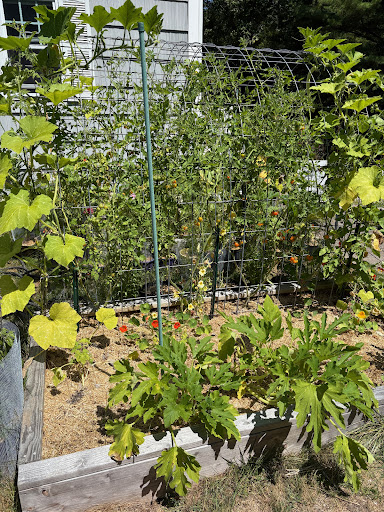
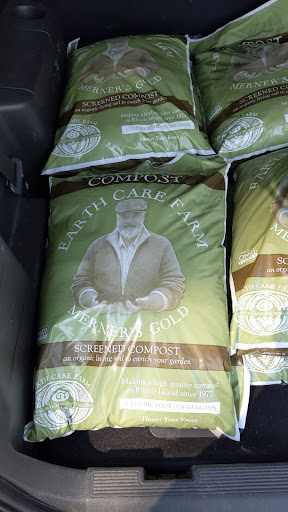
8th-year home gardener here (still an amateur). I used Earth Care's raised bed mix to fill some new beds and areas last year, 2024. Year 1 looked great. This year, year 2 (a much dryer summer) was pretty rough: tomatoes/zucchini stayed stunted and “wispy.” Frankly the growth was disappointing. When I removed the mulch and opened the bed in early August to take a look, it was basically completely bone-dry and water-repellent. This was after regular weekly waterings (or so I thought). That hydrophobic dryness is on me for not doing a deep early-season recharge and not 'noticing' the issue - sure. But compared with my 6+ year beds of significantly cheaper sandy loam + compost that I lightly amend ever year, this material has been far far less forgiving.
Frankly I find this mix to be 'tricky' and harder to work with than the cheaper stuff, harder to 're-wet', and easily hydrophobic, plus prone to 'cracking' from dryness. The day after I water this soil, any additional water I decide to add just sits on top as the top is completely dried out and cracking (from the dryness - after just one day). My cheaper beds behave like you'd expect - the next day the surface is still visibly darker/moister, subsequent water that second day soaks up like a sponge, quickly disappearing. That's just an example scenario of what I'm talking about
Ironically this soil is also slower to 'dry out' and warm up in the spring to get an early start on summer stuff (again, all compared to my 6+ year old raised beds which were a 50/50 mix of sandy loam and compost, and was less than half the price).
One other issue from my batch (2024 raised bed mix delivery):
Lots of shells, honestly too many IMO—large pieces that will take a long time to break down, and they weren’t well mixed throughout. I love the idea of using shells but...too many!
Even getting the soil delivery and filling up wheelbarrows to go fill up my beds and top off my other areas was resulting in clearly different 'mixes' - some areas were completely covered in shells!
For vegetables/flowers... I just don't think you need pricey pure compost or raised bed mix, at least not unless you 'dilute' this 50/50 with some sandy loam—you really want something with a good mineral backbone (topsoil/sandy loam) that is easier to manage and re-wet. If you don't believe me go tour the fields of various farms around who have completely fantastic results....and see how 'sandy' their fields are! They are not using this kind of pure soil and they do just fine. If you do buy here, plan to blend in mineral soil, maybe mix this 50/50 with sandy loam, and do one deep recharge before mulching in the early summer (and by deep recharge, I mean potentially in excess 40 gallons of water to an 8'x4' raised bed that has dried out - and you may need to 'fluff' the surface to guarantee good infiltration). You need more water than you think - this is how much it takes to 're-wet'. If you let it dry out (which it is prone to) - it is a hassle. I was constantly 'stirring up' the top inch or two to try to get some good infiltration of the water.
Again - this is a hassle I haven't experienced with my cheaper beds, and is it worth it? I have to say it isn't.
I’m uploading photos showing the dry soil after regular waterings and an application of mulch and the minimal root growth, as well as year 1 vs year 2 pictures, and my older cheaper beds (all from this season). The pictures of plant roots are 'full size' nasturtiums and zucchini growing in this raised bed mix all summer (pics taken August 9th). I'm sure you'll agree the plant/root development is quite poor in the year 2 bed with this expensive and 'good' soil, and that the pictures of my older and cheaper beds look significantly better. Happy for those who get great results—this is just my experience. For my use the value just isn't there - the product is expensive, the mix (and filling beds yourself from a soil delivery) is clearly highly variable, and the soil is hard to work with and seems to behave very differently than what...
Read more
 Learn more insights from Wanderboat AI.