It was a nice day out for an adventure. It was "only" high 80s, low 90s. But that humidity! Thankfully I remembered water, but not bug spray. There's now a bottle that will permanently live in my car.
The Visitors Center display was very informative. The sign with the potential animal sitings had me hopeful for dolphins, but I didn't get close enough to see any. I did see a couple little crabs. No pictures of the first one because it took me a moment to realize it was a crab and not a bad spider. They had six stamps if you have the National Parks Passport, I was able to claim five of them.
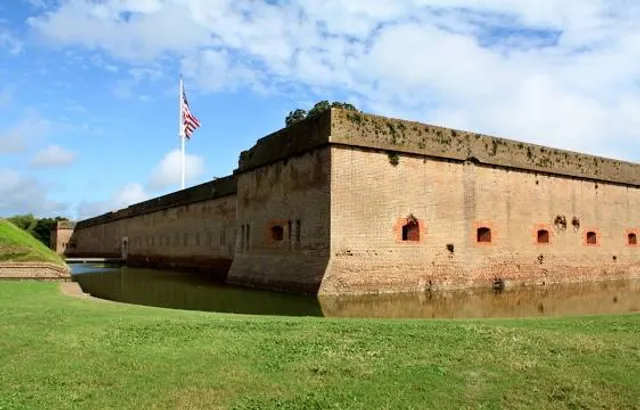
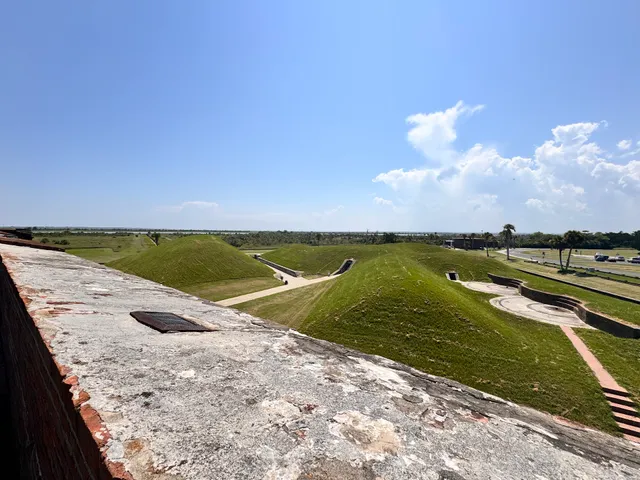
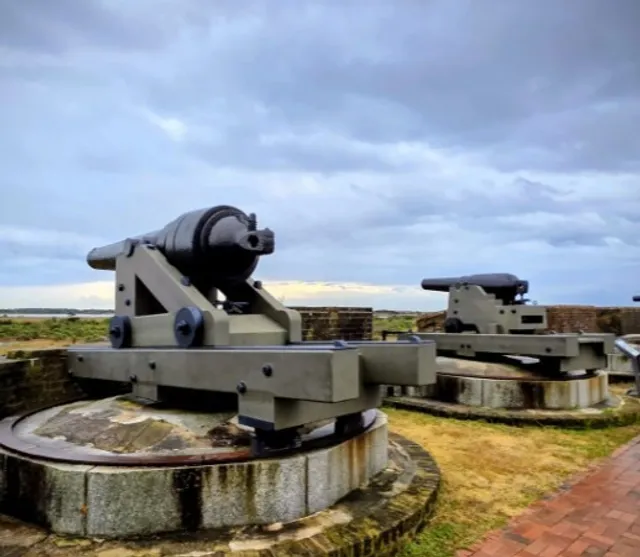
The fort itself was nice to walk around, there's staircases to the top of it so you can get a great view. Admittedly it's mostly trees and kinda swampy land, but it's still a view. I was impressed by the displays, I think there were more of them here than Fort Sumpter. I loved the 120 year old fig tree and the sign welcoming people to pick the figs. Unfortunately it's the wrong time of year to eat them.
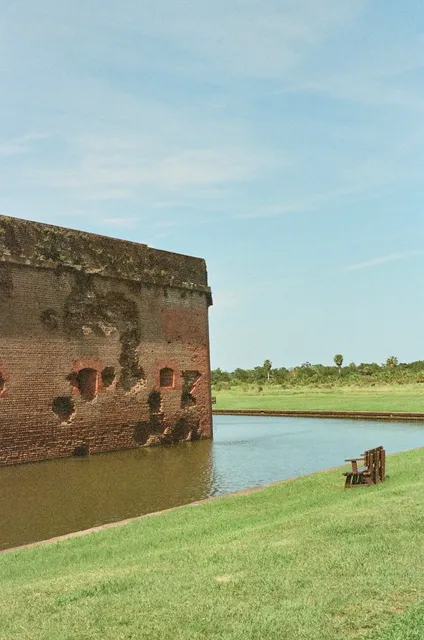
There's several short trails to explore, I think the longest was 1.2 miles. I wish the signage for the lighthouse trail was better, having one at the beginning of the Moat Trail would be beneficial so us directionally challenged people would know which way we should go around the fort. Plus the Moat Trail was a questionable "trail", the only way to tell where the trail was is because there's some benches and slightly shorter grass. I did eventually get in the right direction and got a decent view of the Cockspur Island Lighthouse (yup, actual name). I didn't go all the way to the end of the trail because the mosquitoes were merciless, but I did get to see it.
Fort Pulaski shares a lot of history with Fort Sumpter, which I visited a few months ago. Despite my problems finding the correct trail, I think I prefer this one because of the trails. Definitely need to remember better shoes, water,...
Read more• Visited on a Saturday afternoon during Winter Break right before Christmas 2023. • Plenty of parking in large parking lot next to the visitor center. • They do charge you at the gate so make sure you have annual pass or be ready to pay. • There were at least a dozen other cars in the parking lot when we visited. It never really felt crowded at all at the park. The Fort is huge. • The visitor center is a bit smaller than we were expecting but has a small theater that shows a video every hour on the hour and half hour. Good to watch before exploring the fort. • The bathrooms are located just outside the visitor center so go before you enter the fort. • The NPS Passport Cancellation Stamps are located both in the visitor center next to the parking lot and in the NPS store inside the fort. The park store has an additional stamp not available in the visitor center which is specific for the store as this is where the original fort’s commissary was located. • The NPS store had a ton of merch. Make sure you get a chance to speak with Shannon Harmon (Manager?) of the NPS store. She knows so much about so many of the parks nearby and afar. She gave us tips on who, what, when, where and why to visit. Saved us so much headache doing it ourselves. • The fort’s earthen works was way more fun that we thought it would be as it seemed like a maze and the kids wanted to play hide and seek in them. Not a problem with so few people but I can how it could be claustrophobic with more visitors. • Park Rangers were super helpful answered questions and super nice as well. • Junior Ranger Booklets can be acquired at visitor center. We were able to complete it in a 90 min visit. • We would probably visit again to do some of the hiking trails as we were on a tight schedule but were told the hiking trails...
Read moreAmazing location to learn about Americas History. After the War of 1812, US President James Madison ordered a new system of coastal fortifications to protect the United States from a foreign invasion. Construction of a fort to protect the port of Savannah began in 1829 under the direction of Major General Babcock and later Second Lieutenant Robert E. Lee, a recent graduate of West Point. The new fort would be on Cockspur Island, at the mouth of the Savannah River. In 1833, the facility was named Fort Pulaski in honor of Casimir Pulaski, a Polish soldier and military commander who fought during the American Revolution under the command of George Washington. Pulaski was a noted cavalryman, played a large role in training Revolutionary troops, and took part in sieges at Charleston and Savannah. Fort Pulaski belonged to what is known as the Third System of coastal fortifications, which were characterized by greater structural durability than the earlier works. Most of the nearly 30 Third System forts built after 1816 still exist along the Atlantic and the Gulf Coasts. Wooden pilings were sunk up to 70 feet (21.3 m) into the mud to support an estimated 25 million bricks. Fort Pulaski was finally completed in 1847, after 18 years of construction and nearly $1 million (~$27.7 million in 2023) in construction costs. Walls were 11 feet thick and were thought to be impenetrable except by only the largest land artillery. The smoothbore cannon of the time had a range of only around half a mile, and the nearest land (Tybee Island) was much further away than that. It was assumed that the fort would be invincible to enemy attack. In reference to the fort's strength, United States Chief of Engineers, General Totten, remarked that "you might as well bombard the...
Read more