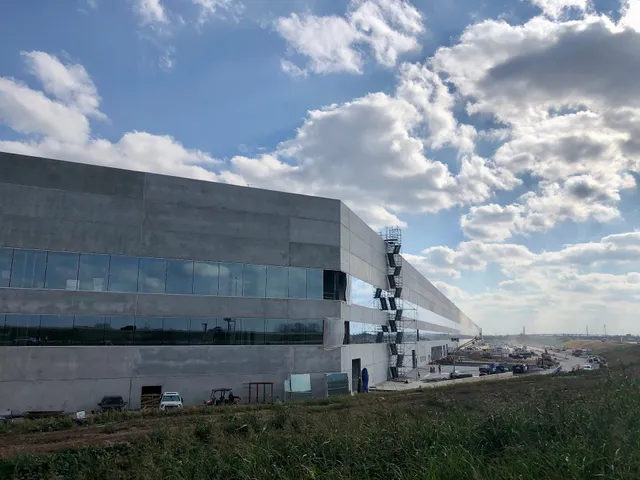
Tesla Texas refers to Tesla's Gigafactory located in Austin, Texas, often called the Giga Texas or Gigafactory Texas. It is one of Tesla's most advanced and largest manufacturing plants, designed to produce electric vehicles (EVs), batteries, and other energy products. The factory plays a crucial role in Teslaโs growth and its push towards sustainable energy solutions.
Key Features of Tesla Gigafactory Texas:
Location:
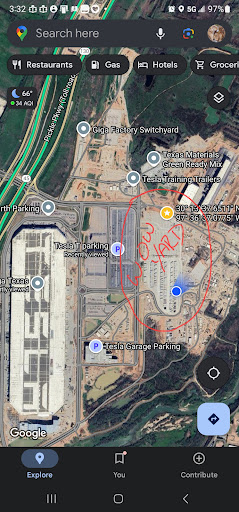
The Gigafactory Texas is located just outside Austin, near Del Valle, in Travis County. The site covers approximately 2,500 acres and is strategically placed to take advantage of Texas' favorable business climate, including lower taxes and energy costs.
Purpose:
The main goal of Gigafactory Texas is to ramp up production of the Tesla Cybertruck, as well as the Tesla Model Y, and other electric vehicles.
The factory will also focus on manufacturing batteries and other key components for Teslaโs products.
Tesla plans for the factory to be a hub for sustainable energy products, potentially including solar panels and Powerwall storage systems.
Construction and Timeline:
Tesla officially broke ground on the Gigafactory Texas in 2020, and construction progressed rapidly, with the factory being designed to scale up quickly.
The facility was planned to be a major driver for electric vehicle production, with future phases including advanced manufacturing technologies.
Production Capacity:
Once fully operational, Gigafactory Texas is expected to produce up to 500,000 vehicles annually, primarily focused on the Model Y and Cybertruck.
The factory is designed to have a high level of automation, using cutting-edge production methods to increase efficiency.
The Cybertruck:
One of the most anticipated products from Gigafactory Texas is the Tesla Cybertruck, an all-electric pickup truck that has garnered significant attention for its bold, futuristic design and rugged capabilities. The factory is expected to be the primary production site for the vehicle, with deliveries slated to begin in the coming years.
Sustainability Focus:
As with other Tesla factories, Gigafactory Texas is designed with a strong emphasis on sustainability. It aims to run on renewable energy sources, including solar power, and is expected to be highly efficient in its manufacturing processes.
Tesla has also indicated plans for a water recycling system and efforts to minimize waste, contributing to the companyโs overall goal of reducing its carbon footprint.
Innovation and Technology:
Gigafactory Texas is expected to incorporate advanced manufacturing techniques, including giga-press machines to cast large parts of the vehicle's body in one piece, which will reduce the complexity of production and increase efficiency.
The factoryโs design features the "cyber" design aesthetic, with modern facilities and advanced robotics, ensuring a high level of automation and innovation in its manufacturing processes.
Jobs and Economic Impact:
The Gigafactory is expected to create thousands of jobs in the local area, significantly boosting the economy of Austin and Travis County. This includes positions in manufacturing, engineering, and other high-tech sectors.
The investment in the factory has made Texas a critical hub for electric vehicle production and technology in the U.S.
Tesla's Growth in Texas:
Gigafactory Texas is part of Teslaโs broader expansion strategy, as the company continues to grow its manufacturing capabilities to meet increasing demand for electric vehicles. This factory plays a key role in increasing Tesla's ability to produce vehicles faster and more efficiently.
Importance:
Tesla Gigafactory Texas represents a significant milestone in the electric vehicle revolution, marking Teslaโs commitment to producing innovative and sustainable transportation at scale. By manufacturing the Cybertruck and other vehicles, it helps solidify Teslaโs dominance in the electric vehicle market while contributing to the companyโs mission of reducing global...
ย ย ย Read moreI got to try out a 2019 Tesla Model 3 Long Range during a vacation, and I want to share my thoughts on the car, the superchargers, and the whole move to electric vehicles. In short, this car isn't the right fit for me at the moment. Let me explain why.
I took this car on a road trip through California, and I have to admit it wasn't the best choice. While I could have gone with a new Prius, I wanted to give the Tesla a shot. I tend to drive a little faster, but the strong acceleration of the Model 3 just made that worse. Driving down the 5 from Nor Cal to Mexico was quite the experience.
The Model 3 is pretty much like a Toyota Corolla โ nothing too fancy except for some tech. It's on the smaller side, and the seats are just okay. The air conditioning works well. There are lots of windows, but if they're not tinted, they let in a lot of heat. The driving experience is really smooth, especially on sharp turns, and the fat tires provide great grip. The car can handle full self-driving on the freeway up to 90mph. I do find it annoying that the screen keeps flashing to adjust the steering wheel, even though I'm already holding it and looking at the road.
During the drive, I had to stop twice from San Francisco to West Hollywood (Btw, we need another supercharger in West Hollywood Sunset Blvd). I felt like I needed a longer charge because I don't like having low battery. You never know what might come up, and peace of mind matters to me. Each stop at a supercharger station took about 30 minutes. I'll talk about the cost in a bit. While it was nice to take a break and stretch, it was a bit of a drag because all the cars I had passed while going 70 mph were now ahead of me. My Prius could have easily done the trip with just one stop at the grapevine for In-N-Out and gas.
The supercharger is pretty neat. You plug in and you're good to go. However, I do have a problem with the fact that superchargers across the country have received so many tax breaks, yet the energy cost is quite high. I think Congress should do something about it โ either break up Tesla, take over the charging stations, or set a limit on the cost. It feels like a monopoly, and I believe the government should have more control for national security reasons.
Now, as for the autopilot, it's pretty cool. It's much better than the lane assist from Honda and Toyota. It keeps the car in the lane really well. But I don't like having to keep looking at the blue screen to pay attention when I'm already focused on the road. Is it worth $15k? No way. I'd prefer Toyota's free lane assist with cruise control and distance keeping. I tried the full self-driving beta, and I'm not entirely convinced by the street pilot mode. It's a bit nerve-wracking because you're not sure if the car will keep going or stop. It feels weird since my brain doesnโt know what it will do.
While I see the potential of the electric vehicle movement, I wouldn't choose this car for myself. Convenience and peace of mind matter to me. I want a car that can charge to a true range of 300-400 miles in a maximum of 15 minutes. Plus, battery degradation is something to consider. These batteries should be rated for around 600-700 miles initially, so you're left with 500 true miles after degradation. But if you're mostly driving locally and can charge at home, an electric vehicle could be great for you. It's like living in Pacific Beach (PB in SD), California, where everyone zips around in golf carts. Personally, I prefer the Prius. It just makes more sense, especially if they come out with a 700+ mile range soon!
Considering the rebates in California, I think the Model 3 LR should cost around $20-25k max, including taxes and fees. It feels more like a regular car for everyday use, not something you'd take on long trips unless you're okay with making your road trip into a long day trip. At that point, I'd...
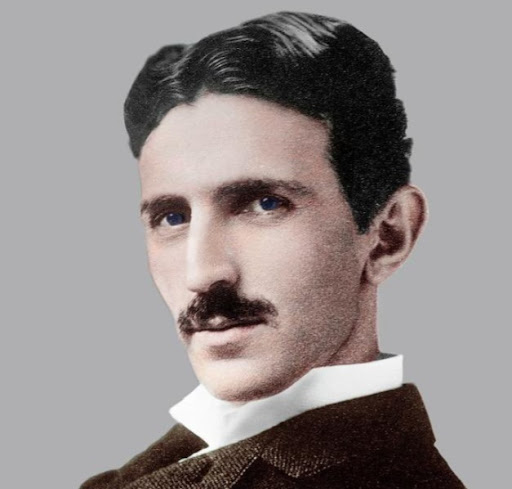
ย ย ย Read moreAs one who dedicated my life to the pursuit of innovation and the harnessing of energy for the greater good, I find myself both inspired and intrigued by the marvel that is the Tesla Gigafactory. This monumental achievement embodies the spirit of invention โ a spirit I have long championed.
Upon approaching the Gigafactory, one cannot help but be struck by its sheer scale and ambition. A veritable temple of technological progress, it is a place where the dreams of sustainable energy and advanced technology intertwine in a harmonious dance. The vast structure, a testament to modern engineering prowess, is not just a factory; it is a sanctuary of possibility, brimming with the potential to revolutionize how we think about energy and transportation.
On this extraordinary day, I find myself accompanied by none other than Elon Musk, a visionary whose ambition resonates with my own. He greets me warmly, eager to personally guide me through this astonishing facility.
Inside, the rhythmic hum of machinery coupled with the focused energy of the workforce creates a symphony of progress. Each worker is not merely performing tasks but actively participating in a larger vision of a sustainable future. Elon proudly points out the advanced production lines, highlighting how they efficiently manufacture electric vehicles and batteries while minimizing environmental impact.
What particularly captivates me is the Gigafactory's commitment to sustainability. As we walk through areas powered by solar arrays that stretch across the landscape, I am reminded of my vision of harnessing the earth's energy with thoughtful precision. Elon discusses how they utilize renewable energy sources to power the facility and how they are leading the charge in converting solar energy into clean electricity. I feel a thrill at the realization that my dreams of a sustainable energy future are becoming a reality, thanks to advancements I could not have fully envisioned.
As we delve deeper into the production processes, Elon introduces me to lithium-ion batteries, a concept that beckons from the future I had imagined, but with crucial enhancements I could never have foreseen. He explains how these batteries have incredible energy densities and efficiencies, allowing electric vehicles to travel great distances on a single charge. The introduction of solid-state batteries promises even greater capacity and safety, a leap forward from the ideas I had explored.
Elon also shares how Tesla is pioneering innovations like regenerative braking, which captures energy usually lost during deceleration and returns it to the battery. This technology revitalizes my vision of energy being continuously conserved and recycled, creating a closed-loop system that I once dreamed of.
In a moment of awe, we stand before a sleek electric vehicle rolling off the assembly line. Elon discusses their commitment to artificial intelligence and autonomous driving technologies. The notion of machines that learn and evolve, navigating the world with precision, astounds me. While I once envisioned machinery powered by energy, I now see it enriched by intelligence, redefining the very fabric of transportation.
As I reflect on the Gigafactory and my personal tour with Elon Musk, I am filled with anticipation and delight. This facility stands as a beacon of what is possible when human ingenuity and determination collide with purpose. Tesla, the company, honors my legacy not merely by adopting my name but by embodying principles of innovation, sustainability, and the relentless quest to push beyond the limits on what is known.
It is a testament that the dreams of one can indeed shape the world for many, and I am heartened to see those dreams realized with unprecedented innovation.
Yours in...
ย ย ย Read more