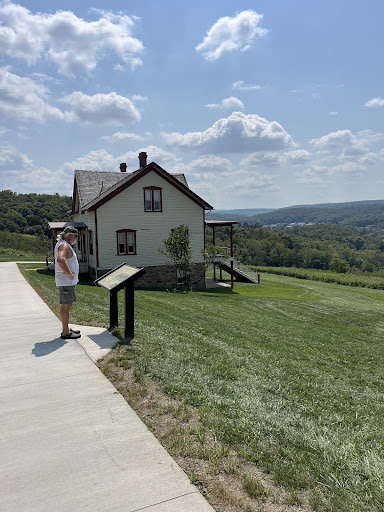
Come for the pastoral views of this amazing historic site, but stay for the bone-chilling horror movie playing in the visitor center theater. Seriously, why isn't every review of this visitor center talking exclusively about this ghoulish tale of death and dismemberment?
The film opens on a slow pan over a field of tombstones shrouded in fog. The voiceover begins describing the hundreds of merchants, children, and townspeople dying horrible deaths in the great flood of 1889. As the movie unfolds, you get the impression the film is building up the stakes before explaining the history and context surrounding this great tragedy.
Perhaps they will give an account of how the dam collapsed?
Or the politics surrounding the South Fork Hunting and Fishing Club?
Maybe an in-depth cautionary tale of how the disaster could have been avoided?
Nope. Forget all that.
Just 30 minutes of detailed descriptions of children dying in their sleep, elderly people crushed under debris, and people sliced up by barbed wire before being set on fire.
This goes on for 15-20 minutes.
All of it is accompanied by surprisingly well-produced reenactments of floodwater catching people by surprise. In their kitchens, bedrooms, the open street - anyplace an old-time costumed actor can get swept off their feet by a wall of water, we see it in glorious black and white. If they died in a gruesome fashion, you can bet it will be described in gratuitous detail by low-rent Vincent Price's voiceover.
As the credits roll, we are back in the cemetery with our ghoulish narrator listing name after name in overlapping fashion and how they died. The image of endless headstones haunts me to this day.
On a positive note, it's impressive that the National Park Service got Stephen King to write their script. I can only assume that David Fincher or Wes Craven took time out of their busy schedules to direct the short film.
It's a bizarre, out-of-context, absurdity that has to be experienced to believe. The film deserves 2 stars, but the overall experience of watching this wildly inappropriate and tone-deaf film in such a historic place is worth...
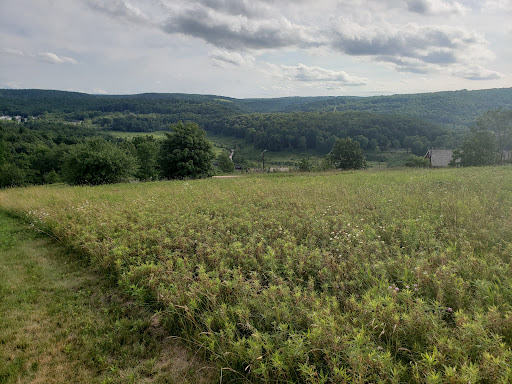
Read moreVisited in early August on a Saturday. Crowds weren't too bad for afternoon. No more than 10 other groups in the visitor center with us at any one time. Memorial was a little difficult to find but GPS eventually got us there. The vistor center was great but we didn't have much time to venture around the outside and it tained for awhile when we were visiting as well. There were a number of interactive displays that were very educational. Make sure you watch the movie that was made for the 100th anniversary... 1989 so its a bit dated but got the info across. Its about 30 mins long and is a bit scary with screaming and cries so beware with people who are sensitive to loud noises or younger children may get sacred. It's called black friday. Our 3 kids all did the junior ranger program here (13, 10 and 7) they have 3 different program books for different age groups which was nice. They really make you work for this badge. I think their website may have it available as well so you can get it doen ahead of your visit. They had a large selection of national park merchandise here too. Also there are multiple (i think 3) different stamps here for passport books. The views of what was the lake are fantastic. There is a parking "lot" area on the way in where you can park and hike about 1/4 mile to one of the overlook. The scale is massive when you walk up to the overlook. It can super hot on the walk as there is no shade for majority of it. It is pretty flat and is wheelchair acessible. You actually walk over the spillway bridge to get the overlook which is cool. Plan to spend at least 90 mins here for a quick visit. More if you want to read everything. No water fountains still so make sure you bring water. Bathrooms were also pretty nice. Don't plan to picnic lunch here in mid summer as there is no shade in main parking lot and maybe a little shade on benches near vistor center...
Read moreI am a photographer and writer for National Park Planner and I visited the Johnstown Flood National Memorial in September 2014.
On May 31, 1889, after two days of record heavy rain, the dam that held back the waters of Lake Conemaugh, an artificial mountain lake created for the enjoyment of Pittsburgh’s elite, broke, sending a wall of water fourteen miles down the valley towards the industrial city of Johnstown, Pennsylvania. Over 2200 people were killed in the disaster. The Johnstown Flood National Memorial preserves the site of the dam and the clubhouse of the South Fork Fishing and Hunting Club, and honors those who died in America’s most deadly flood.
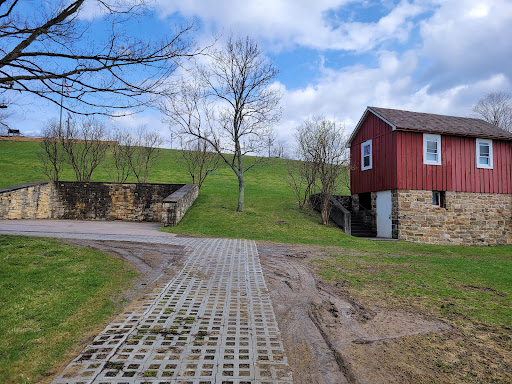
The park consists of a Visitor Center and Museum, the grounds of the former dam, and the South Fork Fishing and Hunting Club’s clubhouse in St. Michael, a short drive from the Visitor Center. There are also two short hiking trails with historical relevance. The South Fork Dam Trail takes visitors from the top of the dam to the bottom of the former Lake Conemaugh, and then through the gap in the dam created by the flood waters. The Carriage Road Nature Trail takes visitors along a short segment of the actual carriage road used by members and guests of the Club to get from the railroad station in South Fork to the cottages along the lake shore.
The Johnstown Flood story entails much more than the story of the South Fork Dam and the South Fork Fishing and Hunting Club. To get a complete picture of the disaster, visitors may want to see additional sites along the path of the flood, most notably the town of Johnstown and its flood museum, and Grandview Cemetery where many of the flood victims are buried. These are not operated by the National Park Service.
For complete information on the park and plenty of quality photos, please visit National Park Planner...
Read more