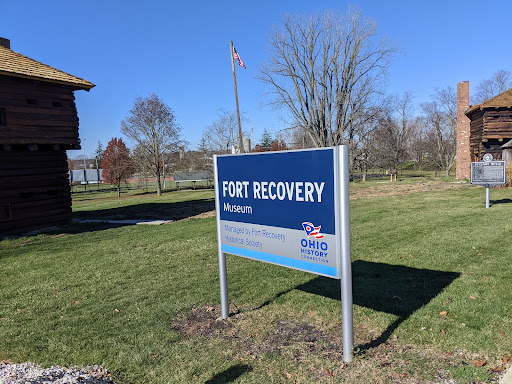
It is important to know that while the entry to the Museum is only $5.00 per person only paper currency/cash or coin is accepted. If you decide to buy any books, or other gifts, or wares, be sure to have extra money on hand for any additional purchases. The museum is open 7 days a week with reduced hours on weekends. Parking is available across the street with handicap access into the main floor of the museum. Additional displays require climbing stairs to the 2nd floor, or descending into the basement. There are actual items recovered from the site, and a nice sized display of Native stone tools, spearheads, axes, and even Mastodon teeth upstairs.
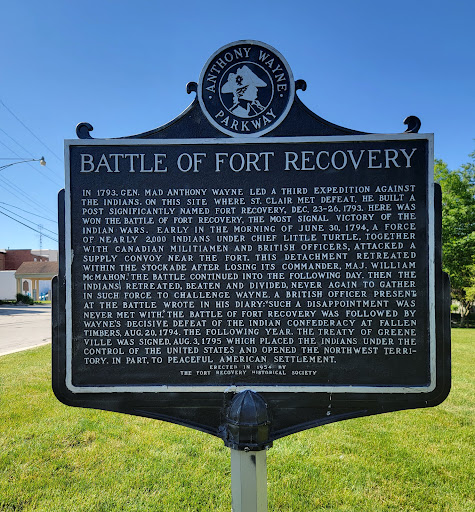
Fort Recovery is a site of Historical significance which documents soldiers, pioneers, and Native Americans who were killed in a battle along the former Wabash River in 1791. It is also more commonly known as "The Battle of 1,000 Slain." An alliance of Native Americans flanked and attacked General St. and his troops which included other settlers traveling with them. Losses were so heavy that at one point St. Clair commanded his remaining men to retreat. His was the most casualties in battle during the Native American Wars with the encroaching pioneers. Afterward, General George Washington from his location in North Washington, Ohio (now known as Cincinnati) had Arthur Sinclair stripped of his rank.
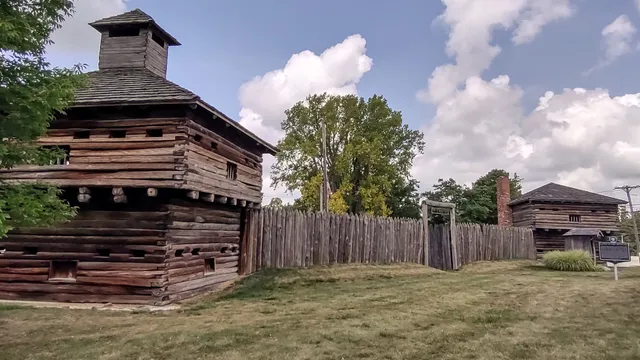
Two sections of the reconstructed Stockade can be entered and one may climb stairs to the 2nd floor to get a more elevated view. Kids may pretend to fire muskets or imagine what it may have been like to keep watch from the towering wood structures. As you begin the walking tour outside after descending the stairs be sure to stop and get a paper map that walks you through each stage of the path. One may imagine the sounds of battle as a surprised General St. Clair barked orders, the sounds of muskets or muzzle loader rifles firing, and the yells of Native Americans as they attacked.
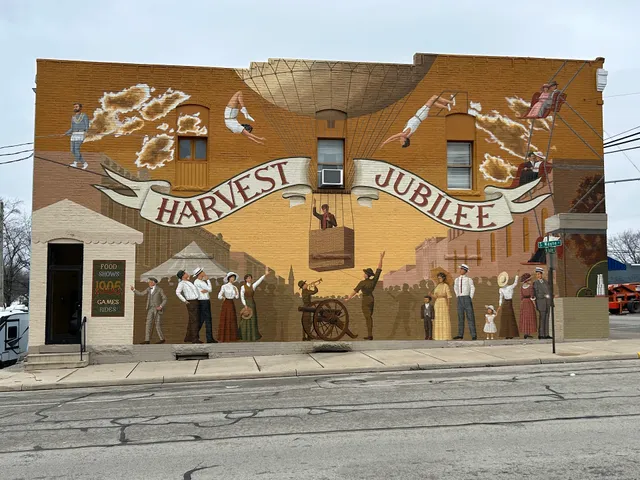
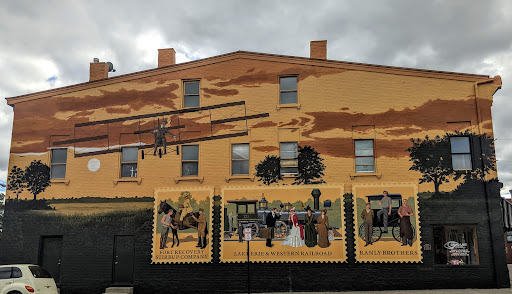
There is an outdoor theater as well as a walking trail with educational signs along a paved walkway beside where the battle took place. There is also a reconstructed Blacksmith Shop and one other building. The self-guided map should take you to another museum behind the parking area, and along multiple murals painted on buildings. In the center of town is a large stone obelisk, a statue, and a memorial placed by Congress in remembrance of this incident.
Fort Recovery was one of many Forts erected during the time of the Pioneer settlement in what was first referred to as the Northern or Northwest Territories. Be sure to look for the marker inside the walls of the Fort which commemorates the Treaty of Greenville. Like almost all the treaties agreed upon unfortunately it too was not kept, or honored. Overall, one can feel a sadness associated with the Native Americans plight to defend their lands, family, homes, and way of life. If peace had truly been possible, everything about society today may be very different. This location marks a chapter which preceded the expansion and settlement of settlers into lands West of...
   Read moreWent for a Saturday morning visit with the kids. The museum does not open until 11:00 and we got there about 10:00 and we were able to do the walking tour through the battlefield and the town. There are 15 signs along the walk discussing various aspects of the battles. Additionally there were some helpful flyers as well as a website that can also give you additional information as you're walking around. Currently the museum is free and it's open through the winter on Fridays Saturdays and Sundays.because of a special exhibit, recommend visiting the Facebook for the most current information on opening hours. There's a short movie on the new exhibit and it takes about 20 minutes to walk through the new exhibit as it discusses the battle from the perspective of the Native Americans. The second floor has a large number of arrowheads as well as some activities for the children. There's a basement with some older exhibits but it's interesting to look through. Finally there's a gift shop with the number of books and some unique gifts related to Fort Recovery. The docent at the museum was extremely helpful and friendly. Overall it was a great trip to check out some more...
   Read moreLoved the details surrounding the construction of the fort as well as the battles fought and as to which side was victorious. The only thing I have an issue with is that the plaques indicate the battles were part of the Revolutionary War, when in fact they were not. There might have been continuing political unrest after the War ended in 1783, but it probably was not related to Great Britain. It most likely had to do with colonists itching to move to areas that offered greater opportunities for business and familial growth. We did not go into the actual museum as we brought two of our dogs along. Plus, it was closed. The log cabin across the street was also very informative! Loved...
   Read more