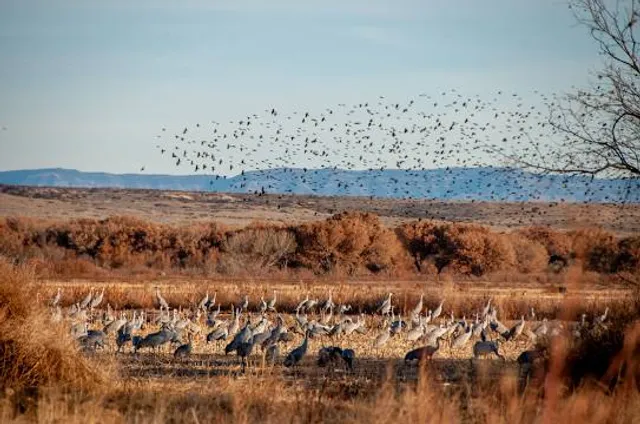
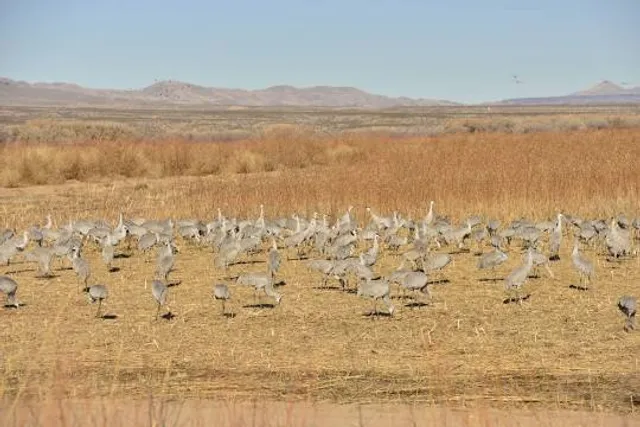
The annual Festival of the Cranes is an experience that stays with you, and Bosque del Apache (BDA) National Wildlife Refuge is undeniably the star of birding in NM. This isn't just a venue; it's a carefully curated ecosystem that allows the spectacle of thousands of Sandhill cranes and other migrating birds to unfold in all its breathtaking glory.
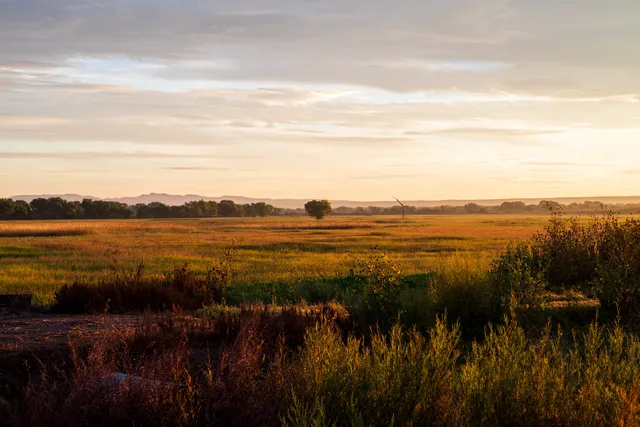
The refuge's landscape, with its flooded fields, grasslands, and the winding Rio Grande, creates a captivating backdrop for the avian drama. The contrast between the crisp, golden morning light and the dusky, muted sunsets provides a stunning visual experience that’s both tranquil and invigorating. The readily accessible observation points, from well-maintained walking trails to strategically placed overlooks, allow visitors of all mobility levels to immerse themselves in the wildlife.
The BDA is great for birding and While the Festival celebrates the Sandhill Crane migration, it's about more than just one species. You're treated to a symphony of wildlife: thousands of cranes rising in a choreographed mass lift-off at dawn, snow geese swirling like snowflakes across the sky, hawks gracefully circling overhead, and the chatter of various ducks and other waterfowl. The sheer number and diversity of birds, coupled with the incredible acoustics of their calls echoing through the air, create a truly unforgettable experience.
Beyond the landscape, the logistics are incredibly well-managed. The educational workshops and presentations are top-notch, catering to both novice and seasoned birders. The guided tours, often led by passionate and knowledgeable volunteers, offer deeper insights into the ecology of the refuge and the lives of the migrating birds. The event is generally well-organized, with easy access to parking, restrooms, and visitor information, ensuring that the focus remains on enjoying the natural wonder unfolding around you.
It's not just the birds that make Bosque del Apache so compelling; it's the feeling of being connected to nature on a grand scale. There's a quiet reverence in the air as visitors stand in awe of this annual migration. The refuge’s commitment to conservation and education is palpable, making the experience both enjoyable and meaningful. You leave not only having witnessed a spectacular display but with a deeper appreciation for the intricate balance of the natural world.
Bosque del Apache is the perfect setting for the Festival of the Cranes. The refuge’s well-maintained environment, accessible viewing areas, and dedicated staff ensure a world-class experience that will leave you captivated and inspired. Whether you're a seasoned birder or simply curious about nature, the Festival of the Cranes at Bosque del Apache is a must-do, offering a front-row seat to one of nature's most remarkable migrations. It’s an annual reminder of the beauty and wonder that surrounds us, and Bosque del Apache provides the ideal platform to impart a...
Read moreThe Bosque is a real jewel in the crown of our national park lands. Founded in 1939, it is managed by the US Fish and Wildlife service. Bosque means "woodland" or "forest" and this area was where many Apache tribes in this area. It is operated under a cooperative effort between government and local farmers. The farmers get the benefit of good land with water access from the Rio Grande and Fish and Wildlife maintains the land for wintering waterfowl who migrate from Canada and beyond.
We go every few years, usually just prior to the annual Festival of the Cranes as the town and park get quite crowded. The closest town of a decent size is Socorro, about 22 miles north along I-25.
Entry to the park is $5 per car but you can get an annual pass or get in for free with a National Park pass or even a Federal Duck Stamp. There is a visitor center with interesting exhibits as well as a Nature Store and restrooms with flush toilets however they are not unlocked until 8am in the morning. They have an entry bate and kiosk you must pass trough to get in but it is only manned during peak times so it's more of an honor system for admittance.
Once inside, there is a cross road intersection. If you go left it's a two way road that goes down along the flooded field to a deck area with benches and some public binoculars as well as some pit toilet restrooms. To the left at the intersection is a one way south loop that takes you by fields, some are flooded as well as woodland areas. You eventually get to the center road which leads back to the entrance or you can continue on the north loop which will bring you full circle back to the entrance.
If your goal is to see birds, especially cranes and other migratory waterfowl then you should go early, like just before sunrise. You can see large flocks of birds lifting off of their roost ponds and flying out to the fields to feed. Going in the afternoon is also good but stay until sunset when the birds make their way back to their nighttime roosting areas. But it's not just about birds; I have seen feral hogs, mule deer and elk in the refuge!
I'd recommend a good set of binoculars or maybe a camera with a telephoto lens. It can be cold in the morning as the altitude is fairly high and it's adjacent to the Chihuahuan Desert. But usually once the sun is up it warms up and is...
Read moreI travel I 25 a couple times a year between Denver and back home to Tucson. Like most other motorists I'm in too big of a rush to pass the long miles. But there are so many possible side trips on the way I decided to see a different one each trip so this time (July '18) I picked Bosque del Apache Wildlife Refuge. It has a history in that Apache Indians once camped and lived here. Bosque is the word for forest and this area is a riparian forest along the Rio Grande. But in modern times it is a wildlife area. Even though I went in the off season, and cranes weren't there, just driving real slow on their loop drive I saw two deer, a roadrunner, ravens, quail, a diamondback stretched across the road, rabbits and birds (I'm not much of a birder so couldn't tell you the species.) They charge 5 bucks entry but I had my Senior Pass. BTW I was the only visitor that afternoon. Besides staff working here and there, I had it totally to myself. For sure check out their website. At different seasons they have more spectular species like cranes and arctic geese. No camping on site but there was a privately owned RV park nearby. There are state parks elsewhere along the I 25 / Rio Grande corridor where...
Read more