This is THE spot. History is replete with turning points, but this was one of the biggest; the world's first nuclear explosion was detonated here. July 16, 1945, at 5:29 a.m.
This is the event that, in my opinion, brought humans into the modern age.
There is, almost literally, nothing to see here, as historical sites go; there is a dark stone obelisk about 12' tall built at the very site marking Ground Zero, directly beneath where the first nuclear bomb was being held at the top of a 100 foot tower, which was destroyed with the explosion (there is a small piece of one leg of the metal tower that remains, and can be seen near the obelisk). The area is almost one mile altitude, and the sun was notably more intense at this elevation than my home at sea level, so a hat, water, and sunscreen, is advised.
There were several food vendors at the parking area. Porta-potties were also available. No running water, no utilities here.
There is also at this location a metal structure, a small building, mostly below ground-level, that was built to protect a part of the glassy crater floor that was formed when the extreme heat of the nuclear blast turned the surrounding sand into a radioactive glass; however, in the ensuing years, the glass, visible through square portals in the 'roof' of this low building, has been naturally covered over by blowing desert sand, and it has been left this way, so there is nothing to see inside now.
The glass that covered the entire area immediately surrounding the blast area was removed by the government a long time ago and/or covered by sand, except what was preserved in the small metal building nearby, so fragments of 'nuclear glass' are not visible when you visit and walk around looking at the ground for it. Lots of people looked for it anyway, but this is sternly forbidden to remove, with due penalty if you are caught.
I had to laugh when I noticed a few people had brought geiger counters to test for 72-year old residual radioactivity from the blast; a slight increase was noted from the surrounding area, but nothing to be concerned about.
The site is miles within a US government test range, and access is restricted. The Trinity Site is only accessible to the public twice per year; the first Saturday of April and October. I estimated (pure guess) that there were about 400 people there during the two hours I spent there. I was in the line of cars waiting for the gate to open at 8 am, and my car was #56 in line! The desert sunrise while waiting in line that cold morning was stunning.
Again, once you reach the test site, there is very little to see other than the obelisk, a small piece of metal sticking out of the ground, and sparse dry grass and sand, but those that come here are not looking for a theme park experience, and you certainly won't get it here. What you do get here is the awe with understanding that here, at this tiny spot where you are now standing, THE EARTH CHANGED. This event was truly a watershed event in human history, and you can feel it as you walk the grounds. The immediate areas is flat desert, but mountains partially surround the area some miles away, and it gave me a chill to realize that, 72 years ago, all of these distant mountains were lit up by a light much more intense than the sun. When you walk around the First Ground Zero, deep inside you you'll feel awe, dread, astonishment, and hope. It is a visceral experience, a solemn experience, not a fun one, and not really sensible. But if you have some understanding of what the Trinity event means, then you must come, you must make a pilgrimage here, once in your life. No matter your feelings of nuclear weapons, good or bad, one cannot help but feel the immensity of history concentrated at this one small spot. And you can actually stand there. It was awe-inspiring to everyone there, it seemed to me. Everyone who goes there, to some degree or another, understands. And they had to be there.
For those people who understand, or are just curious, it is not just recommended,...
Read more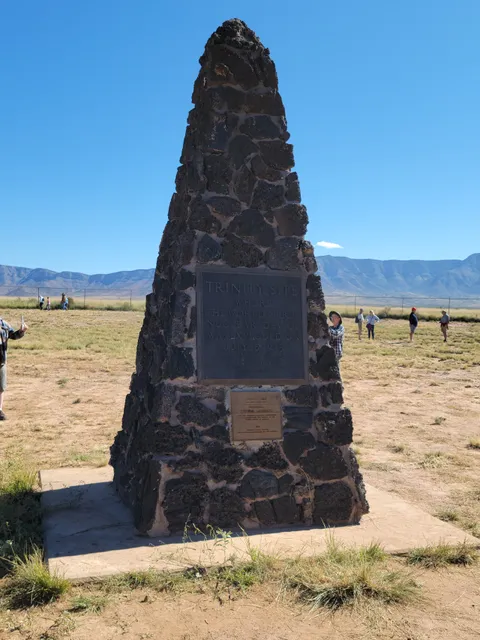
 Learn more insights from Wanderboat AI.