"Hey, since we're in the area, let's take a little detour." I said, since we were on a road trip and happened to be driving though the Indio Valley past the exit for Joshua Tree. I didn't really wait for my Loving Spouse to argue before adding the destination to our route.
I'd learned about the Noah Purifoy outdoor art museum on a website of unusual things to see and do, and had pinned it on my map as Want To Go. I figured we were in the area, now was our best chance to check it out.
"In the area" turned out to be a relative term. After exiting, it was at least a thirty minute drive on smaller and smaller roads until the pavement ended and we found ourselves driving into the high desert flats on a road of dirt and gravel.
"What is this place again?" Loving Spouse wanted to know.
"It's an outdoor art museum!" I enthused, thus exhausting the entirety of my knowledge about the site.
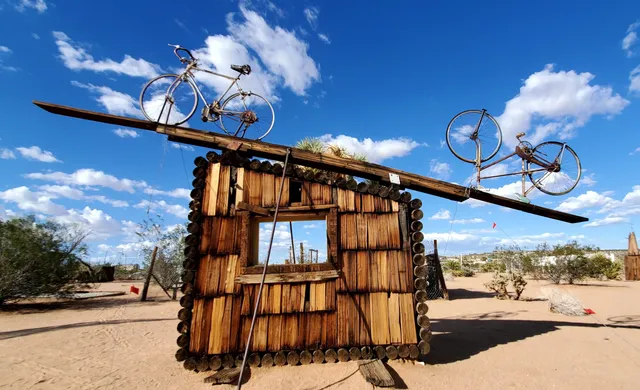
We arrived at what appeared to be a slightly festive junkyard and parked beside a chain link fence with a sign that said "museum parking" but appeared to be beside somebody's house. Climbing out, we wandered over to where a metal box held brochures about the artwork, including a numbered map with names of the various installations. No one else seemed to be around and there didn't seem to be any obvious path so we just kind of wandered in a clockwise circuit around the grounds, guessing at each installations title and/or meaning. I'll be the first to admit that, even having studied art in college I found most of it to be mystifyingly opaque. Many of the installations looked like accumulations of just...Junk.
"Is this ART?" I found myself asking. "Broken glass and old furniture and mannequin parts? What does it even MEAN?"
I can't imagine what Loving Spouse thought I'd dragged him into, but he made an effort to gamely participate in the experience and I appreciated it. I snapped a handful of photos: I was THERE after all, and as Loving Spouse reminded me numerous times, had gone an hour out of our way to get there. As far as I could discern, this Noah Purifoy had gone out into the desert and just proceeded to fill his entire property with installations of junk-art, giving zero shits if anyone liked or understood it, and I respected that. I envied it a bit too: I longed for that kind of artistic audacity in my own life. And so, even without understanding a single piece, I learned a lot.
Afterwards, when I got home and was looking at the photos, I realized there was a lot more form and intentionality to the various pieces than I'd picked up on in person. I'd been so focused on "ew, junk" I'd more or less missed the point of all the pieces. Somehow, seeing them framed and flattened in a photograph made me see them through clearer eyes. So, now in retrospect, I quite like a lot of the pieces that I didn't have much time for at first glance.
Anyway, I enjoyed it and recommend it to anyone with an adventurous spirit, a bit of artistic interest, and a patient Loving Spouse who will tolerate going A WHOLE HOUR out of their way...
Read moreThe Noah Purifoy Outdoor Desert Art Museum is a captivating and thought-provoking destination tucked away in the vast expanse of the Mojave Desert near Joshua Tree, California. This unique museum showcases the incredible works of artist Noah Purifoy, who was known for his large-scale outdoor installations that blend art, social commentary, and the natural desert landscape.
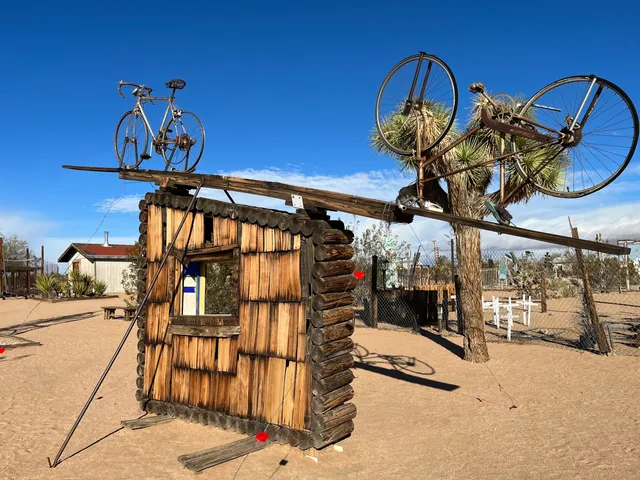
Visiting the museum feels like stepping into an open-air art gallery, where each installation tells a story and invites visitors to reflect on the themes of creativity, resilience, and the human experience. The works are made from found objects and recycled materials, demonstrating Purifoy's innovative approach to art and his belief in the power of repurposing. From whimsical sculptures to thought-provoking assemblages, each piece captivates the imagination and encourages visitors to ponder deeper meanings.
One of the standout features of the museum is its breathtaking setting. Surrounded by the stunning desert landscape, the installations seem to harmonize with the natural environment, creating a truly immersive experience. The contrast of the rugged desert terrain with Purifoy's artistic vision makes for striking photographs, and the ever-changing light throughout the day adds an additional layer of beauty to the artwork.
As you wander through the museum, you'll encounter a variety of installations that reflect Purifoy's unique perspective on society and culture. One piece that particularly stands out is the "65 Signs of Human Progress," which features a series of signs that challenge viewers to reflect on the state of humanity. The creativity and thoughtfulness behind each piece highlight Purifoy's ability to blend art with social commentary, making the museum not just a place to admire art but also a space for dialogue and reflection.
The museum is also a testament to Purifoy's belief in the importance of art as a form of expression and communication. He famously said, "The only thing that is real is the truth," and this sentiment resonates throughout the museum. The installations invite visitors to engage with complex ideas in a way that is both accessible and impactful.
Another highlight of the Noah Purifoy Outdoor Desert Art Museum is its commitment to inclusivity and community engagement. The museum often hosts events and workshops, encouraging local artists and visitors alike to connect and contribute to the creative landscape of the desert.
In summary, the Noah Purifoy Outdoor Desert Art Museum is a hidden gem that offers a unique blend of art, nature, and social commentary. Its stunning desert setting, innovative installations, and thought-provoking themes make it a must-visit destination for anyone exploring the Joshua Tree area. Whether you're an art enthusiast or simply looking for a meaningful experience, this outdoor museum is sure to inspire and leave a lasting impression. Be sure to bring your camera and an open mind as you explore this remarkable celebration of creativity in the heart...
Read moreNoah definitely had a passion for the unusual. Making things out of what others discarded or had no use for and because of the effort and time it took Noah to create his visions, I feel it's worth a visit.
Unfortunately, his visions were hard for me to conceptualize and are in various states of neglect. This reminded me of Slab City, near the Salton Sea. Seems like it's being milked for as long as the pieces are still standing, but this could be due to costs to maintain??
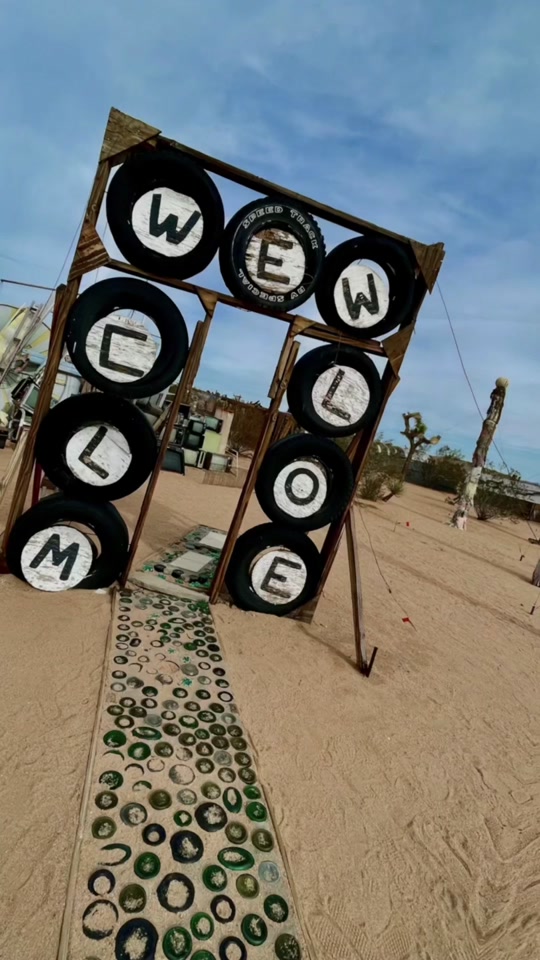
Now, in the defense of those overseeing his art, the donation box is hard to find and not marketed correctly, it should be, in my opinion, next to the Welcome art piece; with the entrance clearly marked there. Guiding people to this spot. If the funds would actually be used to upkeep Noah's art pieces, then there should be signage explaining why donations are needed. I didn't see one of the many visitors drop money into the donation box next to the sign in box. We had to search/figure out where the money drop box was in order to make our donation.
Most of the drive is paved until your last right turn on to Blair Lane. You park perpendicular to the road, on the sides of the road. There is parking signage.
The owner of the spaceship home, I think it's a vacation rental, probably won't be happy with my pointing out its existence a ways behind Noah's Desert Museum. It's cool. Check it out from a distance so as not to ruin it for the people who are there.
Respect the residents of the area by not littering, drive slowly, stay off their property, and...
Read more