What a fascinating place this is!
While the nearby Badlands Natl. Park as well as Wall Drug (and it's wildly numerous billboards) might overshadow this place - this is truly a cant-miss for any visitor to the area.
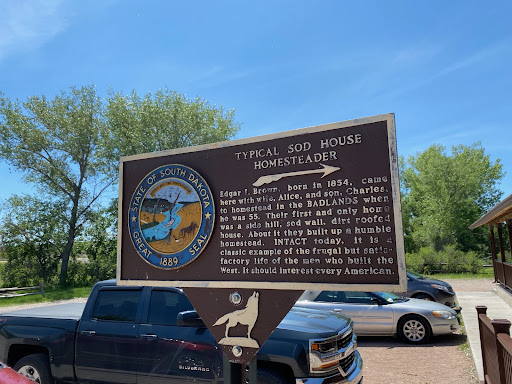
Now, I had learned of the prairie homesteaders and their sod houses - but - I admit to being kind of unclear as to what the heck a sod house actually looked like. This museum not only has an example of one such sod house - but a surviving, largely-original, authentic prairie homesteader structure. If I remember correctly, some of the sod bricks around the window had to be replaced, but nearly all of the structure is the original dugout sod home, still standing after over a century.
The interior is decorated with artifacts from the period, impressively recreating a living snapshot of how the homesteaders lived at the time.
It's truly striking to enter the dugout home - for one thing, seeing the sod bricks and the original timber frame supporting the roof instantly creates an appreciation for the difficulty and craft of the task facing the settlers who built these homes. Secondly - a key advantage and feature of the dugout style home was the natural climate control, and stepping inside the home on a hot day and physically feeling how much cooler it is inside versus outside is amazing (also - refreshing).
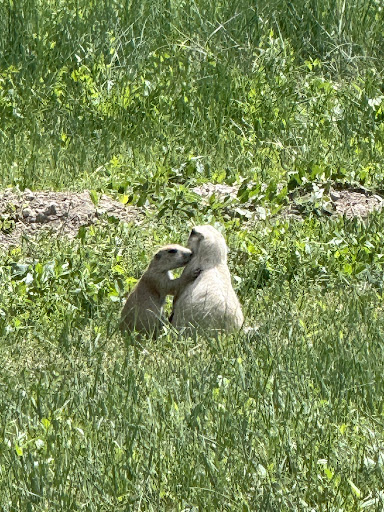
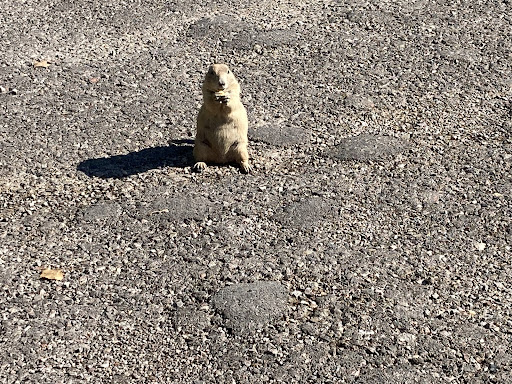
The site is also home to a pretty well populated prairie dog town, including the rare all-white prairie dogs.
Lets go on a tangent about prairie dogs for a bit:
Digging into some local folklore, apparently these white prairie dogs were either moved to the area of the museum with the help of a local tribe, or bartered for by the museum ownership, depending on who you ask. These aren't albino prairie dogs, nor are they a different species - they have a lack of fur and skin pigmentation called leucism. The lack of pigmentation is a naturally occurring random genetic thing, and apparently this is a thing that sometimes happens to spread through generations to entire prairie dog towns/colonies.
Since bright white isn't exactly great camouflage in the grasslands (winter notwithstanding), most of the time, via predators, nature takes its course. On the museum property they're somewhat more protected from natural predators, so this has allowed them to flourish.
Prairie dogs are of course skilled tunnelers, so their town now extends well past the museum property - but the level of human activity in the area just in general protects them a bit, enough that they survive.
So the claim that they only exist at the museum is half-half-true. They're only known to persistently exist in the area immediately around the museum, and they have existed in other places, just - they're usually easy prey when that happens.
I noticed another review complaining about the staff not letting visitors feed the prairie dogs --- lets be abundantly clear, this isn't a petting zoo, these are wildlife.
Yeah, the nearby badlands ranch store encourages visitors to feed the prairie dogs there, and I'm unclear if those are somewhat domesticated - but as a rule, keep a bit of distance from wildlife. I'd suggest staying on the trails and out of the grass in general, on the prairie. The dogs aren't inherently dangerous but may carry disease - the rattlesnakes you might encounter in the grass, those are inherently dangerous - none of this is anything to worry about if you stay on a trail or path and out of the grass.
In any event, they are cute and fun to watch. They're very social animals with their own community jobs and language.
Thank you for coming to my ted talk.
So, in conclusion, come to the museum for a fascinating example of homesteader life that gives the visitor a bit of an experience, and while you're there, enjoy - from a comfortable distance - the show the prairie dogs naturally put on as they go about their prairie...
Read more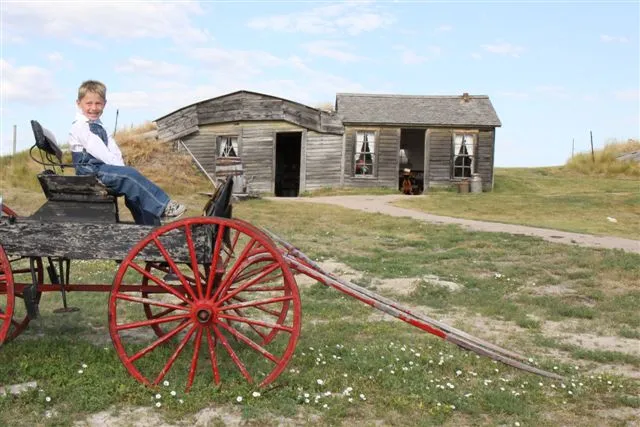
 Learn more insights from Wanderboat AI.