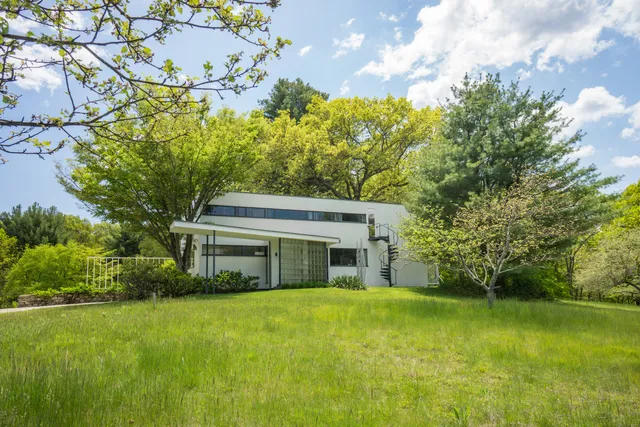
Pioneer master architect of modernism, Walter Gropius, founded the German school house, Bauhaus 1919 -33. Recognized for his visionary hand selected staff of prominent artists and masters from respective disciplines of art, crafts, design and architecture that still influence todays tenets of minimalist design and function. Upon his arrival to Massachusetts to fullfill a professorship at Harvard's Graduate School of Design he built his family residence in Lincoln 1938, a remarkable architecture and interior design case study. Of note, Gropius used his house to share the unique Bauhaus principles and philosophy with his students...maximize efficiency and simplicity.
The homes lobby, three bedrooms, terrace, study, two bathrooms and two double helix balustrade stair cases to the second floor perambulates to the pergola at the back of the house which performs the function of a double height covered terrace that naturally propigates light and solar gains into the dining room. This was particularly important during winter months against single payne glass locations. (1945 The first double-pane, insulated window was introduced). The homes cantilevered roof would block the high-angle sun during summer months.
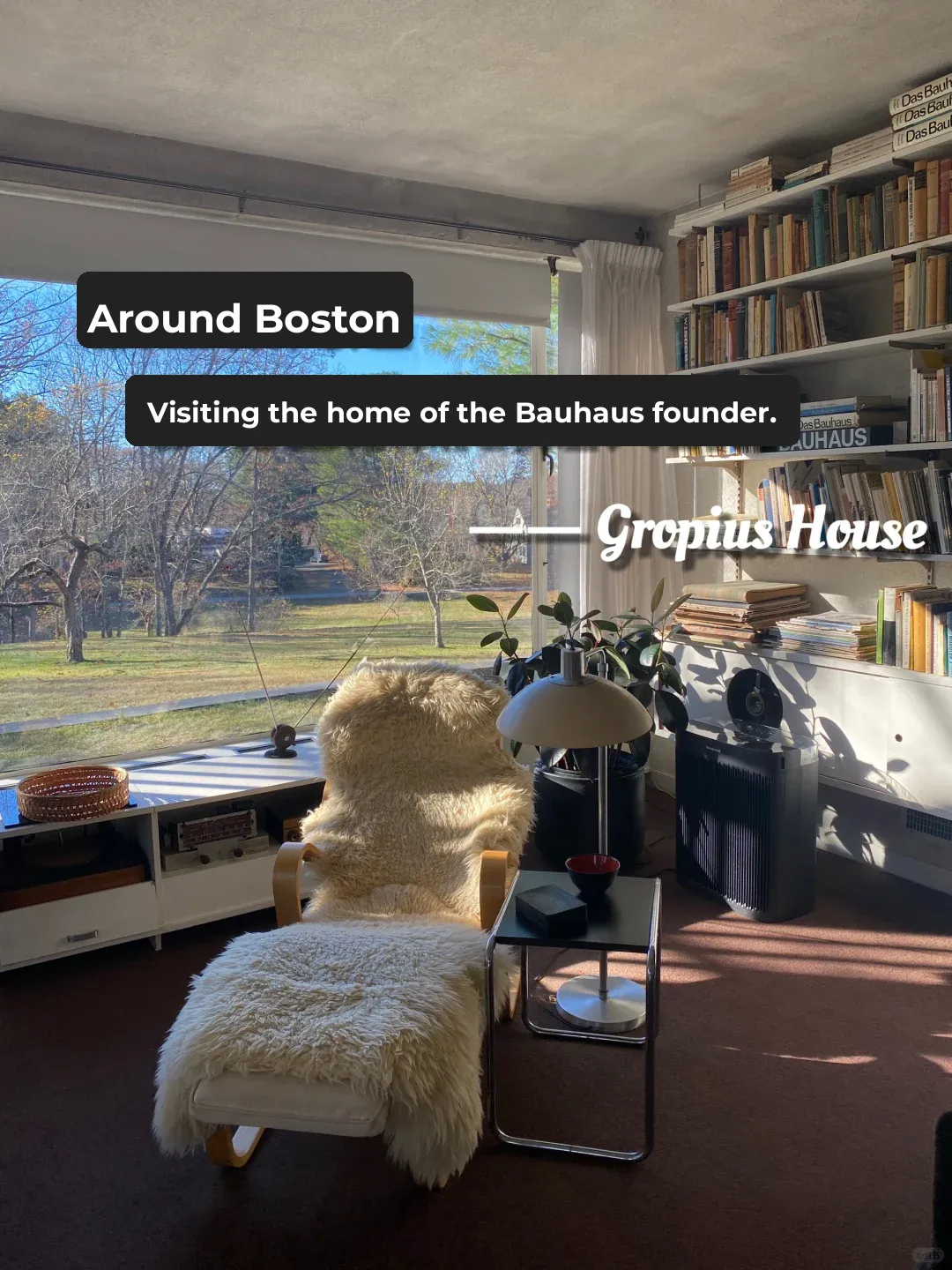
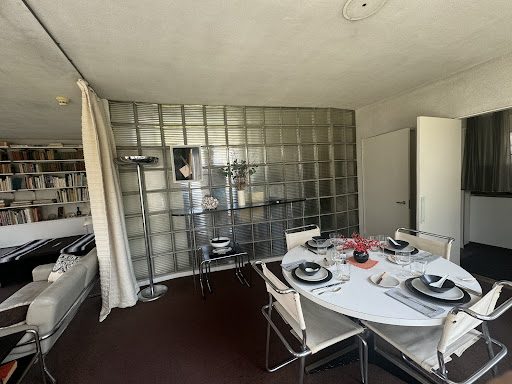
One of many Gropius' investigations can be seen with the long heating radiator that he completely concealed leaving minimalist profile rectilinear register openings at the top. This was pivitol, and in my opinion, influenced todays high-end ultra modern homes of today with extrapolated designs that now include filtration cooling/conditioning, ceiling/floor locations. The detail of the homes recessed front door floor mat, spiral stair cases both indoor/outdoor, other notable materials include transparent glass blocks, chrome banisters and acoustical plaster. Additionally, you can see early Bauhaus window practices with the high rectangular clerestory windows. Together, he demonstrates his awareness of well being and environmental consciousness. The homes interior is punctuated throughout with furniture by Marcel Breuer and other bespoke designs from his Bauhaus workshops. Of note, you will find architect Eero Saarinen's Womb chair (1948) that was a birthday gift to Gropius 1953.
Thank you architecture community and preservationists for your ongoing efforts to share an historical architectural benchmark case...
Read moreVery interesting and different type of house for the Northeast. focused on function and efficiency along with an open feeling that is connected to the outside this house is a refreshing change from the normal New England architecture. This house is a wonderful example of the style, and we had the opportunity to tour with several Architecture students attending MIT which gave us a different perspective. Walter Gropius has a rich history that includes fighting with Germany in WWI and eventually marring a Jewish woman in the 1920s. While the exit from Germany in the early 1930s is not the focus of the tour, the backstory always makes things more interesting. I do think the design is cool but not very well suited for our climate. I enjoyed the tour and the guide Oliver was very well informed on the history and the items in the house. Worth the...
Read moreAn awesome house museum, with a subpar guide. This was our fifth Historic New England House. The building was beautiful to experience inside and outside. There a rich history as usual. Unfortunately the host we had let much to be desired. She kept telling the entire group that she had to 'keep an eye on my daughter and I'. Also repeatedly mentioning that we had to stay with the group, which we always did, meanwhile she didn't haggle other group members who lingered behind. This was so annoying, that my daughter and I almost left the tour. She left out key details about the house, namely the significance of important paintings and interesting décor. It would have been better if the tour had been self...
Read more