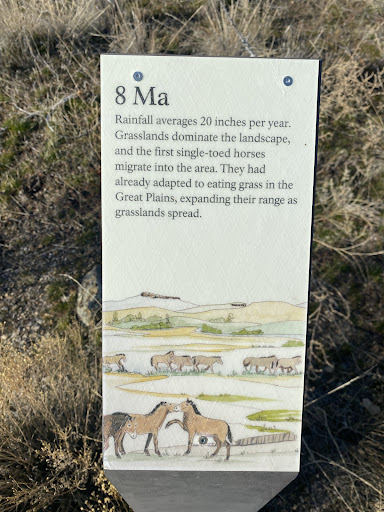
Owing to its more remote location and smaller size compared to the other two units of the JDFBNM, the Clarno Unit is easily the least visited and sometimes seems like the forgotten step-child of the monument. But you would be making a mistake to skip it. It features the oldest rock among the three units and some fascinating geological and ecological history, as depicted by the interpretive signs, including a fun walk through 50 Million years of natural history.
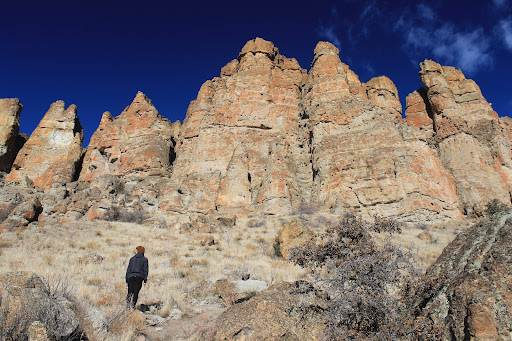
The palisades looming above you are a feast for the eyes, and the camera, as they reveal new nooks and crannies with each step. Birds of prey circle overhead, and animals such as coyotes and mule deer can be spotted. A round trip hike from the parking lot to the end of the arch trail (covering all three trails along the way) is just over two miles, and does not require a great deal of physical fitness to accomplish. It’s worth it for the views at the top, both of the interesting arch feature above and the bucolic valley below.
Imagine a smaller version of Smith Rock, but all to yourself, and that will give you a good idea of what to expect at the Clarno Unit. I’ve been twice and we were the only car in the parking lot both times. I recommend visiting early or late in the day, or during the cooler months, as it is quite exposed to the sun. The sunsets are particularly beautiful here.
But no matter when you go, do yourself a favor and just go. You won’t regret it. In case you need any extra incentive, it is located along the Journey Through Time Scenic Byway, which stretches from the Sheep Rock Unit all the way up to Biggs Junction in the Columbia Gorge, itself perhaps the most beautiful day of driving you can find in Oregon.
Other people might sleep on the Clarno Unit but you don’t have to be...
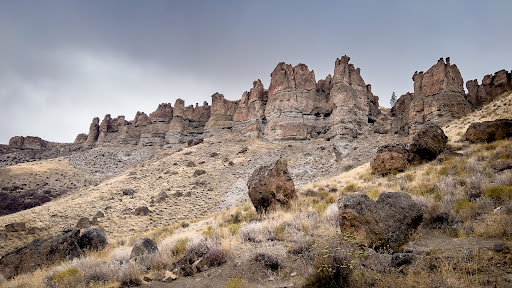
Read moreThe Clarno Unit is a lesser visited section of the Painted Hills National Monument is in unique setting a bit off of the beaten path. It is located 18 miles west of the town of Fossil, Oregon. The main feature is the Palisades, the most prominent landforms which are volcanic lahars, or mudflows, that formed 54-40 million years ago in a lush semi-tropical rainforest environment. Quite different from the existing ecosystem typical of Central Oregon's near-desert environment. This area had burnt a month or so prior to our arrival which added to the rugged impression of the surrounding landscape. On the trail fossilized plants can be seen along the cliff walls and in some of the boulders. While hiking we saw and heard several rattle snakes but they all kept their distance from us. There is a nice shaded picnic area as well as restrooms. It is quite a long way to the nearest gas station on wandering roads. The remoteness made for wonderful star gazing and with the arid climate we had several good nights of good vision. Although it is a bit out of the way in regards to the other two units of the Monument, the Clano units uniqueness makes it an interesting part of the of a must see...
Read moreMake sure and visit all three areas of the Monument. Very informative and a nice little walk! After checking out this gem, head down to the painted hills near Mitchell. Just make sure to top off on fuel, gas stations are few and far between in this area.
The landscape here is stunning, with dramatic cliffs, rolling hills, and canyons that seem to go on forever. The colors of the rocks and cliffs change with the sunlight, creating a mesmerizing display of light and shadows.
One of the highlights of John Day National Monument is the stunning rock formations. The rocks here are incredibly unique and look like they have been sculpted by an artist. The colors of the rocks range from deep reds and oranges to pale yellows and whites, making for a stunning display of natural beauty. The park also has several hiking trails that lead you through the different formations, allowing you to explore the park at your own pace.
Another highlight is the wildlife. This place is home to a wide variety of animals, including deer, elk, coyotes, and birds. As you hike through the park, you will often come across these animals, adding to the...
Read more