HTML SitemapExplore
logo
Find Things to DoFind The Best Restaurants

Lovelock Cave — Attraction in Nevada

Name
Lovelock Cave
Description
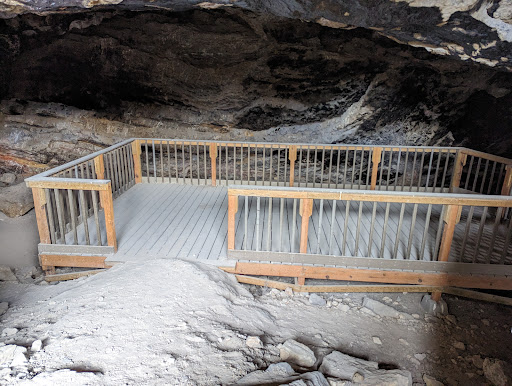
Lovelock Cave is a North American archaeological site previously known as Sunset Guano Cave, Horseshoe Cave, and Loud Site 18. The cave is about 150 feet long and 35 feet wide.
Nearby attractions
Nearby restaurants
Nearby hotels
Related posts
Keywords
Lovelock Cave tourism.Lovelock Cave hotels.Lovelock Cave bed and breakfast. flights to Lovelock Cave.Lovelock Cave attractions.Lovelock Cave restaurants.Lovelock Cave travel.Lovelock Cave travel guide.Lovelock Cave travel blog.Lovelock Cave pictures.Lovelock Cave photos.Lovelock Cave travel tips.Lovelock Cave maps.Lovelock Cave things to do.
Lovelock Cave things to do, attractions, restaurants, events info and trip planning
Lovelock Cave
United StatesNevadaLovelock Cave

Basic Info

Lovelock Cave

Nevada
4.5(116)
Open 24 hours
Save
spot

Ratings & Description

Info

Lovelock Cave is a North American archaeological site previously known as Sunset Guano Cave, Horseshoe Cave, and Loud Site 18. The cave is about 150 feet long and 35 feet wide.

Cultural
Adventure
attractions: , restaurants:
logoLearn more insights from Wanderboat AI.

Plan your stay

hotel
Pet-friendly Hotels in Nevada
Find a cozy hotel nearby and make it a full experience.
hotel
Affordable Hotels in Nevada
Find a cozy hotel nearby and make it a full experience.
hotel
The Coolest Hotels You Haven't Heard Of (Yet)
Find a cozy hotel nearby and make it a full experience.
hotel
Trending Stays Worth the Hype in Nevada
Find a cozy hotel nearby and make it a full experience.

Reviews

Get the Appoverlay
Get the AppOne tap to find yournext favorite spots!
Wanderboat LogoWanderboat

Your everyday Al companion for getaway ideas

CompanyAbout Us
InformationAI Trip PlannerSitemap
SocialXInstagramTiktokLinkedin
LegalTerms of ServicePrivacy Policy

Get the app

© 2025 Wanderboat. All rights reserved.
logo

Reviews of Lovelock Cave

4.5
(116)
avatar
5.0
17w

Lovelock Cave, located in Nevada, is a significant archaeological site known for its unique discoveries. The cave is approximately 150 feet long and 35 feet wide, with a depth of 40 feet. It was first excavated in 1911 by miners searching for bat guano, leading to the discovery of various artifacts and human remains.

Discoveries of Mummies/Human Remains—

Height: Reports indicate that some mummies found in Lovelock Cave measured around 6 feet 6 inches tall.

Hair Color: Many of these mummies had red hair, which has sparked various theories about their origins and lifestyle.

Excavation History: The first significant archaeological investigation occurred in 1912, where around 10,000 artifacts were recovered, including human remains.

Si-Te-Cah Tribe: Local Paiute legends describe a group known as the Si-Te-Cah, characterized as red-haired giants. They were said to have lived in the area and were eventually driven out or exterminated by the Paiutes. Cultural Significance: The red hair of the mummies has led to speculation about their identity, with some suggesting they were a distinct group separate from the indigenous tribes.

Conclusion: The findings at Lovelock Cave, including the red-haired mummies, continue to intrigue researchers and contribute to the rich tapestry of Native American history in the region. The cave remains a focal point for understanding prehistoric life in Nevada.

While modern historians and anthropologists whom are considered so called experts that know it all generally consider the account of the Si-Te-Cah giants to be a fictional or allegorical myth, there is archaeological evidence from Lovelock Cave proving that it contained elements of truth.

Radiocarbon dating of materials found during follow-up visits to Lovelock Cave yielded dates of 2030 BC for vegetable material, 1450 BC for a human femur, 1420 BC for human muscle tissue, and 1218 BC for basketry. Artifacts found in the cave prove that an advanced culture predated the Paiute Indians.

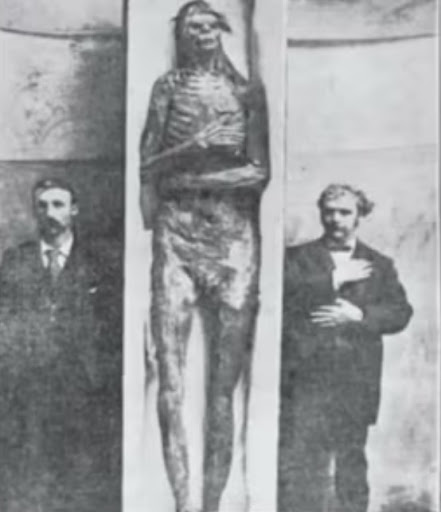
These mummies measured an astonishing 8 to 10 feet tall, according to the news outlet at the time.

Archaeologists also found a 15-inch-long sandal showing signs of wear, and a boulder with a seemingly giant handprint etched onto it. A 1931 local newspaper article reported the discovery of two more giant skeletons, around 8.5 and 10 feet tall, in a nearby dry lake bed. These remains were even described as being mummified in a similar way to those of the Ancient Egyptians.

Intriguingly, the Paiute tribe inhabiting the region for millennia possesses a legend of red-haired giants called the Si-Te-Cah. These giants, according to the legend, arrived by sea and dominated the area due to their superior size and strength.

Further supporting the legend, a 16th-century Spanish conquistador documented an ancient Peruvian tale about giants who crossed the ocean on large reed rafts. He described them as being so tall that their legs from the knee down were as long as an average man's entire body.

Elongated skulls, possibly 3,000 years old and much larger than normal human skulls, have also been found high in the Andes mountains. Some of these skulls are reported to have had red hair, although some scientists whom are likely being coerced attribute this coloration to the burial environment.

The story doesn't end there. The Paiute legend continues with the tribes uniting to defeat the Si-Te-Cah after years of war. The last remaining giants were supposedly chased into Lovelock Cave, where they were trapped and ultimately burned alive by a fire set at the entrance. Interestingly, archaeologists did find evidence of significant burning near the cave's entrance during the initial excavations.

While the existence of 10-foot giants remains unconfirmed there are bodies of evidence and great amounts of speculation about the Smithsonian‘s involvement in the cover-up of the Giants who once ruled America & other continents, these discoveries and their connection to local legends offer a fascinating glimpse into the past and the power of storytelling across...

   Read more

avatar
5.0
1y

My buddy and I decided to embark on a thrilling day trip from Reno to explore a mysterious cave. The drive took about two hours, but as soon as we arrived, we were struck by the sight of a unique white quartz structure standing out against the backdrop of black, brown, and red terrain.

As we hiked up to the entrance, we noticed the charred black marks that hinted at the cave's storied past. Initially, we stuck to the path, but curiosity got the better of us, and we ventured off to explore. It wasn't long before we discovered that some of the entrances appeared to be deliberately covered. Armed with small shovels, we began to clear away the rocks and dirt.

To our amazement, we uncovered a hidden entrance leading deeper into the cave. We had to squeeze through a narrow crevice, but after some effort, we emerged into a vast chamber large enough to fit a football field. As we wandered around, we stumbled upon some strange and unmentionable items that left us both intrigued and spooked.

By the end of our adventure, I became a believer—though I won't say of what. We carefully covered the entrance before leaving, but I'll give you a clue on how to find it: look for the three wise people, find the drinking fountain beneath them, move it, and you'll see a black rock. The entrance is hidden...

   Read more
avatar
4.0
2y

Interesting historical site, shame all the artifacts were removed and are now in various museums. It is best to start at the historical society museum in Lovelock. You pick up a booklet that explains the various sights at numbered signs along the route to the cave. beautiful drive, great scenery. Some dirt roads, but well maintained. Once at cave site, a covered picnic table and pit toilet, and interpretive signs. The official trail to the cave is the nature trail, which is nice, but it is steep, narrow and slippery and takes 40 minutes to get to the entrance of the cave. Now that we did it once, we go around the west side of the outcrop and use the trail there. It is steep, narrow and slippery also, but much shorter. The outcrop is beautiful and a geological oddity, it is not volcanic like everything around it, google it, it is...

   Read more
Page 1 of 7
Previous
Next

Posts

Dylan DemersDylan Demers
Lovelock Cave, located in Nevada, is a significant archaeological site known for its unique discoveries. The cave is approximately 150 feet long and 35 feet wide, with a depth of 40 feet. It was first excavated in 1911 by miners searching for bat guano, leading to the discovery of various artifacts and human remains. Discoveries of Mummies/Human Remains— Height: Reports indicate that some mummies found in Lovelock Cave measured around 6 feet 6 inches tall. Hair Color: Many of these mummies had red hair, which has sparked various theories about their origins and lifestyle. Excavation History: The first significant archaeological investigation occurred in 1912, where around 10,000 artifacts were recovered, including human remains. Si-Te-Cah Tribe: Local Paiute legends describe a group known as the Si-Te-Cah, characterized as red-haired giants. They were said to have lived in the area and were eventually driven out or exterminated by the Paiutes. Cultural Significance: The red hair of the mummies has led to speculation about their identity, with some suggesting they were a distinct group separate from the indigenous tribes. Conclusion: The findings at Lovelock Cave, including the red-haired mummies, continue to intrigue researchers and contribute to the rich tapestry of Native American history in the region. The cave remains a focal point for understanding prehistoric life in Nevada. While modern historians and anthropologists whom are considered so called experts that know it all generally consider the account of the Si-Te-Cah giants to be a fictional or allegorical myth, there is archaeological evidence from Lovelock Cave proving that it contained elements of truth. Radiocarbon dating of materials found during follow-up visits to Lovelock Cave yielded dates of 2030 BC for vegetable material, 1450 BC for a human femur, 1420 BC for human muscle tissue, and 1218 BC for basketry. Artifacts found in the cave prove that an advanced culture predated the Paiute Indians. These mummies measured an astonishing 8 to 10 feet tall, according to the news outlet at the time. Archaeologists also found a 15-inch-long sandal showing signs of wear, and a boulder with a seemingly giant handprint etched onto it. A 1931 local newspaper article reported the discovery of two more giant skeletons, around 8.5 and 10 feet tall, in a nearby dry lake bed. These remains were even described as being mummified in a similar way to those of the Ancient Egyptians. Intriguingly, the Paiute tribe inhabiting the region for millennia possesses a legend of red-haired giants called the Si-Te-Cah. These giants, according to the legend, arrived by sea and dominated the area due to their superior size and strength. Further supporting the legend, a 16th-century Spanish conquistador documented an ancient Peruvian tale about giants who crossed the ocean on large reed rafts. He described them as being so tall that their legs from the knee down were as long as an average man's entire body. Elongated skulls, possibly 3,000 years old and much larger than normal human skulls, have also been found high in the Andes mountains. Some of these skulls are reported to have had red hair, although some scientists whom are likely being coerced attribute this coloration to the burial environment. The story doesn't end there. The Paiute legend continues with the tribes uniting to defeat the Si-Te-Cah after years of war. The last remaining giants were supposedly chased into Lovelock Cave, where they were trapped and ultimately burned alive by a fire set at the entrance. Interestingly, archaeologists did find evidence of significant burning near the cave's entrance during the initial excavations. While the existence of 10-foot giants remains unconfirmed there are bodies of evidence and great amounts of speculation about the Smithsonian‘s involvement in the cover-up of the Giants who once ruled America & other continents, these discoveries and their connection to local legends offer a fascinating glimpse into the past and the power of storytelling across generations.
Doug RockeyDoug Rockey
Interesting historical site, shame all the artifacts were removed and are now in various museums. It is best to start at the historical society museum in Lovelock. You pick up a booklet that explains the various sights at numbered signs along the route to the cave. beautiful drive, great scenery. Some dirt roads, but well maintained. Once at cave site, a covered picnic table and pit toilet, and interpretive signs. The official trail to the cave is the nature trail, which is nice, but it is steep, narrow and slippery and takes 40 minutes to get to the entrance of the cave. Now that we did it once, we go around the west side of the outcrop and use the trail there. It is steep, narrow and slippery also, but much shorter. The outcrop is beautiful and a geological oddity, it is not volcanic like everything around it, google it, it is interesting.
Matt ChampionMatt Champion
It was really neat to hike the trail with great views all around. The trail is easy however there is no shade anywhere on the trail so it will get hot out there if you're out there midday or the afternoon. There is shade in the cave however obviously since it is a cave, lol. If you are using Alltrails to map your progress, once you get around to the cave it seems rather wonky but the trail continues in front of the cave & down the other side of it back to the beginning. I was mapping it for completion but it got all messed up so I erased my progress & I'll have to go back and do it again. Also it is slippery in certain spots so bring good hiking boots & trekking poles. You also definitely need a flashlight for the cave. The only wildlife I saw in the cave was a large owl & as soon as I went into it, the owl flew away.
See more posts
See more posts
hotel
Find your stay

Pet-friendly Hotels in Nevada

Find a cozy hotel nearby and make it a full experience.

Lovelock Cave, located in Nevada, is a significant archaeological site known for its unique discoveries. The cave is approximately 150 feet long and 35 feet wide, with a depth of 40 feet. It was first excavated in 1911 by miners searching for bat guano, leading to the discovery of various artifacts and human remains. Discoveries of Mummies/Human Remains— Height: Reports indicate that some mummies found in Lovelock Cave measured around 6 feet 6 inches tall. Hair Color: Many of these mummies had red hair, which has sparked various theories about their origins and lifestyle. Excavation History: The first significant archaeological investigation occurred in 1912, where around 10,000 artifacts were recovered, including human remains. Si-Te-Cah Tribe: Local Paiute legends describe a group known as the Si-Te-Cah, characterized as red-haired giants. They were said to have lived in the area and were eventually driven out or exterminated by the Paiutes. Cultural Significance: The red hair of the mummies has led to speculation about their identity, with some suggesting they were a distinct group separate from the indigenous tribes. Conclusion: The findings at Lovelock Cave, including the red-haired mummies, continue to intrigue researchers and contribute to the rich tapestry of Native American history in the region. The cave remains a focal point for understanding prehistoric life in Nevada. While modern historians and anthropologists whom are considered so called experts that know it all generally consider the account of the Si-Te-Cah giants to be a fictional or allegorical myth, there is archaeological evidence from Lovelock Cave proving that it contained elements of truth. Radiocarbon dating of materials found during follow-up visits to Lovelock Cave yielded dates of 2030 BC for vegetable material, 1450 BC for a human femur, 1420 BC for human muscle tissue, and 1218 BC for basketry. Artifacts found in the cave prove that an advanced culture predated the Paiute Indians. These mummies measured an astonishing 8 to 10 feet tall, according to the news outlet at the time. Archaeologists also found a 15-inch-long sandal showing signs of wear, and a boulder with a seemingly giant handprint etched onto it. A 1931 local newspaper article reported the discovery of two more giant skeletons, around 8.5 and 10 feet tall, in a nearby dry lake bed. These remains were even described as being mummified in a similar way to those of the Ancient Egyptians. Intriguingly, the Paiute tribe inhabiting the region for millennia possesses a legend of red-haired giants called the Si-Te-Cah. These giants, according to the legend, arrived by sea and dominated the area due to their superior size and strength. Further supporting the legend, a 16th-century Spanish conquistador documented an ancient Peruvian tale about giants who crossed the ocean on large reed rafts. He described them as being so tall that their legs from the knee down were as long as an average man's entire body. Elongated skulls, possibly 3,000 years old and much larger than normal human skulls, have also been found high in the Andes mountains. Some of these skulls are reported to have had red hair, although some scientists whom are likely being coerced attribute this coloration to the burial environment. The story doesn't end there. The Paiute legend continues with the tribes uniting to defeat the Si-Te-Cah after years of war. The last remaining giants were supposedly chased into Lovelock Cave, where they were trapped and ultimately burned alive by a fire set at the entrance. Interestingly, archaeologists did find evidence of significant burning near the cave's entrance during the initial excavations. While the existence of 10-foot giants remains unconfirmed there are bodies of evidence and great amounts of speculation about the Smithsonian‘s involvement in the cover-up of the Giants who once ruled America & other continents, these discoveries and their connection to local legends offer a fascinating glimpse into the past and the power of storytelling across generations.
Dylan Demers

Dylan Demers

hotel
Find your stay

Affordable Hotels in Nevada

Find a cozy hotel nearby and make it a full experience.

Get the Appoverlay
Get the AppOne tap to find yournext favorite spots!
Interesting historical site, shame all the artifacts were removed and are now in various museums. It is best to start at the historical society museum in Lovelock. You pick up a booklet that explains the various sights at numbered signs along the route to the cave. beautiful drive, great scenery. Some dirt roads, but well maintained. Once at cave site, a covered picnic table and pit toilet, and interpretive signs. The official trail to the cave is the nature trail, which is nice, but it is steep, narrow and slippery and takes 40 minutes to get to the entrance of the cave. Now that we did it once, we go around the west side of the outcrop and use the trail there. It is steep, narrow and slippery also, but much shorter. The outcrop is beautiful and a geological oddity, it is not volcanic like everything around it, google it, it is interesting.
Doug Rockey

Doug Rockey

hotel
Find your stay

The Coolest Hotels You Haven't Heard Of (Yet)

Find a cozy hotel nearby and make it a full experience.

hotel
Find your stay

Trending Stays Worth the Hype in Nevada

Find a cozy hotel nearby and make it a full experience.

It was really neat to hike the trail with great views all around. The trail is easy however there is no shade anywhere on the trail so it will get hot out there if you're out there midday or the afternoon. There is shade in the cave however obviously since it is a cave, lol. If you are using Alltrails to map your progress, once you get around to the cave it seems rather wonky but the trail continues in front of the cave & down the other side of it back to the beginning. I was mapping it for completion but it got all messed up so I erased my progress & I'll have to go back and do it again. Also it is slippery in certain spots so bring good hiking boots & trekking poles. You also definitely need a flashlight for the cave. The only wildlife I saw in the cave was a large owl & as soon as I went into it, the owl flew away.
Matt Champion

Matt Champion

See more posts
See more posts