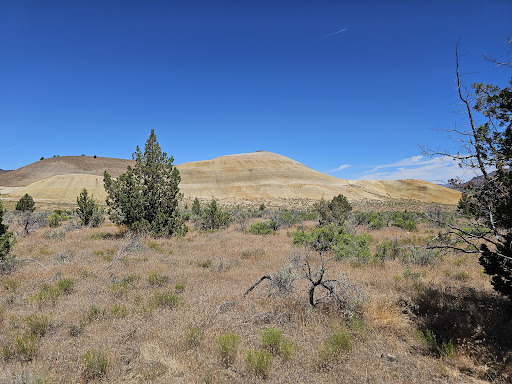
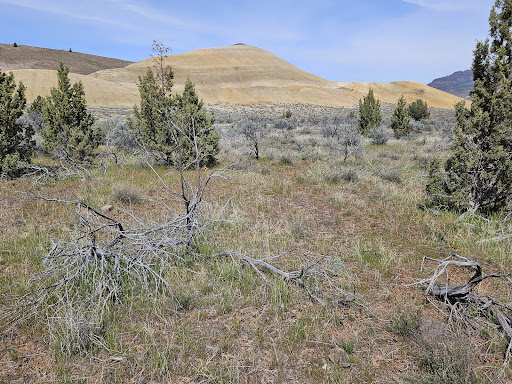
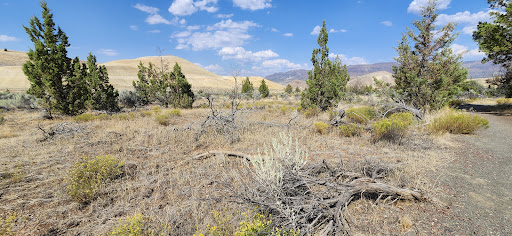
The Leaf Hill Trail at ¼ mile takes you to the location of significant scientific studies in the 1920s and 1990s where thousands of leaf fossils were found and preserved.
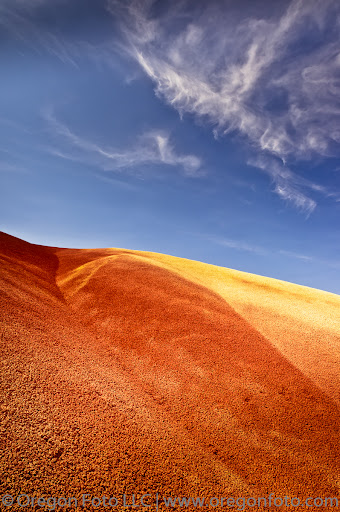
he Painted Hills at the John Day Fossil Beds National Monument is noted mostly for its colorful geology made of heavily eroded volcanic ash layers deposited during ancient times when the area was a river plain with a warm tropical climate. Over time, the layers of ash formed with different mineral compositions, which led to the incredible bands of color seen today. The red and orange hues are from laterite soil which formed by floodplain deposits. The grey coloring is from mudstone, shale, and siltstone. The striations of black soil are lignite which was vegetation that grew along the floodplain. It is from these layers of ash, minerals, and vegetative matter, coupled with eons of erosion from the powerful forces of nature that caused the painted hills to emerge as we see them today.
The area is regarded as one of the most beautifully striking regions in Eastern Oregon. The Painted Hills receive their name from spectacular colors and banded striations that appear hand-painted with an artistic quality that seems almost unnatural and highly surreal. These colors shift in appearance throughout different times of the day due to the varying angles of the sun. They absolutely explode in vibrancy after a thunderstorm, with a full saturated color palette due to the polarizing light filtering the sun’s rays through the clouds. Colors range from burnt red, amber, orange, yellow, and gold, with streaks of black and grey reminiscent of an...
Read more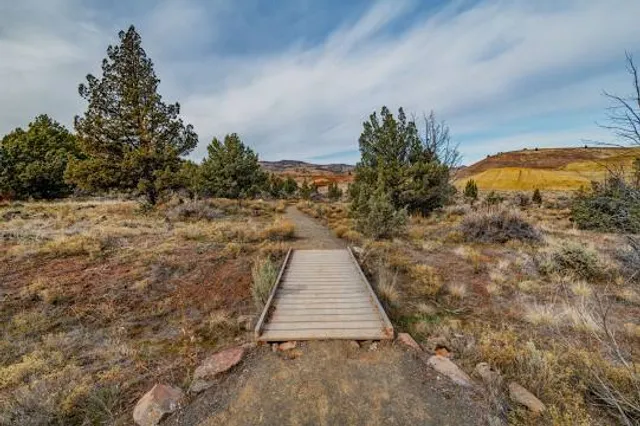
 Learn more insights from Wanderboat AI.