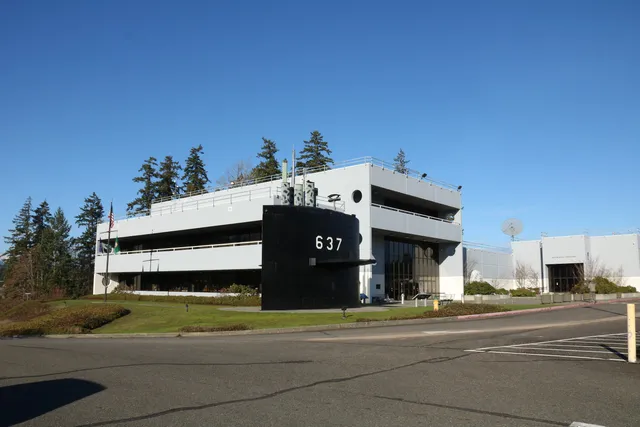
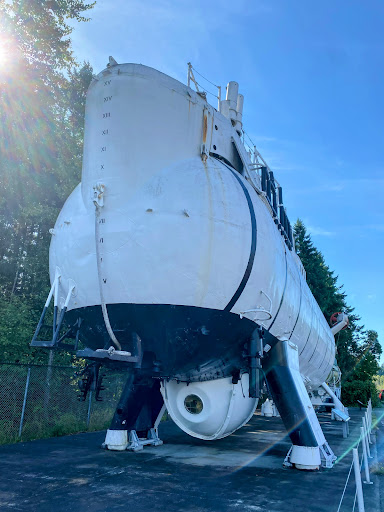
This was a cool stop for the Naval history nerds and science geeks!
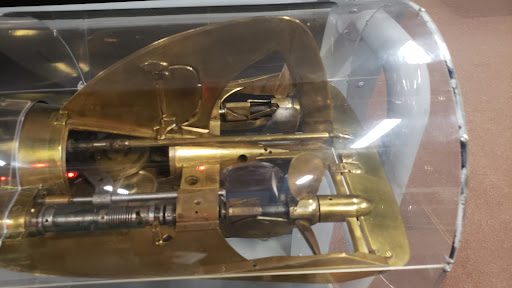
Super cool history of flintlock floating keg bombs all the way to modern torpedoes. Including the first adjustable pitch prop that was invented in 1873 and self regulates the pitch based on drive speed!!! This was cool to see modern turboprop technology born in a 1873 torpedo impeller!
Science of the sea and instruments used to take readings and why they are important to a submarine navigation and sensing systems. Many displays here were not functioning, but the static instruments were still cool to see engineered simplicity for depths and unknown bottoms.
There are torpedoes, and mines. There are also command bridges, nuclear missile mock ups, and how to escape an underwater sub!
There is a section on animal training and partnership with the Navy. During training, one of those animals even found 1 of the early adjustable pitch torpedoes in the training harbor (there were only 50 made, so that is a really cool find 120 years later).
I did not get to spend much time with the animal training, scuba and rebreather technology, or whatever else was on that side. The museum was closing, and I had spent a lot of time being fascinated by the amazing early and complex engineering in the torpedo section. I mean aligning the impellers to noise cancel each other, or using chemical-electrical engines to increase range and reduce wake and thermocline signatures: who wouldn't be fascinated.
Outside there are cool deep sea vehicles. One carries steel ballast down and drops it to resurface back from 20,000 feet! This beast only carries 2 people and uses gasoline as positive ballast that does not compress at depth to prevent the hull from imploding!
Seriously; a free museum that one should definitely need out at! Many of the displays could have been set up better to highlight the amazing STEAM that has continued in the Navy's history to present. Bring your science tutor to explain the wonders you are actually viewing and you will have a blast!
Okay the cool torpedo stored kinetic energy as potential in a massive flywheel revved up by steam, and the pitch of the impellers changed based on the residual rotational speed of the flywheel. When the flywheel stopped, the torpedo stopped. It would not have left an exhaust heat signature and was an elegant piece of...
Read moreThe U.S. Naval Undersea Museum in Keyport, Washington, is an incredible museum that provides a fascinating glimpse into the world of undersea warfare. One of the most interesting exhibits at the museum is the one about using marine mammals.
This exhibit is a must-see for anyone interested in the history of naval warfare. The exhibit showcases how the U.S. Navy has used marine mammals, such as dolphins and sea lions, for a variety of tasks, including detecting mines, locating underwater objects, and rescuing lost divers.
The exhibit features a wide range of information, including detailed explanations of the training and care of marine mammals, as well as displays of the equipment and technology used in their training and deployment. The displays are informative and engaging, with interactive exhibits and videos that bring the topic to life.
One of the most impressive displays in the exhibit is the one that shows how dolphins are trained to detect mines. The display features a replica of a minefield, complete with mines hidden underwater. Visitors can watch as the dolphins swim through the water, using their highly developed senses to locate the mines and alert their handlers.
Overall, the exhibit on using marine mammals at the U.S. Naval Undersea Museum is a must-see. It is well-presented, informative, and engaging. Whether you're a history buff, a marine biology enthusiast, or simply interested in the incredible capabilities of these amazing animals, this exhibit is sure to impress. So, if you're ever in the Keyport area, be sure to stop by and...
Read moreLOVED this museum!! It was well worth the time to visit! Highly recommend- especially if you're into history, military history, the Navy, Naval History, or submarines. 5/5 stars is an easy rating to give. Loved this displays and the exhibits. My negatives are few, and only something an avid Silent Service fan might notice. Examples- I was hoping to see more on Rickover. As a huge influence on modern submarines, I would have liked to have seen him acknowledged a bit more than he was. Also, while I fully understand the clandestine nature of the Silent Service and that also of the boats themselves, I was hoping to see a bit more on modern boats too. The Los Angeles class boats and the Ohio class boomers, I felt, were under represented. So, too, are the Seawolf and Virginia class boats. Their storied histories would make a valuable addition, those stories that can be added, of course. I also feel like the contribution of the Gato class boats from WWII could have been mentioned more. Their contribution to the war in the Pacific is especially worth noting.
Make no mistake, these examples are very minor when compared to everything the museum offers. The staff are friendly and knowledgable. The exhibits are worthy of their subject matter, and the history presented and information given was easy to follow and understand. I would absolutely go back, and...
Read more