HTML SitemapExplore
logo
Find Things to DoFind The Best Restaurants

John Day Fossil Beds National Monument — Attraction in Prineville

Name
John Day Fossil Beds National Monument
Description
Nearby attractions
Painted Hills and John Day Fossil Beds
John Day Hwy, Fossil, OR 97750
Nearby restaurants
Nearby hotels
Related posts
Keywords
John Day Fossil Beds National Monument tourism.John Day Fossil Beds National Monument hotels.John Day Fossil Beds National Monument bed and breakfast. flights to John Day Fossil Beds National Monument.John Day Fossil Beds National Monument attractions.John Day Fossil Beds National Monument restaurants.John Day Fossil Beds National Monument travel.John Day Fossil Beds National Monument travel guide.John Day Fossil Beds National Monument travel blog.John Day Fossil Beds National Monument pictures.John Day Fossil Beds National Monument photos.John Day Fossil Beds National Monument travel tips.John Day Fossil Beds National Monument maps.John Day Fossil Beds National Monument things to do.
John Day Fossil Beds National Monument things to do, attractions, restaurants, events info and trip planning
John Day Fossil Beds National Monument
United StatesOregonPrinevilleJohn Day Fossil Beds National Monument

Basic Info

John Day Fossil Beds National Monument

32651 OR-19, Mitchell, OR 97750
4.8(726)
Open 24 hours
Save
spot

Ratings & Description

Info

Outdoor
Adventure
Scenic
Cultural
Family friendly
Off the beaten path
attractions: Painted Hills and John Day Fossil Beds, restaurants:
logoLearn more insights from Wanderboat AI.
Phone
(541) 987-2333
Website
nps.gov

Plan your stay

hotel
Pet-friendly Hotels in Prineville
Find a cozy hotel nearby and make it a full experience.
hotel
Affordable Hotels in Prineville
Find a cozy hotel nearby and make it a full experience.
hotel
The Coolest Hotels You Haven't Heard Of (Yet)
Find a cozy hotel nearby and make it a full experience.
hotel
Trending Stays Worth the Hype in Prineville
Find a cozy hotel nearby and make it a full experience.

Reviews

Nearby attractions of John Day Fossil Beds National Monument

Painted Hills and John Day Fossil Beds

Painted Hills and John Day Fossil Beds

Painted Hills and John Day Fossil Beds

4.9

(13)

Open 24 hours
Click for details
Get the Appoverlay
Get the AppOne tap to find yournext favorite spots!
Wanderboat LogoWanderboat

Your everyday Al companion for getaway ideas

CompanyAbout Us
InformationAI Trip PlannerSitemap
SocialXInstagramTiktokLinkedin
LegalTerms of ServicePrivacy Policy

Get the app

© 2025 Wanderboat. All rights reserved.
logo

Reviews of John Day Fossil Beds National Monument

4.8
(726)
avatar
5.0
8y

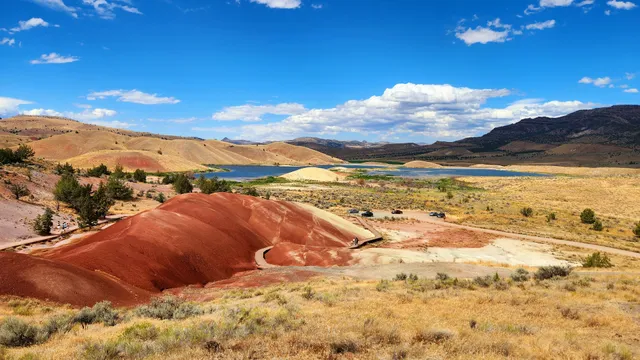
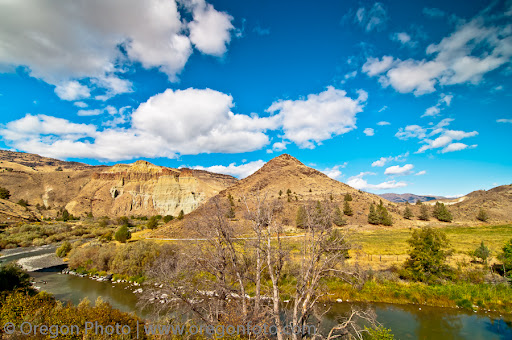
The John Day Fossil Beds National Monument is the highlight of the John Day area. Most notable, the Painted Hills makes up one unit of the overall 14,000 acres of semi-desert shrublands and colorful badlands of the John Day River Basin. The other units include Sheep Rock and Clarno. The area became a National Monument in 1975 and is one of the most popular tourist destinations in Oregon. The Painted Hills is noted mostly for its colorful geology made of heavily eroded volcanic ash layers deposited during volatile and ancient times when the area was a river plain with a warm tropical climate. The hills receive their name from spectacular colors and banded striations that appear hand-painted with an artistic quality that seems almost unnatural and highly surreal. Over eons of time, the layers of ash formed and became embedded with different mineral compositions, which has led to the incredible bands of color we see today.

There is no finer location to witness an awe-inspiring landscape and countless painters and photographers visit the Painted Hills year-round. A couple of ways to capture a photograph that is a little different than the rest is during the springtime, where small clusters of yellow flowers dot the hills, and in early wintertime when there is a fresh dusting of white powder. Right after a rain or thunderstorm is the best time to view the hills as the dampness enriches the saturation of the reds, oranges, and yellows contrasted with black striations.

The John Day Fossil Beds National Monument is well-known for its preserved layers of fossil plants and mammals that lived in the region ranging between the late Eocene, about 45 million years ago, and the late Miocene, about 5 million years ago. Fossils found in the John Day Strata include a wide variety of plants and more than 100 species of mammals, including dogs, cats, saber-toothed tigers, horses, camels, and rodents. The monument features a visitors attraction called the Thomas Condon Paleontology Center located at the Sheep Rock unit. It is the best place to see fossils at the monument. Visitors can watch scientists carefully working on fossils from behind a window. The center features interactive displays, including “touch tables” and microscopes, paintings, murals, and displays illustrating the various regions where the fossils were found and the variety of plant and animal fossils discovered within...

   Read more
avatar
5.0
7y

Open year round during daylight hours and managed by National Park Service. Established in 1975 with over 14,000 acres spread out in three different units; Sheep Rock, Painted Hills and Clarno. All located within drainage basin of the John Day River, a tributary of the Columbia River.

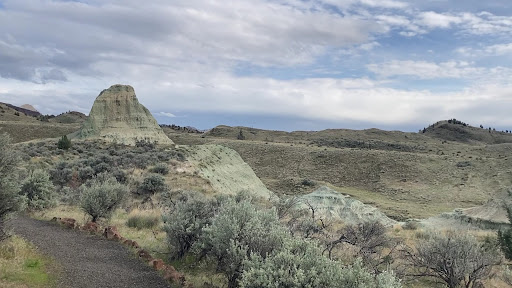
Sheep Rock is largest of the three units and located in Grant County, Oregon nearby towns of Kimberly and Dayville. Within the unit visitors will find Sheep Rock, Thomas Condon Paleontology Center, James Cant Ranch Historic District, the blue-green Turtle Cove beds and several hiking trails.

Thomas Condon Paleontology Center is National Monument's headquarters, visitor center and research facility. There visitors can view fossil exhibits and watch scientists at work studying fossils through a lab window. The research facility helps the public and scientific community better understand the paleontological resources of the John Day River Basin Area.

Across from paleontology center off Hwy 19, part of Journey through Time Scenic Byway, is the James Cant Ranch. An interpretive center allowing visitors to tour an early 20 century livestock ranch and it's buildings. The Cant Ranch is a great educational opportunity to learn about Eastern Oregon's ranching heritage and was listed on the National Register of Historic Places in 1984.

Painted Hills and Clarno Units are both located in Wheeler County. Painted Hills is 9 miles northwest of Mitchell. Listed as one of Oregon's seven wonders, the colorful clay layers represent different geological time periods. A network of trails allow visitors to view different perspectives of one of the most photographed geologic formations in the National Monument.

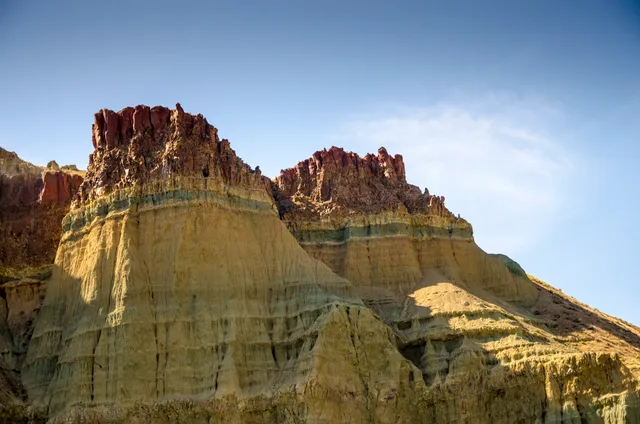
Clarno Unit is 18 miles west of Fossil and is known for it's towering Clarno Palisades. Volcanic lahars, or mudflows that are the oldest geologic formations within the National Monument created by an ancient volcano. Visitors can also view fossilized plants hiking 1/4 mile...

   Read more
avatar
5.0
3y

I didn’t have a lot of expectations going in - I was looking for a quiet place for a long weekend drive from Seattle.

This place blew my mind! I love learning about geology and paleontology - well, general natural history. This felt like an open museum! Visit here and take your kiddos.

Can you imagine that at some point in history, millions of years ago, Central Oregon was a tropical forest?! And there were 3-toed horses? I never imagined the possibility! So, expect to learn a lot of cool things!

This National Monument has 3 units - Sheep Rock, Clarno and Painted Hills. I’d recommend that you visit them in that order even though they’re all miles apart. Start at the Thomas Condon Paleontology center(they open at 10 am) - checkout the many fossils and read up on their descriptions of the history. If you don’t want to read all those paragraphs, watch the documentary at the theater. It is a 20-minute video and very informative! On weekdays, you can watch scientists at work here as they handle fossils!! Then, proceed to the sheep ranch, Cathedral Rock(there wasn’t a place to pull over and stop the car here, so be prepared to slow down to appreciate this volcanic rock formation) and Foree. The Foree was gorgeous! The blue-green claystone was so pretty!!

Then proceed to the Clarno unit. There are trails from the parking lot. Check them out! There are many cards placed along the trail to explain the history. Walk to the end of the trail and then start reading the cards on your way back to the parking lot, for it to make more sense, if you’ve not visited the Paleontology center.

Finally, stop by the Painted Hills! 😍 These are so pretty! And sunset makes the layers clear as the sun hits these hills at the right angles for some nice photographs! I was told to visit here right after the rain lets up in the evenings for everything to pop!

Oregon is so gorgeous!! And John Day Fossil Bed is a must visit if you’re a geology and natural...

   Read more
Page 1 of 7
Previous
Next

Posts

Your browser does not support the video tag.
hereisoregonhereisoregon
From the Painted Hills to prehistoric fossils, there's no shortage of things to see at the John Day Fossil Beds National Monument in central Oregon. Read more at the link in our bio. @subaruofamerica is proud to #sharethegood from Oregon's top news team #centraloregon #johnday #fossils #exploregon #HereisOregon
Your browser does not support the video tag.
taconvtaconv
The John Day Fossil Beds National Monument is one of the most under-visited places in Oregon. While it's not a National Park, it is apart of the National Parks System. What once was a lush tropical forest, is now a desert. What remains are the mileralized remains of plant life, sloths, saber-toothed tigers, horses, turtles, and my favorite, a tree dwelling dog about the size of a cat. Fossils in the park range from 40 million years to as young as 5 million years ago. the scenery is #epic and the landscapes are similar to that of Utah and Arizona. #fossil #oregon #explore #desert #hike
Michael SkourtesMichael Skourtes
The John Day Fossil Beds National Monument is the highlight of the John Day area. Most notable, the Painted Hills makes up one unit of the overall 14,000 acres of semi-desert shrublands and colorful badlands of the John Day River Basin. The other units include Sheep Rock and Clarno. The area became a National Monument in 1975 and is one of the most popular tourist destinations in Oregon. The Painted Hills is noted mostly for its colorful geology made of heavily eroded volcanic ash layers deposited during volatile and ancient times when the area was a river plain with a warm tropical climate. The hills receive their name from spectacular colors and banded striations that appear hand-painted with an artistic quality that seems almost unnatural and highly surreal. Over eons of time, the layers of ash formed and became embedded with different mineral compositions, which has led to the incredible bands of color we see today. There is no finer location to witness an awe-inspiring landscape and countless painters and photographers visit the Painted Hills year-round. A couple of ways to capture a photograph that is a little different than the rest is during the springtime, where small clusters of yellow flowers dot the hills, and in early wintertime when there is a fresh dusting of white powder. Right after a rain or thunderstorm is the best time to view the hills as the dampness enriches the saturation of the reds, oranges, and yellows contrasted with black striations. The John Day Fossil Beds National Monument is well-known for its preserved layers of fossil plants and mammals that lived in the region ranging between the late Eocene, about 45 million years ago, and the late Miocene, about 5 million years ago. Fossils found in the John Day Strata include a wide variety of plants and more than 100 species of mammals, including dogs, cats, saber-toothed tigers, horses, camels, and rodents. The monument features a visitors attraction called the Thomas Condon Paleontology Center located at the Sheep Rock unit. It is the best place to see fossils at the monument. Visitors can watch scientists carefully working on fossils from behind a window. The center features interactive displays, including “touch tables” and microscopes, paintings, murals, and displays illustrating the various regions where the fossils were found and the variety of plant and animal fossils discovered within the monument.
See more posts
See more posts
hotel
Find your stay

Pet-friendly Hotels in Prineville

Find a cozy hotel nearby and make it a full experience.

From the Painted Hills to prehistoric fossils, there's no shortage of things to see at the John Day Fossil Beds National Monument in central Oregon. Read more at the link in our bio. @subaruofamerica is proud to #sharethegood from Oregon's top news team #centraloregon #johnday #fossils #exploregon #HereisOregon
hereisoregon

hereisoregon

hotel
Find your stay

Affordable Hotels in Prineville

Find a cozy hotel nearby and make it a full experience.

Get the Appoverlay
Get the AppOne tap to find yournext favorite spots!
The John Day Fossil Beds National Monument is one of the most under-visited places in Oregon. While it's not a National Park, it is apart of the National Parks System. What once was a lush tropical forest, is now a desert. What remains are the mileralized remains of plant life, sloths, saber-toothed tigers, horses, turtles, and my favorite, a tree dwelling dog about the size of a cat. Fossils in the park range from 40 million years to as young as 5 million years ago. the scenery is #epic and the landscapes are similar to that of Utah and Arizona. #fossil #oregon #explore #desert #hike
taconv

taconv

hotel
Find your stay

The Coolest Hotels You Haven't Heard Of (Yet)

Find a cozy hotel nearby and make it a full experience.

hotel
Find your stay

Trending Stays Worth the Hype in Prineville

Find a cozy hotel nearby and make it a full experience.

The John Day Fossil Beds National Monument is the highlight of the John Day area. Most notable, the Painted Hills makes up one unit of the overall 14,000 acres of semi-desert shrublands and colorful badlands of the John Day River Basin. The other units include Sheep Rock and Clarno. The area became a National Monument in 1975 and is one of the most popular tourist destinations in Oregon. The Painted Hills is noted mostly for its colorful geology made of heavily eroded volcanic ash layers deposited during volatile and ancient times when the area was a river plain with a warm tropical climate. The hills receive their name from spectacular colors and banded striations that appear hand-painted with an artistic quality that seems almost unnatural and highly surreal. Over eons of time, the layers of ash formed and became embedded with different mineral compositions, which has led to the incredible bands of color we see today. There is no finer location to witness an awe-inspiring landscape and countless painters and photographers visit the Painted Hills year-round. A couple of ways to capture a photograph that is a little different than the rest is during the springtime, where small clusters of yellow flowers dot the hills, and in early wintertime when there is a fresh dusting of white powder. Right after a rain or thunderstorm is the best time to view the hills as the dampness enriches the saturation of the reds, oranges, and yellows contrasted with black striations. The John Day Fossil Beds National Monument is well-known for its preserved layers of fossil plants and mammals that lived in the region ranging between the late Eocene, about 45 million years ago, and the late Miocene, about 5 million years ago. Fossils found in the John Day Strata include a wide variety of plants and more than 100 species of mammals, including dogs, cats, saber-toothed tigers, horses, camels, and rodents. The monument features a visitors attraction called the Thomas Condon Paleontology Center located at the Sheep Rock unit. It is the best place to see fossils at the monument. Visitors can watch scientists carefully working on fossils from behind a window. The center features interactive displays, including “touch tables” and microscopes, paintings, murals, and displays illustrating the various regions where the fossils were found and the variety of plant and animal fossils discovered within the monument.
Michael Skourtes

Michael Skourtes

See more posts
See more posts