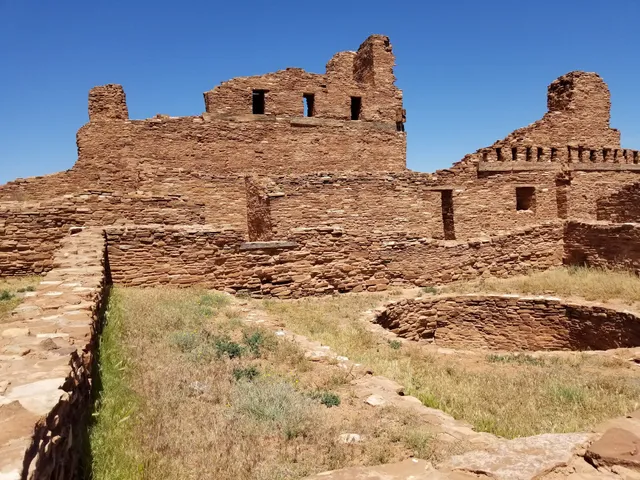
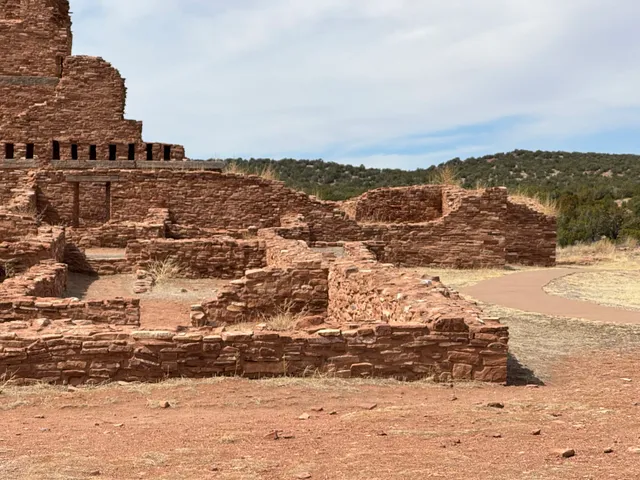
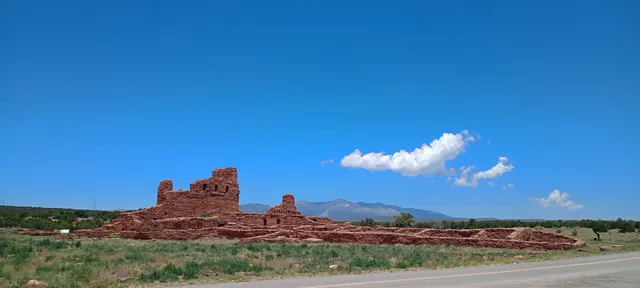
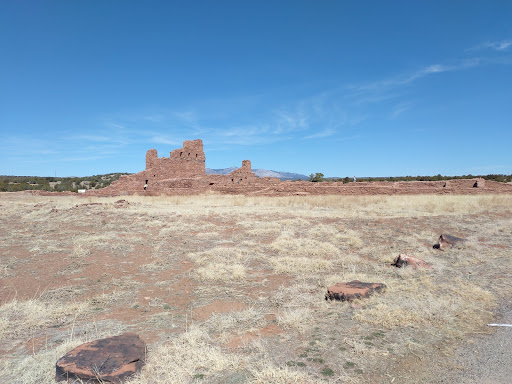
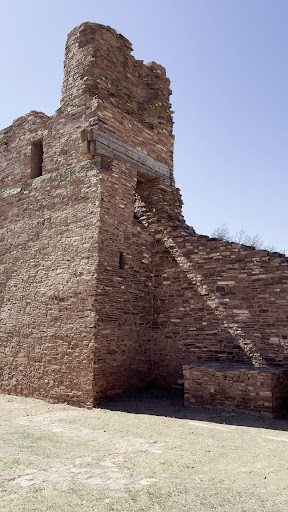
The Abó Pueblo Mission ruins site is one of the hidden treasures of New Mexico. Part of a larger complex of three Spanish Colonial missions from the 17th century (Abó, Quarai, and Gran Quivera - these three sites comprise the Salinas Pueblo Missions National Monument), Abó is uniquely striking because of the natural beauty of it's location (just outside Mountainair, NM) as well as the stature and dramatic presence of the ruins. The stone ruins were once a Spanish mission church built in the vicinity of a Native American pueblo community. The mission was started in the 1581 as a small convento inside the pueblo community. Many expansions and renovations occurred over the next 77 years, until the church was complete in 1658. Unfortunately, due to a variety of factors such as drought, famine and Apache raids on the community, Abó was abandoned in 1673, almost a hundred years after its founding. The Abó site is quite extensive (370 acres), and includes the central church, living quarters and storehouses. A unique feature of the site is a circular kiva that was incorporated into the church complex. While the church complex ruins are the only visible remnants of the site today, Abó is actually the ruins of a very large, ancient Native American pueblo community, and many unexcavated ruins exist in the area.
Facilities at the Abó ruins are quite nice for a picnic outing or day trip from Albuquerque. There is a staffed Ranger Station with a small exhibit area and souvenir shop, restrooms and a very pleasant picnic ground. The scenery around the ruins is outstanding.
This is my single favorite National Park site in New Mexico, and I highly recommend it. Before you visit, check out James Ivey's highly readable archeological survey of the Salinas Pueblo National Monument Sites entitled, "In the Midst of a Loneliness." It Is available free online from the National...
Read moreWe are full-time RVers and also working as we travel.
On our way from Las Cruces to Santa Fe in New Mexico, we stopped at the Abo ruins. It is yet another place where the European culture (in the form of Catholic friars) overlaid the native culture. Nor were they the first. The Tompiro, probably the first to settle in the area, facilitated trade between the Pueblo to the west in the Rio Grande valley and the plains Indians to the east. The Pueblo became more dominant in the area, followed by the Europeans, only to be wiped out by the Apache and drought.
The place is peaceful, and one can almost feel the history surrounding you. People there don't appear to be in a rush, rather taking in the ruins around them. Another small gem that lets Americans (and others) learn more...
Read moreI was impressed how accessible the ruins and the arroyo were at this site. There is a great paved path that made it wheelchair accessible, so it was a great family outing for everyone including grandpa. The ranger here was incredible friendly, knowledgeable, and took the time to give us the history and show us around the mission site. While this is the smallest of the three Salinas Pueblo Mission ruins, it was perhaps one of the most beautiful, especially with the nearby arroyo which showed where the sandstone was harvested to build the mission buildings. This was an excellent adventure if you're in the...
Read more