The Bay Bridge: Icon of Urban Connection and Contradiction A Critical Analysis of Infrastructure's Cultural Role in San Francisco
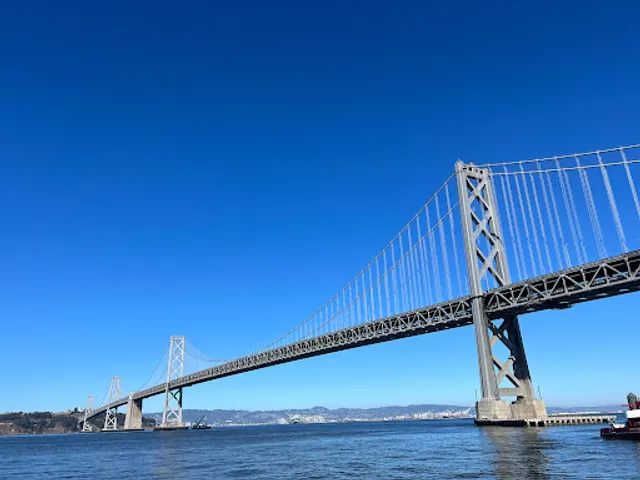
From the steep streets of Chinatown, where ornate pagodas frame the distant span of steel and cable, the San Francisco-Oakland Bay Bridge serves as both literal and metaphorical connector of the Bay Area's complex urban narrative. This crucial piece of infrastructure, initially constructed between 1933-1936, represents far more than its primary function as a transportation artery – it embodies the region's perpetual tension between preservation and progress, safety and spectacle, cultural heritage and technological advancement.
The bridge's presence in the urban fabric is particularly poignant when viewed through the lens of San Francisco's Chinatown, where traditional architecture with its distinctive red roofs and turquoise accents stands in stark contrast to the modernist steel span. This juxtaposition, captured perfectly in street views where the bridge appears as a distant anchor point, tells a story of immigration, resilience, and urban evolution. The neighborhood's historic buildings, which survived both the 1906 earthquake and decades of cultural transformation, frame the bridge as if to remind viewers of the city's layered history.
The 1989 Loma Prieta earthquake marked a crucial turning point, not just for the bridge's structural integrity but for the Bay Area's approach to infrastructure resilience. The subsequent reconstruction of the eastern span, while plagued by cost overruns and delays, resulted in what some consider a triumph of modern engineering – though at a staggering financial and environmental cost. The project's final price tag of over $6.4 billion (more than four times initial estimates) raises questions about the true cost of iconic infrastructure in an age of climate consciousness and social equity concerns.
Architecturally, the bridge represents three distinct eras of American infrastructure design: the industrial pragmatism of the 1930s original span, the utilitarian modernism of mid-century additions, and the sculptural expressionism of the new eastern span. This evolution mirrors San Francisco's own transformation from industrial port city to technology hub, with each iteration of the bridge reflecting contemporary attitudes toward urban infrastructure.
The bridge's role in the cityscape is particularly evident in views from Chinatown's streets, where the steep grade creates dramatic urban canyons leading toward the bay. These perspectives showcase San Francisco's unique topography while highlighting the bridge's role as a visual terminus – an architectural punctuation mark that grounds the city's vertical ambitions in horizontal connection.
Yet this iconic status comes with ongoing challenges. The bridge remains vulnerable to seismic activity despite improvements, and its maintenance requirements pose continuous logistical and financial challenges. Environmental concerns, particularly regarding marine habitat disruption and bay ecology, persist. These issues reflect broader questions about sustainable urban infrastructure in an era of climate change and rising seas.
The bridge's significance extends beyond its physical presence. It represents the Bay Area's economic interdependence, connecting San Francisco's financial and technology sectors with Oakland's port and industrial infrastructure. This economic role, while crucial, has led to criticism that the project primarily serves corporate interests rather than community needs.
Looking forward, the Bay Bridge stands as both warning and inspiration – a reminder of infrastructure's cost and complexity, but also its potential to shape urban identity and connection. Its presence in the cityscape, particularly when framed by historic neighborhoods like Chinatown, creates a dialogue between past and present that defines San Francisco's character.
As we face decisions about future infrastructure projects, the Bay Bridge offers crucial lessons. We must advocate for infrastructure that serves...
Read moreOver the years, I have traveled across this "old bridge a bazillion" times and seen the changes to the surrounding area, some good and of course others not so good.
My fondest memories will always be driving across the bridge to witness the panoramic view of both side of the bay and on a clear day, it was quite spectacular.
I was on this bridge after the center span collapsed during the 1989 Loma Prieta Earthquake, taking a photo of the collapsed portion of the span (attached in my profile pictures) and wondered if they were ever going to replace this bridge, which they did in 2013.
The drive across the "new span" is inspirational as well as a tourist attraction for being the only bridge in the world with a "center suspension system." I've highlighted the conception of this man made phenomenon.
In 1850, the idea of a bridge linking San Francisco with the cities of Oakland, Berkeley, and Alameda "was proposed."
In 1868, the ferry service made five round trips a day and eventually came under the control of the Southern Pacific Railroad.
In 1869, railroad executives who built the western portion of the transcontinental railroad considered the idea of a bridge but because of the challenges involved never took shape."
Demands for a bridge were the result of economic and social changes in the Bay Area, including increasing popularity of the automobile.
The original plans for the Bay Bridge included a key system with railway access across the bridge.
On August 18, 1869, Emperor Norton, a well-known San Francisco character issued a proclamation ordering the construction of what is now the Golden Gate Bridge and the San Francisco-Oakland Bay Bridge.
In 1921, the San Francisco Motor Car Dealers Association financed an engineering report on the feasibility of a link consisting of a tunnel and a concrete causeway.
In 1927, a study concluded that a bridge spanning the bay was technically or financially non-feasible, although it suggested a bridge could be built.
In 1928, Congress authorized the City of San Francisco to build a bridge but it was stalled as a result of objections by the Army and Navy.
The design chosen for the bridge was a combination of linked structures that constituted an historic engineering challenge. It included a cantilever span of 1,400 feet in the East Bay crossing, two 2,310-foot center suspension spans, two 1,160-foot side spans in the West Bay crossing, and a tunnel carrying the upper (six lanes for fast traffic) and lower decks (three truck lanes and two interurban track lines) through Yerba Buena Island.
In 1929, the creation of the California Toll Bridge Authority and it was their responsibility of connecting San Francisco and Alameda County with a bridge.
In 1933, construction of the Bay Bridge began on the longest bridge in the world at that time.
More than 8,300 men worked on the original Bay Bridge. The workforce was not unionized except for eight unionized crafts. The average wage was $7.75 per day, and all the workers were men.
The odds were if a man worked on the bridge for more than a year and a half he was likely to suffer at least one serious injury. There were a total of 28 fatalities during construction."
The final bridge cost was approximately $77 million, $6 million under the estimated cost.
In 1936, the new Bay Bridge was completed and the Bay Area celebrated completion with a four day festival that began in Oakland before the opening and concluded in San Francisco after the opening.
As expected, as soon as the San Francisco-Oakland Bay Bridge was built, it immediately became the favorite way to travel between San Francisco and the East Bay.
In 1937, the Golden Gate Bridge opened.
In 2013, after decades in the planning and construction, the Eastern Span was replaced with a new design, including the world's longest Self-Anchored Suspension Span.
The new Bay Bridge cost an estimated $6.3 billion dollars making it one of the largest public works projects...
Read moreThe San Francisco-Oakland Bay Bridge, affectionately known as the Bay Bridge, is an iconic landmark and vital transportation artery in the San Francisco Bay Area. Its rich history, combined with its modern engineering marvels, make it a fascinating subject for review.
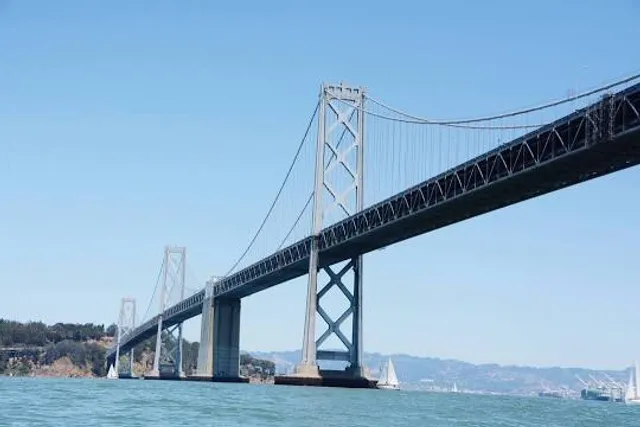
The Bay Bridge was built during the Great Depression as a means to connect San Francisco with Oakland and the East Bay. Its construction began in 1933 and was completed in 1936, an impressive feat for its time. The original bridge consisted of two suspension bridges from San Francisco to Yerba Buena Island, a tunnel through the island, and a cantilever bridge from the island to Oakland. However, the 1989 Loma Prieta earthquake exposed a critical vulnerability in the bridge's design. A section of the upper deck on the eastern span collapsed, leading to a major re-evaluation and reconstruction effort. The new eastern span, a self-anchored suspension bridge, opened in 2013 and is considered a marvel of modern engineering.
Today, the Bay Bridge is a vital transportation link, carrying over 260,000 vehicles daily. Its two decks accommodate different types of traffic, ensuring a smooth flow across the bay. The bridge also features a bicycle and pedestrian path on the new eastern span, offering stunning views of the bay and the surrounding cityscape.
The Bay Bridge has a few quirks that add to its character: The Bay Bridge Lights: A mesmerizing LED light display illuminates the bridge's cables at night, creating a dynamic and ever-changing spectacle. This public art installation, known as "The Bay Lights," has become a beloved symbol of the Bay Area. The S-Curve: The eastern span's unique S-curve design was a response to geological and environmental concerns. It adds a distinctive visual element to the bridge's profile. The Ghost Tower: On Yerba Buena Island, you can still see the remains of the old eastern span's cantilever section. This "ghost tower" serves as a reminder of the bridge's history and evolution.
The Bay Bridge is more than just a bridge; it's a symbol of resilience, innovation, and the spirit of the Bay Area. Its history, combined with its modern engineering and artistic elements, make it a truly remarkable landmark. Whether you're driving across it, cycling on its path, or simply admiring it from afar, the Bay Bridge is an unforgettable experience.
The bridge offers breathtaking views of the San Francisco skyline, Alcatraz Island, and the East Bay hills. It's a popular spot for photography, sightseeing, and outdoor activities. The Bay Bridge is a testament to human ingenuity and a source of pride for the Bay Area. If you have the opportunity to visit San Francisco, be sure to take some time to appreciate the Bay Bridge in all its glory. It's a true icon of American engineering and a must-see for any visitor...
Read more