I am a travel writer for National Park Planner and I visited Shiloh National Military Park in November 2014.
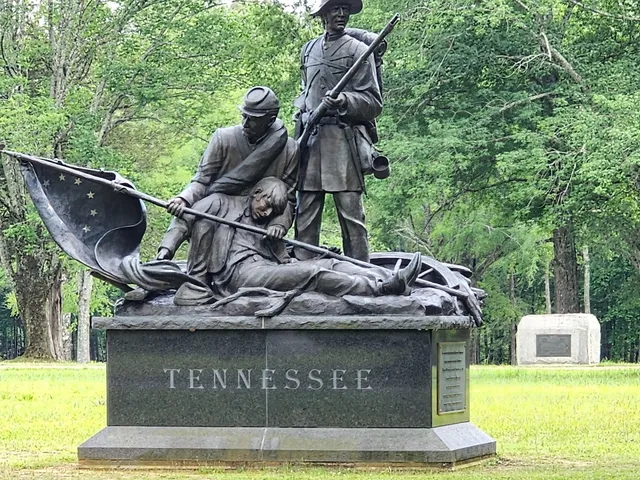
Shiloh National Military Park in Shiloh, Tennessee, preserves the battlefield on which Union and Confederate forces fought a two day battle early in the Civil War on April 6-7, 1862. With huge losses on each side, the country realized that it was in for a long and bloody conflict. After the first day of fighting the Rebels had driven Union troops back to their original landing point at Pittsburg Landing on the Tennessee River. With victory in hand, the Confederate commanders decided to rest the troops overnight and finish off Grant and his army in the morning. However, fresh Union reinforcements arrived that night and the next day’s anticipated Confederate victory turned into a demoralizing defeat. The Confederate living and wounded retreated back to Corinth, Mississippi, a strategic railroad town that was key to controlling what was at the time the southwestern United States.
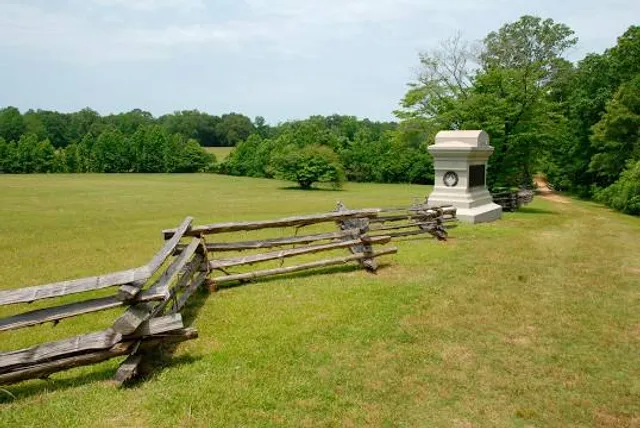
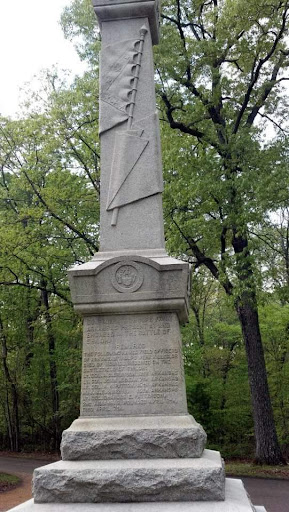
The Military Park includes locations in both Shiloh and Corinth, which is about 25 miles south of Shiloh. The Shiloh unit of the park includes a Visitor Center and small museum, a gift store, the Shiloh National Cemetery, and the preserved battlefield. A tour road leads visitors to various points of interest.
The Corinth battlefield is not as well preserved, for much of it was within city limits and was developed at the time the park was created in 1894. However, parcels of the battlefield that lie outside the city have been purchased over the years and were added to the park 2000. Many of these sites simply mark locations where events took place or preserve a few Union and Confederate trenches, so most will only be of interest to true Civil War buffs. Only the Corinth Contraband Camp site offers much in the way of exhibits. However, the Corinth Civil War Interpretive Center is far superior to the Shiloh Visitor Center. It is the “Visitor Center” that should be at Shiloh and if you really want to learn about the battle before venturing out onto the battlefield, it would not be a bad idea to start your visit here. It is only a half hour drive between Corinth and Shiloh.
For complete information on all there is to see and do, plus nearly 150 quality photos, visit my National Park Planner web...
Read moreYears ago when I was still doing American Civil War reenacting, our unit participated in the 150th Anniversary of the Battle of Shiloh. While in Shiloh, TN we visited the Shiloh National Military Park and Cemetery.
The battle took place in southwestern Tennessee, which was part of the war's Western Theater. The battlefield is located between a church named Shiloh and Pittsburg Landing, which is on the Tennessee River.
The battle resulted in nearly 24,000 killed, wounded, and missing. The two days of fighting did not end in a decisive tactical victory for either side—the Union held the battlefield but failed to pursue the withdrawing Confederate forces. However, it was a decisive strategic defeat for the Confederate forces that had massed to oppose Grant's and Buell's invasion through Tennessee. After the Battle of Shiloh, the Union forces proceeded to capture Corinth and the critical railroad junction there.
The battlefield is named after Shiloh Methodist Church, a small log church near Pittsburg Landing, Tennessee. Pittsburg Landing is the point on the Tennessee River where the Union forces landed for the battle; they referred to the battle as "The Battle of Pittsburg Landing".
A big disappointment is the park’s museum, which is nothing more than a generic Civil War museum with exhibits on such things as cannon, drummer boy life, field hospitals, ammunition, and uniforms. Information on the battle itself is surprisingly absent, other than an information panel detailing the commanding officers at the Battle of Shiloh and a few displays of artifacts found on the battlefield. You can read all of the information in about 15 minutes.
There are two short videos at the museum, both playing on a constant loop. One shows how Civil War-era canon are fired, and the other is a collection of personal items, letters, and photos of soldiers who died at Shiloh. Both are roughly 3.5 minutes long.
I give the museum 4 stars. ⭐⭐⭐⭐
However, the battle grounds and cemetery will give you chills as you walk on sacred ground where so many gave their lives during this decisive time in American history which shaped our country's direction for years to...
Read moreMy American ancestors at this battleground have the greatest honor for having unlimited discipline. So many American men died here at Shiloh at a time before USA or CSA knew what total war really meant. When groups of men felt glory in being brave, standing their ground on a battlefield. So much death occurred as a result.
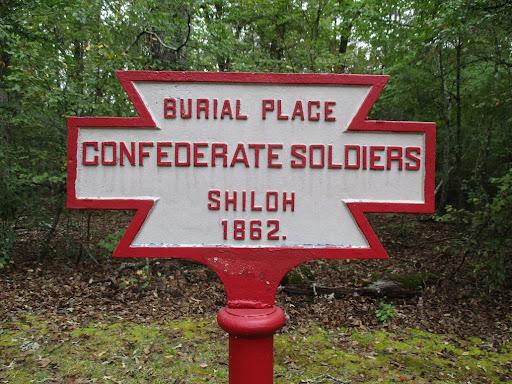
But the park here does a great service in honoring and remembering these events. There are CSA burial trenches that are very moving to stand at in total silence. Your walking on extremely hallowed ground. There is a grave of the unknown Confederate soldier in Mississippi....here at Shiloh there are several trenches of unknown CSA soldiers. I don't have the words.
A surprise was native American mounds / early civilization. This area, 1500 years ago, was popular with native Americans, obviously, and they erected mounds, that are (somewhat) preserved through time. The Battle of Shilo affected this site, as USA soldiers were buried on at least one of those ancient, pre-existing mounds. I can only imagine the emotions of the native American who lived here, and then saw what happened after the battle. You can walk up to, and climb on top of, these ancient native American mounds, and I have never been to such an open historical site as this. You drive to it, and it was really something, secluded, almost private, never will forget, and VERY GLAD I found this Native American site by accident. One of the mounds has an elevated view of the river.
You can also stand in the exact spot CSA Gen Johnston died from his injuries in battle. The spot is marked, and it was very moving to stand in that same spot, and to think the land topography has stayed intact, with a stream. You can easily picture CSA Gen Johnston on horse lay down and die from battle wounds at...
Read more