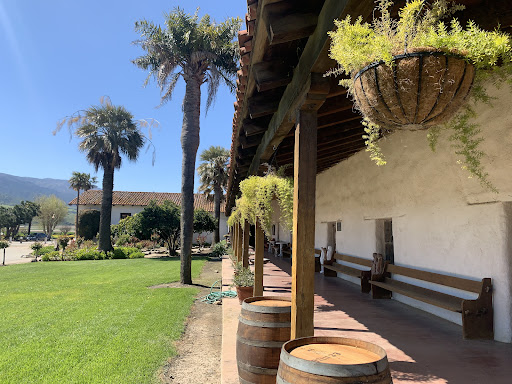
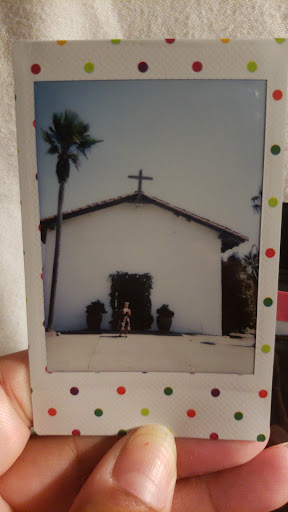
La Mision de Maria Santisima Nuestra Senora de la Soledad (Mary Most Holy, Our Most Sorrowful Lady of Solitude) was founded by Father Fermin Lasuen in 1791, the 13th mission along the CA Camino Real. Its first temporary church made from wooden poles and thatch took 1 year to build, given extreme winter and summer weather conditions. It took 6 years to build the first adobe church, completed in 1797 (enlarged in 1805). A quadrangle (buildings built around an open center mission square) followed and was completed in 1810.
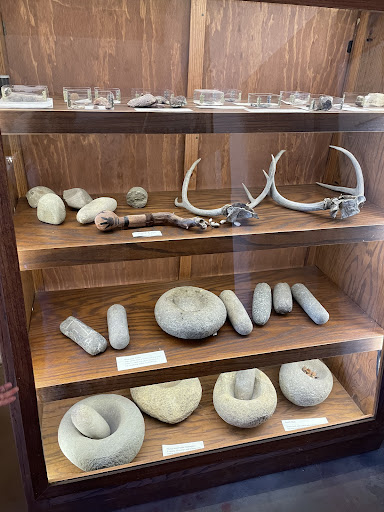
It was built near the Salinas River in the broad Salinas River Valley. Uniquely, it was not built near a native village so "recruitment" of neophytes extended to include the Chalon, Esselen, Yokuts and Salinan tribes. A deadly epidemic occurred in 1802. By 1804, records show that 687 lived at Mission Soledad. Never prosperous, the mission did raise cattle, horses, pigs, sheep, mules, wheat, barley, grapes, corn, beans and peas. It specialized in wool production and weaving.
A original adobe church was destroyed by floods in 1824. Soon after, another epidemic killed many of its neophyte population (peak was 900 individuals). Another flood by the Salinas River occurred in 1828, destroying the rebuilt chapel. In 1832, a 3rd flood damaged the new chapel during its reconstruction.
Mission Soledad was finally rebuilt in 1832. Secularization occurred in 1834, giving control of the lands to the Mexican government. Its last Franciscan priest, Father Vincente Francisco de Sarria (Father-President from 1823-1825) died alone in 1835. Soon after, the mission was abandoned. By 1846, the mission was sold for $800, including the stripping of its roof tiles. Unprotected, the adobe walls began to deteriorate. Returned to the Catholic Church by President Lincoln in 1862, no one returned because little remained except adobe walls.
Decades later, the Native Daughters of the Golden West began restoration in 1954. A small, simple chapel was the first to be rebuilt, restored from a section of storerooms, and dedicated in 1955. New adobe bricks were made from the "dust" of the older bricks on site. The reconstruction of the west wing (padres quarters) was completed in 1963. Reconstruction of Mission Soledad continues to this day, as funds become available, in hopes of completing the Mission's quadrangle structure.
Mission Soledad is unique in that offers something not seen at the other sites. Catastrophic floods devastated Mission Soledad. Here, adobe wall ruins are protected/covered allowing one to see what remains of a more original structure. Many of CA's missions have been reconstructed or rebuilt during a phase after WW11 when interest in preservation flourished, as was Mission Soledad. It is a unique historical opportunity to see both,...
Read more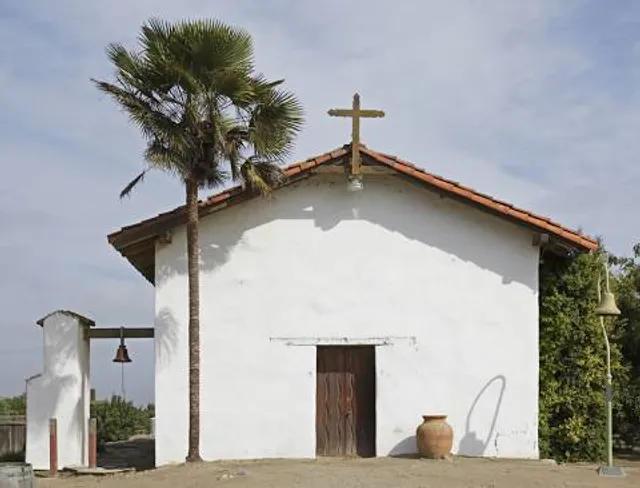
 Learn more insights from Wanderboat AI.